
Prabowo: Sekolah Rakyat Program to Break Intergenerational Poverty Through Education
President Prabowo Subianto announced that 93 permanent Sekolah Rakyat boarding schools are now operational, serving Indonesia's most vulnerable children with comprehensive support including education, nutrition, and safe housing to break the cycle of poverty.
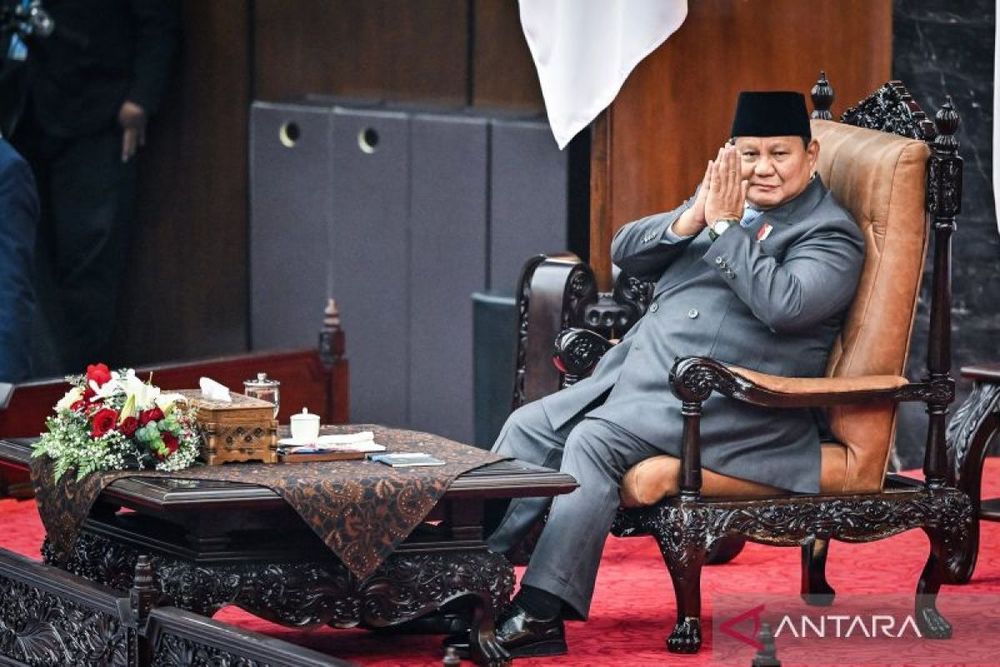
Sekolah Rakyat Program to Break Intergenerational Poverty Through Education
President Prabowo Subianto announced on Friday that the Sekolah Rakyat initiative has established 93 permanent boarding schools nationwide, designed to provide children from Indonesia's poorest families with opportunities to escape intergenerational poverty through comprehensive educational support.
Speaking at the 2026 Annual Session of the People's Consultative Assembly and Joint Session of the House of Representatives and Regional Representatives Council at the Parliament Complex in Jakarta, Prabowo emphasized that economic circumstances should never determine a child's future prospects.
"We are building Sekolah Rakyat — boarding schools for children from the most disadvantaged families — fully equipped with classrooms, living quarters, nutritious meals, computers, teachers, and a safe environment. The primary goal is to break the cycle of poverty," the president stated.
The program operates under Presidential Instruction Number 8 of 2025 on Optimization of Poverty Eradication Implementation and Extreme Poverty Elimination, and is rooted in Article 34 of the 1945 Constitution, which mandates state care for impoverished citizens and destitute children. Launched in the 2025-2026 academic year after government preparations finalized in June 2025, the initiative has grown rapidly from 166 schools serving 15,895 students by January 2026 to the current 93 permanent facilities operating alongside 182 pilot schools.
The program addresses a critical national challenge. Despite Indonesia's poverty rate falling to a historic low of 8.07 percent in March 2026, with 22.93 million people living in poverty, approximately 4.3 million children and adolescents aged 7-18 remain out of school. Children from the poorest households face five times greater risk of educational exclusion than their wealthier peers, with rural poverty rates at 10.67 percent compared to 6.34 percent in urban areas.
Students Overcoming Economic Barriers
During his address, Prabowo highlighted several students whose lives have been transformed by the program. Muhammad Risky Pratama, 12, previously traveled dozens of kilometers daily to sell fish for his family and eventually dropped out due to financial pressures. When he enrolled in Sekolah Rakyat, he could barely read or perform basic mathematics.
"Today, Risky has returned to school and regained his fundamental right to learn and pursue his dreams. There is no investment more valuable than restoring a child's future," Prabowo remarked.
The president also referenced Citra Nur Ramadhani from Pangkajene Regency, South Sulawesi Province, who nearly abandoned her fourth-grade education to help her disabled mother sell peanuts after her father's death. Given access to Sekolah Rakyat, Citra excelled academically and recently secured runner-up honors in a regional karate championship.
Seven Sekolah Rakyat students from Makassar, South Sulawesi, earned top honors at the 15th Indonesian National Olympiad across mathematics, biology, Indonesian language, history, and sociology. Additionally, Ismi Ulfaida from Polewali Mandar Regency, West Sulawesi Province, was selected for the prestigious national flag-hoisting troop (Paskibraka) for the Independence Day ceremony at Merdeka Palace on August 17.
Ambitious Expansion Plans
Prabowo announced plans to expand the program nationwide, with a target of establishing at least one Sekolah Rakyat in every district. The president has previously outlined goals of constructing 100 new facilities annually to reach 500 schools in economically disadvantaged areas.
The government has allocated Rp 25 trillion specifically for Sekolah Rakyat within the 2026 education budget of Rp 757.8 trillion, the largest education allocation in Indonesian history and representing 20 percent of the state budget. This represents a significant increase from the Rp 8.2 trillion allocated in 2025, of which Rp 6.6 trillion was spent.
Research indicates that poverty, child labor rates, and family socioeconomic background constitute the most significant factors driving school dropout rates in Indonesia, with economic factors being the dominant cause. The comprehensive boarding school model addresses these barriers by providing not only education but also housing, nutrition, and a stable environment.
"We will not leave a single Indonesian child behind," Prabowo concluded, emphasizing that the program demonstrates how students from underprivileged backgrounds can achieve extraordinary success when provided with adequate opportunities, facilities, and mentorship.