
Indonesia launches orientation for 1,360 students in first National Integrated School cohort
The Ministry of Primary and Secondary Education kicked off orientation for 1,360 students across 17 National Integrated School locations on Monday, marking the launch of a program mandated by presidential instruction to address educational inequality nationwide.
Indonesia launches orientation for 1,360 students in first National Integrated School cohort
Indonesia's Ministry of Primary and Secondary Education began orientation for 1,360 students in the inaugural cohort of the National Integrated School (SNT) program on Monday, launching an initiative mandated by Presidential Instruction No. 10/2026 on Accelerating the Improvement of Educational Quality through the Integrated National School Program.
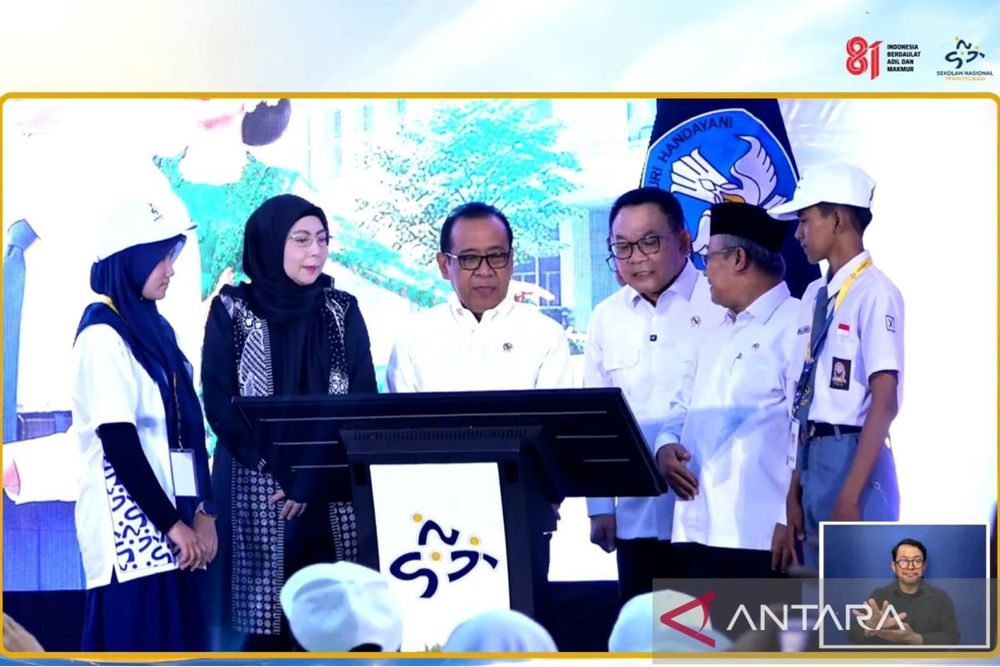
The students, comprising 680 junior high and 680 senior high school enrollees, are spread across 17 SNT locations and commenced the Friendly School Orientation Period (MPLS) on August 10. Director General of Early Childhood Education, Primary Education, and Non-Formal and Informal Education Gogot Suharwoto announced the milestone at the opening ceremony held at SNT 7 Parung in Bogor District, West Java.
The 1,360 students were selected from 2,068 applicants through the new student admission system (SPMB), Suharwoto said. The program addresses a significant educational disparity in Indonesia, where only around 4 percent of sub-districts have junior and senior high schools that deliver strong educational outcomes.
Phased national expansion
The SNT program represents an ambitious expansion of educational access. The government targets the phased construction of 500 SNT facilities through 2029, with 37 locations planned for development in 2026. Of those 37 locations identified after verification, validation, and field visits by the ministry and related agencies, 17 schools have begun operating in the 2026/2027 academic year. The remaining 20 sites will begin construction this year and commence enrollment in 2027.
To support operations of the 17 SNTs launching this academic year, the government has prepared transition classrooms utilizing new buildings such as those in the Nusantara Capital City (IKN), Ministry technical implementation units, and other learning facilities provided by local governments.
The ministry previously received location proposals for SNT from 114 districts and cities before narrowing the selection to the current 37 priority sites.
Modern infrastructure and curriculum
SNT schools are designed with modern facilities including smart classrooms, green schools, international-standard laboratories, future learning commons and libraries, creative arts studios, teacher development centers, sports centers, and regional shuttle transport services.
The schools will develop a three-tier curriculum: the national curriculum as a foundation, a school-specific curriculum, and a curriculum based on local context suited to each region's characteristics. This approach aims to balance national educational standards with local relevance and school identity.
Staff preparation and digital tools
The ministry selected and prepared 17 principals from 1,800 applicants to lead the SNT schools. For teachers and learning assistants, the ministry recruited 204 individuals selected from 60,000 pre-service teachers participating in the Teacher Professional Education (PPG) program.
To support classroom activities, the ministry prepared a Learning Management System (LMS) that includes digital teaching materials and classroom learning tools.
Part of broader education reform
Primary and Secondary Education Minister Abdul Mu'ti, who was appointed to his position on October 21, 2024, and also serves as Secretary-General of Muhammadiyah, one of Indonesia's largest Islamic organizations, expressed hope that SNT will become an environment for children to learn, grow, and achieve. He said the program should ultimately produce future leaders who make major contributions to their regions and the nation.
The SNT program complements other government education initiatives including the tuition-free Sekolah Rakyat (People's School) program and the university-oriented Garuda Top School program. These initiatives are supported by the Indonesian government's allocation of Rp757.8 trillion (approximately US$46.4 billion) for education in the 2026 Draft State Budget, representing 20 percent of total budget expenditure and the largest education allocation in Indonesia's history.
Chief of the Presidential Staff Office Dudung Abdurachman and Coordinating Minister for Human Development and Culture Pratikno joined Minister Mu'ti at the opening ceremony in Bogor District.