
Indonesia advances Deep Learning initiative to reshape classroom instruction nationwide
The Ministry of Primary and Secondary Education is implementing a Deep Learning approach centered on mindful, meaningful and joyful learning experiences to transform instruction across Indonesia's vast education system of 53 million students.
Indonesia advances Deep Learning initiative to reshape classroom instruction nationwide
Indonesia's Ministry of Primary and Secondary Education is advancing a comprehensive Deep Learning initiative aimed at transforming classroom instruction across the country's education system, with Minister Abdul Mu'ti emphasizing that learning quality depends fundamentally on how students experience the educational process.
The Deep Learning approach, part of Indonesia's broader Merdeka Belajar education reform launched in 2019, focuses on three core principles: mindful, meaningful and joyful learning, with student experiences at the center of all instruction. The initiative addresses education challenges at their foundation by reimagining teaching methods across the nation's network of more than 437,000 schools serving approximately 53 million primary and secondary students.
"We want to address the problems in our education sector at their root—starting with the learning approach we are developing, which we call Deep Learning. The keyword is respecting—respecting students, respecting teachers, and respecting knowledge."
Mu'ti, who was appointed Minister of Primary and Secondary Education in October 2024 and also serves as Secretary-General of Muhammadiyah, Indonesia's second largest Muslim organization with over 60 million members, said the approach views learning quality as the main driver of educational success, supported by a mindset that values every student regardless of academic ability or personal background.
The government has demonstrated significant financial commitment to education transformation, allocating Rp757.8 trillion (approximately US$49 billion) for education in the 2026 State Budget—a 9.8% increase from 2025 and the largest education budget in the country's history.
Recognition program highlights innovative teaching
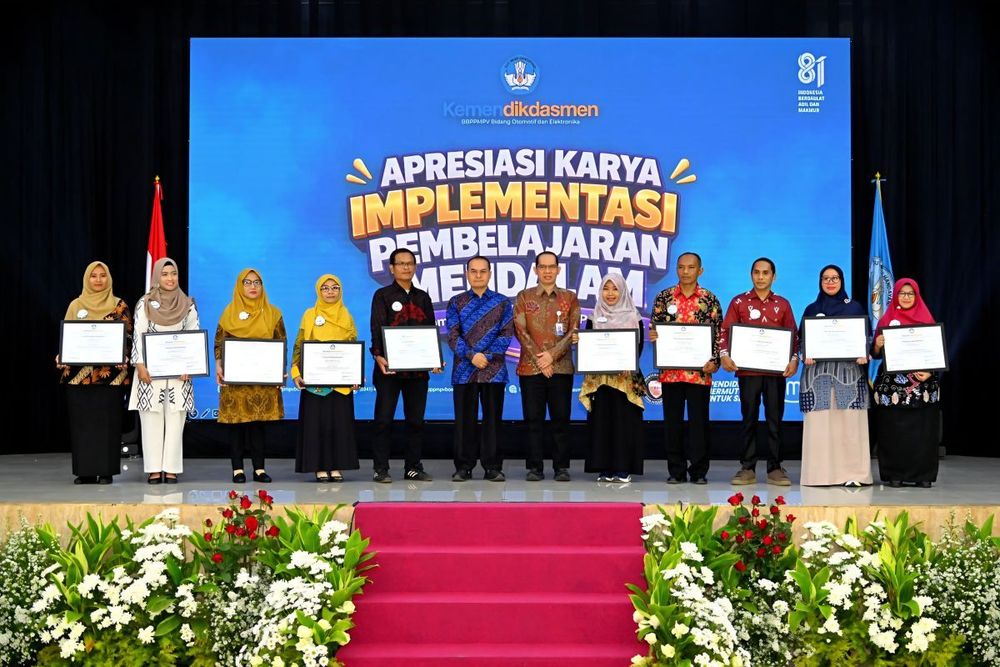
The Ministry hosted Deep Learning Implementation Awards for vocational high schools in Malang, East Java, on Monday, recognizing teachers who address classroom challenges, develop new teaching strategies and share best practices that can be replicated across Indonesia's education system.
Tatang Muttaqin, director general of secondary and special education, said strengthening Deep Learning is vital to transforming education and making vocational education more adaptive. The awards recognize projects that demonstrate concrete impact on students, evaluating the entire learning process from identifying problems and choosing teaching methods to measuring outcomes.
The program, held from July 22 to August 9, 2026, involved 250 schools trained in 2025 and recognized the top 10 projects across multiple categories. The initiative focuses on vocational education, a significant sector with approximately 5.06 million students enrolled in more than 13,000 vocational schools specializing in fields including tourism, business, maritime industries, machinery, technology and engineering, health, arts and crafts, ICT, agro-business and agro-technology.
Addressing educational quality challenges
The Deep Learning initiative responds to persistent challenges in Indonesia's education system. In the PISA 2022 assessment, Indonesian students scored 359 in reading, 366 in mathematics, and 383 in science, compared to OECD averages of 476, 472, and 485 respectively. Despite these below-average scores, Indonesia showed resilience during the COVID-19 pandemic with a smaller decline than the international average.
The transformation effort faces substantial implementation challenges across a system managed by two ministries and 552 subnational governments, with 3.3 to 3.4 million teachers responsible for instruction. The initiative aims to enhance learning outcomes, make schooling more joyful, and empower students and teachers with greater autonomy and flexibility.
Muhammadiyah, where Mu'ti serves as Secretary-General, operates more than 3,000 schools and over 170 universities in Indonesia, providing the minister with extensive institutional experience in education management and reform implementation.