
Deputy Minister urges university consortiums to tackle regional development challenges
Deputy Minister of Higher Education Fauzan called on universities to form consortiums addressing local issues during a meeting at LLDikti Region XVII. He cited successful examples from East Nusa Tenggara where 27 universities collaborate on stunting and poverty reduction.
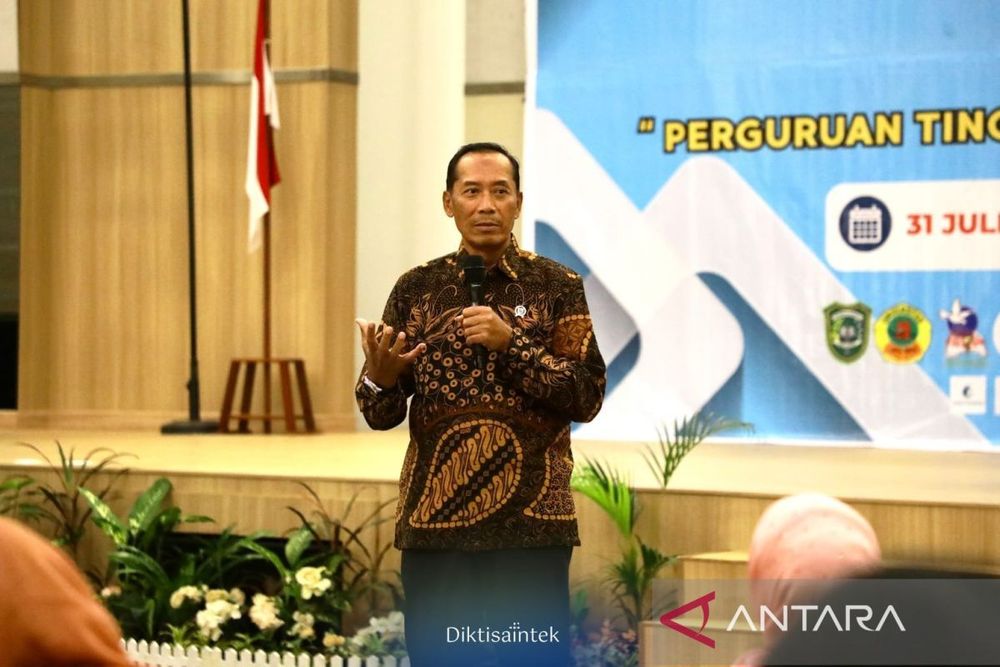
Deputy Minister urges university consortiums to tackle regional development challenges
Deputy Minister of Higher Education, Science, and Technology Fauzan has urged universities across Indonesia to establish consortiums as collaborative platforms to address pressing regional development challenges, speaking at the 2026 Higher Education Leadership Coordination Meeting on Friday.
The meeting took place at the Higher Education Service Institution (LLDikti) Region XVII of Riau and the Riau Islands, the newest coordinating body for higher education in Indonesia, officially established on October 13, 2023. The institution serves 151,499 students across both provinces and provides guidance to public and private universities in the region.
Fauzan emphasized that while higher education governance has shown positive developments in recent years, universities must strengthen their contribution to society by continuously evaluating and enhancing their role in addressing real community challenges.
Strategic asset for human development
The deputy minister described higher education institutions as strategic assets that serve as centers for developing human resources. He argued that this capacity should be directed toward solving actual problems faced by local communities rather than operating in isolation.
Fauzan specifically highlighted the development potential and challenges in Riau and the Riau Islands provinces. Riau's economy ranks as the sixth largest nationally, while the Riau Islands recorded the third highest economic growth in Indonesia during the third quarter of 2025. Both provinces also posted a Human Development Index of 80.53, ranking third highest nationally.
However, significant challenges remain. The unemployment rate in the Riau Islands stood at 6.89 percent as of February 2025, showing only marginal improvement from the previous year and remaining among the highest in Indonesia. The deputy minister stressed that economic growth must be accompanied by stronger job creation.
Addressing inter-regional disparities
Inter-regional disparities present another major concern. In Riau, the poverty rate in the Meranti Islands reaches 23.15 percent, compared to just 3.14 percent in Dumai City. Similarly, in the Riau Islands, Natuna District records an 8.06 percent poverty rate while Batam City stands at 4.03 percent.
Health challenges are equally pressing. The prevalence of stunting in Riau rose sharply from 13.6 percent in 2023 to 20.1 percent in 2024, exceeding the World Health Organization threshold for public health concern.
Fauzan argued that such complex development opportunities and challenges cannot be addressed by individual universities working alone. He believes various expertise, programs, resources, and facilities can be brought together through university consortiums working toward common goals.
This consortium is actually building an ecosystem to advance higher education while simultaneously contributing to regional development.
Successful model in East Nusa Tenggara
The deputy minister cited a consortium of 27 universities in East Nusa Tenggara (NTT) as a successful model. The province historically faced one of Indonesia's most severe stunting problems, with rates reaching 42.6 percent among children under five in 2018 and remaining the highest nationally at 37 percent as of 2024.
Through the Thematic Real Work Lecture program for Stunting Families, thousands of students are deployed to villages under faculty guidance while conducting research that local governments can utilize. This mandatory community service initiative combines academic learning with practical problem-solving, allowing students to identify and address development challenges directly in communities.
Fauzan explained that research conducted through these programs focuses on regional problems, enabling graduates to submit dissertations that serve as foundational recommendations for regional policymaking.
The consortium approach extends beyond the NTT example. The Kosabangsa program, managed by the Ministry of Higher Education, Science, and Technology, involves 75 implementing universities and 46 partner universities working on regional development challenges including stunting, poverty, and strengthening local economies in underdeveloped regions. The Eastern Indonesia Trilateral Consortium, established with universities including University of Mataram, Udayana University, and Nusa Cendana University, focuses on poverty eradication, stunting, island tourism development, and food security.
The deputy minister's call reflects a strategic shift toward positioning universities as active participants in solving Indonesia's development challenges through coordinated, collaborative efforts tailored to regional needs.