
Indonesia champions digital education transformation with launch of Bungo Pintar app
Deputy Minister Fajar Riza Ul Haq calls for digital integration in schools as Bungo District launches new education platform, while national super app Rumah Pendidikan wins global recognition.
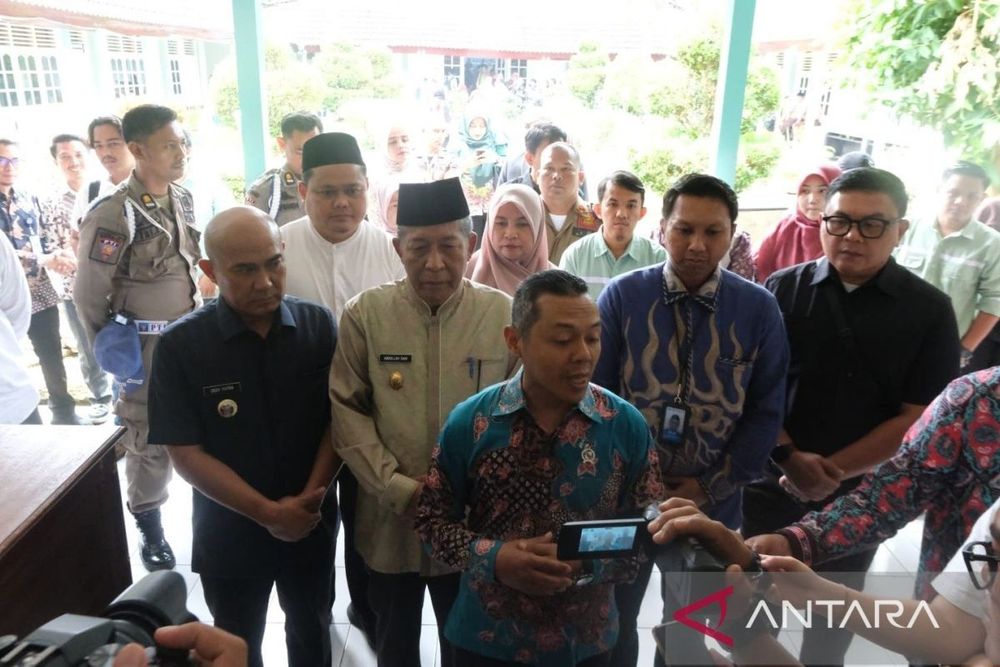
Deputy minister urges digital transformation in education sector
Second Deputy Minister of Primary and Secondary Education Fajar Riza Ul Haq has called for accelerated digital transformation across Indonesia's education sector, emphasizing the need to strengthen innovation in schools through technology integration.
Speaking at the launch of the Bungo Pintar application at the Regional Development Planning Agency office in Bungo District, Jambi Province, on Friday, Haq highlighted the alignment between local digital initiatives and national education policy under President Prabowo Subianto's administration.
"This digital innovation is very fitting and in line with what we are pursuing at the Ministry, namely strengthening digital-based learning innovation," Haq stated during the event in the district of approximately 381,000 residents, established in 1999 when the former Bungo Tebo Regency was divided.
National platform integration effort
The deputy minister revealed that by the end of 2024, the Ministry had recorded more than a thousand applications registered across its departments. Following directives from Minister Abdul Mu'ti, these were consolidated into a single platform. By January 2025, the Ministry successfully integrated 986 applications into Rumah Pendidikan, a super app officially launched at the Pusdatin office in Tangerang Selatan, Banten.
"Rumah Pendidikan is a super app that combines hundreds of applications that have been produced and used at the Ministry of Education. We encourage regional applications, such as Bungo Pintar, to be integrated with or support the Rumah Pendidikan ecosystem," Haq explained.
The platform now serves over 6.9 million users and integrates 66 educational services, providing 4,843 free learning resources. Notably, it supports more than 104,000 teachers in 3T regions—Indonesia's frontier, outermost, and disadvantaged areas—addressing educational equity challenges.
Haq urged teachers and education stakeholders to download and actively use Rumah Pendidikan as their primary digital learning resource, reflecting the government's broader push for technology adoption following the acceleration of digital education initiatives after the COVID-19 pandemic.
Global recognition for Indonesian innovation
The deputy minister highlighted the international success of Rumah Pendidikan, which won first place at the World Summit on the Information Society in Geneva, Switzerland. The platform received the prestigious award on July 9, 2026, after competing against 1,596 digital innovations from 122 countries.
The recognition, presented by the International Telecommunication Union, marks a historic milestone as Indonesia's first victory in the e-Government category since the WSIS Prizes were established in 2012. The rigorous selection process involved approximately 2.2 million public votes, with only 360 projects shortlisted as best nominees across 18 categories.
"The international recognition proves that Indonesia's education digital transformation is progressing well and can serve as a model for the world," Haq said.
Local commitment to transparency
Deputy Governor of Jambi Abdullah Sani emphasized that Bungo Pintar represents more than technological advancement. "The digital innovation is not merely about keeping up with the times, but reflects a real commitment to cutting bureaucracy and opening up transparent access to education information," he stated.
"The presence of Bungo Pintar opens the door wide for education transparency, easier access to information, and faster improvement in the quality of human resources in Bungo District," Sani added.
The initiative aligns with national education reform programs like Merdeka Belajar, which emphasize digital integration in teaching and learning. Indonesia's online education market, valued at USD 1.14 billion in 2024, is projected to grow at 24.5 percent annually to reach USD 8.21 billion by 2033, driven by government-backed digital education programs and rising internet penetration.