
South Kalimantan Police Deploy Innovative Starch-Based Suppressant to Combat Peatland Fires
Police in South Kalimantan are testing a cassava starch-based fire suppressant and peatland injection methods to control forest fires threatening Banjarbaru's airport, as Indonesia faces its worst wildfire season in years with millions at health risk.
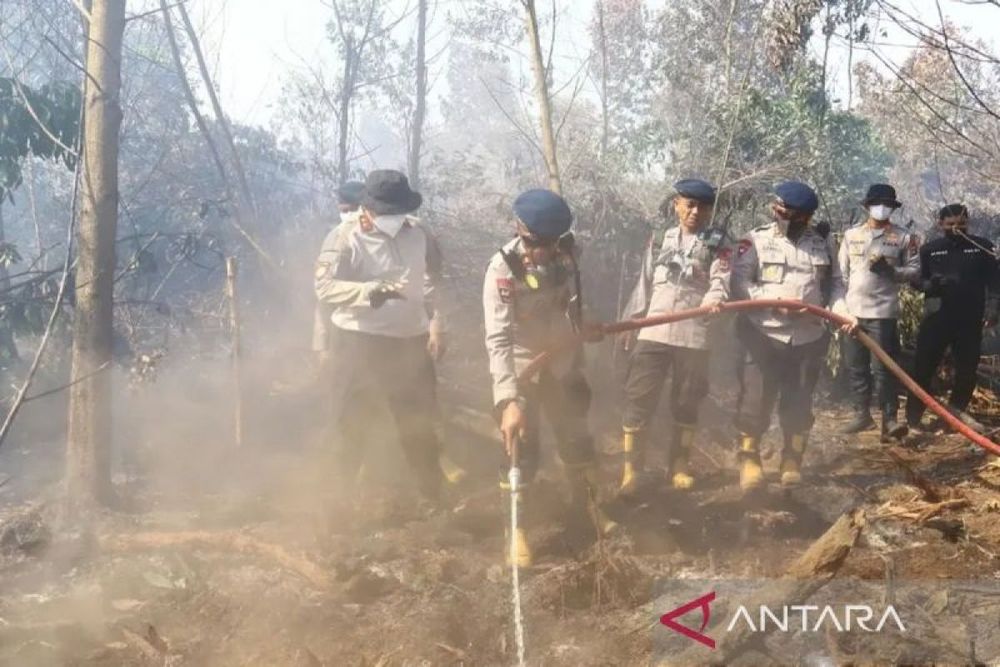
Wildfires - South Kalimantan police test starch-based fire suppressant
South Kalimantan police have begun field testing an innovative starch-based liquid fire suppressant as part of intensified efforts to control peatland fires threatening air operations at Syamsudin Noor International Airport in Banjarbaru. The intervention comes as the region grapples with severe wildfire conditions that have already disrupted aviation and placed millions of residents at health risk.
The urgency of the situation became apparent on August 26, when ten flights at the airport were disrupted due to thick haze from nearby fires. Visibility plummeted to just 200 meters at 06:30 WITA before improving to 1,500 meters later in the day, highlighting the critical need for effective fire suppression near the airport.
Innovative Suppression Formula
Police Chief Inspector General Rosyanto Yudha Hermawan announced Friday that trials of the flour-based formula, supplied directly by National Police headquarters, have shown promising results in slowing fire spread. The suppressant combines cassava starch with ammonium polyphosphate, water and a wetting agent to create a specialized formula for peatland conditions.
The mixture works through multiple mechanisms. Water absorbs heat and lowers the temperature of combustible vegetation, while cassava starch improves adhesion, allowing the liquid to remain on the ground longer. This starch component also helps distribute moisture more evenly across the landscape, keeping peat surfaces wet for extended periods and reducing fire spread risk. The ammonium polyphosphate acts as a fire retardant, coating vegetation to prevent ignition.
Underground Fire Challenge
The specialized approach addresses a particular challenge of peatland fires. When dried, peat transforms into a thick layer of subterranean organic fuel that ignites easily and burns underground, making conventional surface water application largely ineffective. According to Indonesia's Ministry of Forestry, approximately 50 percent of fire-affected areas in 2026 have been located within peatland ecosystems, which produce far greater emissions than fires on mineral soils because the carbon-rich organic layers themselves are consumed.
To complement the starch-based suppressant, South Kalimantan police are working with the Indonesian Palm Oil Association to implement a peatland injection method. This technique pumps water mixed with foam directly into soil to depths of up to two meters. The foam acts as a wetting agent, improving moisture penetration into the peat. Trials have demonstrated significant drops in soil temperatures, with areas within roughly one meter of injection points becoming cooler and underground fire sources being suppressed.
Strategic Deployment Areas
The police forensic laboratory is currently developing capacity to reproduce the wetting-liquid formula for wider deployment. Yudha stated that expanded production would begin immediately, with priority deployment to three critical areas: Guntung Damar, Liang Anggang protected forest and Pengayuan. These locations were selected based on their proximity to the airport, with hotspot fires concentrated in the Ring 1 zone, including areas in Syamsudin Noor Urban Village and Guntung Payung Urban Village.
Regional Crisis Context
The South Kalimantan initiative unfolds against a backdrop of severe regional fire conditions. More than 28,000 hotspots were detected within Indonesia's peat hydrological units during the first half of 2026, with nearly 93 percent of the country recording low rainfall by mid-July and almost 73 percent of seasonal climate zones entering dry season. West Kalimantan alone has recorded over 38,000 hectares burned year-to-date, with thousands of active hotspots through August, positioning it at the center of Indonesia's current wildfire crisis.
Indonesia's weather agency has warned that strengthening El Niño conditions could further suppress rainfall and increase drought risk, particularly in highly flammable peatland landscapes, with the critical period expected from August to September. The health ministry reported that 3.4 million people living in seven provinces on Borneo and Sumatra were at risk of respiratory infections due to wildfire smoke exposure as of August 26.
The transboundary nature of peatland fire smoke compounds the urgency. Wildfire emissions produce toxic fine particulate matter capable of entering human lungs and bloodstream, with pollution traveling hundreds of kilometers and affecting air quality across Southeast Asia, making local fire suppression efforts critical not only for domestic aviation and health but for regional air quality as well.