
Critically endangered orangutan rescued from wildfire zone in West Kalimantan
Indonesian authorities evacuated a weak Bornean orangutan from a smoke-filled oil palm plantation in Ketapang District as wildfires continue to ravage the region, threatening one of the world's most endangered great ape populations.
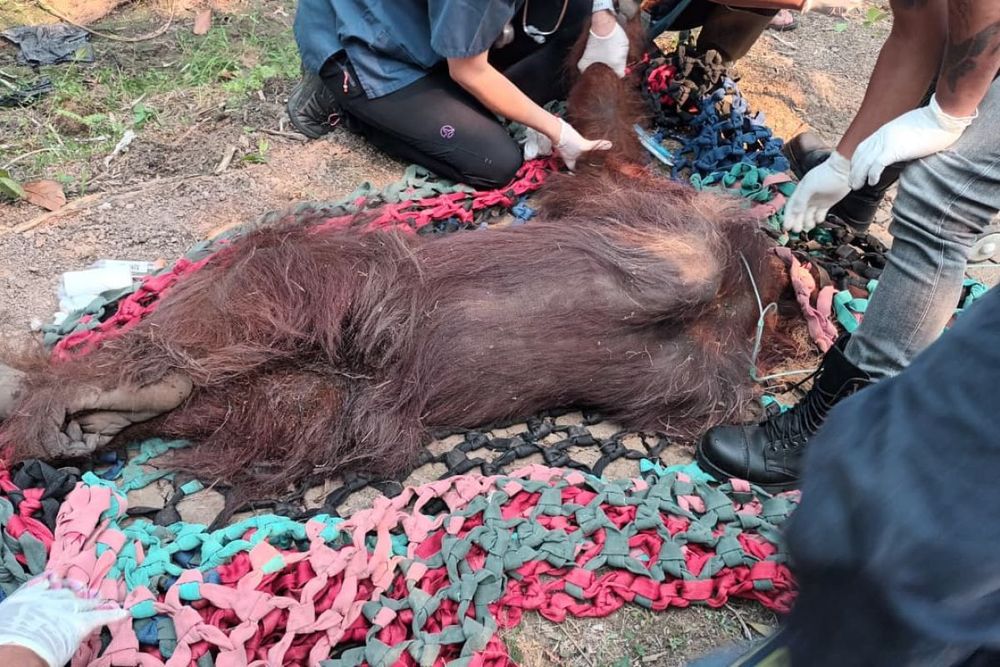
Critically endangered orangutan rescued from wildfire zone in West Kalimantan
The Ministry of Forestry has evacuated a Bornean orangutan found in weak condition near a community oil palm plantation in Ketapang District, West Kalimantan, as wildfires continue to engulf critical wildlife habitat across the province.
The adult male orangutan was discovered on Sunday, August 30, at Sempurna 1 Hamlet in Kuala Satong Village, Matan Hilir Utara Sub-district. Rescue teams from the West Kalimantan Natural Resources Conservation Agency and the Indonesian Rehabilitation Initiative Foundation responded after receiving a report at 7:27 a.m. local time.
Critical conservation status
The Bornean orangutan, classified as Critically Endangered on the IUCN Red List since 2016, faces mounting pressures from habitat loss and environmental disasters. The species has experienced an 80 percent population decline since 1973, with current estimates placing the global population at approximately 104,700 individuals. The slow reproductive cycle of the species compounds conservation challenges, as females do not give birth until 15 or 16 years of age and produce only one offspring every six to seven years.
Murlan Dameria Pane, head of the West Kalimantan Natural Resources Conservation Agency, emphasized the broader threat wildfires pose to regional wildlife.
Fires not only impact land cover but also have the potential to put pressure on wildlife in the surrounding area,she said in an official statement released Monday.
Rescue and medical response
The rescued orangutan had been monitored by field teams near the rescue site on August 16, when it was still actively moving. By Sunday morning, however, the animal was found in severely weakened condition. A veterinarian administered anesthesia at 9:13 a.m. to safely examine and evacuate the animal, then provided oxygen and intravenous fluids. Medical teams collected blood, feces, and hair samples for further testing and implanted a microchip for identification and monitoring.
At the time of rescue, fires were burning in the forested area surrounding the oil palm plantation, generating heavy smoke. Rescue teams found no water source near the location. Based on initial observations, the orangutan's condition was suspected to be related to smoke exposure and dehydration, though further medical examinations are needed to determine the full extent of its health status.
Scientific research has documented that wildfire smoke causes Bornean orangutans to increase rest time, decrease travel distance, and experience increased fat catabolism and potential immune system impacts, which may explain the animal's deteriorated condition.
Severe wildfire season
The rescue occurred amid one of West Kalimantan's most severe wildfire seasons in recent years. Over 38,000 hectares have burned in the province year-to-date through August 2026, with thousands of active hotspots detected throughout the month. The area burned has already surpassed that recorded during the El Niño seasons of 2019 and 2023, though it remains below the devastating 2015 fire levels that caused a severe regional haze crisis.
Ketapang District is home to approximately 2,500 orangutans in the Sungai Putri production forest area, a population increasingly isolated by oil palm plantations and infrastructure development. The region's habitat fragmentation places additional stress on orangutan populations already struggling with wildfire impacts.
After the anesthetic effects subsided and the orangutan was deemed fit for transport, rescue teams moved it to the Indonesian Rehabilitation Initiative Foundation center for further observation and medical treatment.
Safety guidance for residents
The Ministry of Forestry urged people who encounter orangutans or other wildlife near residential areas, plantations, or fire-affected locations not to handle the animals themselves. Residents should keep their distance, avoid disturbing or feeding the animals, and immediately report sightings to conservation authorities or local forestry officials.