
Nearly 2,000 tons of relief supplies delivered to East Nusa Tenggara earthquake survivors
Indonesia's disaster agency reports 98 percent of aid distributed to 188,161 evacuees following the magnitude 7.7 earthquake that struck Flores Island on August 15, killing 111 people and damaging over 1,300 schools.
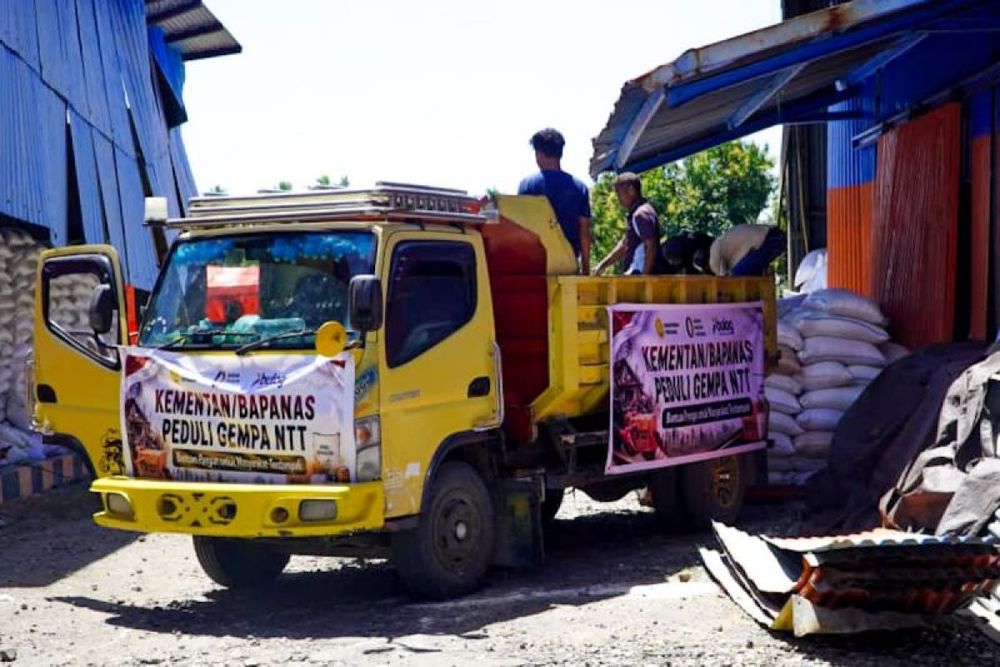
Nearly 2,000 tons of relief supplies delivered to East Nusa Tenggara earthquake survivors
Indonesia's National Disaster Mitigation Agency has delivered approximately 1,954 tons of humanitarian assistance to communities devastated by the magnitude 7.7 earthquake that struck East Nusa Tenggara province two weeks ago, with distribution efforts reaching 98 percent completion.
The earthquake struck Flores Island on August 15 at 5:58 AM local time, with its epicenter located 68 kilometers north-northwest of Ende at a depth of 10 kilometers. The seismic event, caused by movement on the Flores back-arc thrust fault, triggered a tsunami that reached a maximum height of 1.61 meters and was followed by more than 230 aftershocks throughout the first day, the strongest measuring magnitude 6.2.
BNPB Acting Head of the Disaster Data, Information, and Communication Center Berton SP Panjaitan announced Sunday that relief supplies totaling 1,953,849 kilograms had been received and distributed between August 15 and 30. The agency, established in 2008 and reporting directly to Indonesia's president, coordinated the logistics through distribution centers in Maumere and Labuan Bajo.
Multi-channel distribution network
The relief operation employed diverse transportation methods to overcome challenging terrain and damaged infrastructure. The Indonesian Air Force transported 565 tons by air, while the Ready-to-Use Fund contributed 1,065 tons. Maritime shipments accounted for 179 tons, and land transport delivered 145 tons by truck.
Five of the province's 15 airports sustained damage during the earthquake, though runways remained operational with most destruction concentrated in terminal buildings. On Sunday, an additional 21 tons of supplies departed from the Halim Perdanakusuma National Logistics Support Post in East Jakarta, arriving in Labuan Bajo at 8:57 AM. The shipment included basic food packages, medicines, instant noodles, mineral water, rice, toiletries, baby supplies, clothing, and stationery.
Evacuee numbers decline as relief continues
The number of displaced residents decreased by 4,142 people between August 29 and 30, bringing the total to 188,161 evacuees. Nagekeo District, located closest to the epicenter, shelters 50,574 people despite access challenges created by landslides that blocked roads and disrupted communications. Manggarai District hosts 50,556 evacuees, representing the largest concentration alongside Nagekeo.
Significant evacuee populations also remain in East Manggarai, West Manggarai, Ngada, Sikka, and Ende districts. The ongoing displacement reflects the severity of damage across the region, where Indonesia's position on the Pacific Ring of Fire makes it one of the world's most disaster-prone nations due to converging tectonic plates.
Casualties and infrastructure damage
The official death toll stood at 111 as of August 28, with Manggarai District recording 45 fatalities, East Manggarai reporting 38 deaths, and Nagekeo documenting 13 casualties. Beyond the immediate human toll, the earthquake damaged 1,378 schools, affecting 177,678 students across the affected region and highlighting the long-term challenges facing the province's 5.66 million residents.
The disaster echoes the region's seismic history, as a magnitude 7.5 earthquake struck the same area in 1992, causing extensive destruction and demonstrating Flores Island's recurring vulnerability to major earthquakes.