
Indonesia calls for provincial task force to coordinate earthquake relief in East Nusa Tenggara
Coordinating Minister Pratikno urges East Nusa Tenggara to establish a regional disaster response task force following Saturday's magnitude 7.7 earthquake that killed 68 people and displaced thousands across Flores Island.
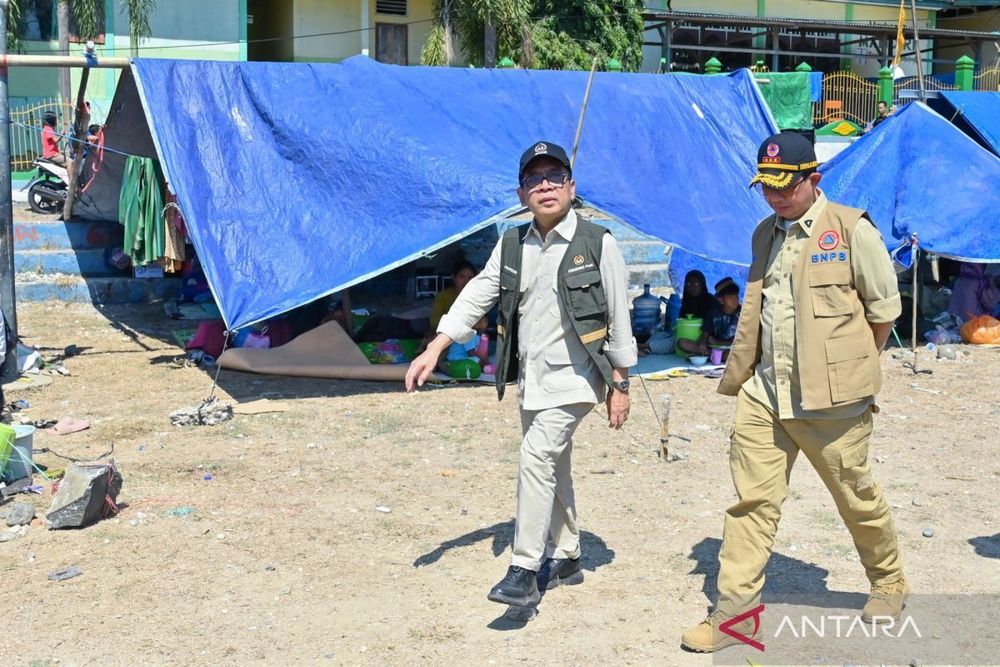
Provincial task force needed for coordination
Indonesia's Coordinating Minister for Human Development and Culture Pratikno has called on East Nusa Tenggara provincial authorities to form a dedicated disaster response task force to accelerate relief operations following Saturday's devastating magnitude 7.7 earthquake that struck off the coast of Flores Island.
The shallow tectonic earthquake, which occurred at 5:58 AM local time on August 15 at a depth of 10-15 kilometers with its epicenter approximately 68 kilometers north-northwest of Ende city, has claimed at least 68 lives across seven districts on Flores and left 213 people injured as of Monday afternoon.
East Nusa Tenggara, a province encompassing over 653 islands with a total land area of 46,378 square kilometers and a population of approximately 5.7 million people, faces significant coordination challenges in delivering aid to affected communities. Flores, the province's largest island with about 2 million inhabitants spread across eight regencies, bore the brunt of the disaster.
We call for the immediate formation of a regional task force, considering that evacuees are sheltering at multiple locations. Furthermore, we observe that the basic needs of evacuees must still be met.
The minister emphasized that a provincial-level task force would strengthen coordination across the affected areas, enable authorities to better identify survivors' specific needs, consolidate relief supplies from the central government, and facilitate aid distribution to hard-to-reach locations.
Death toll rises across multiple districts
According to the National Disaster Mitigation Agency (BNPB) Directorate of Operations Control, Manggarai District reported the highest casualties with 26 deaths, followed by East Manggarai with 24, Nagekeo with eight, Sikka with four, and two deaths each in Ende, West Manggarai, and Ngada districts.
The earthquake also triggered small tsunamis at 16 locations across four Indonesian provinces—East Nusa Tenggara, West Nusa Tenggara, South Sulawesi, and Southeast Sulawesi—according to Indonesia's Meteorology, Climatology and Geophysics Agency (BMKG). A tsunami warning issued immediately after the quake urged residents to evacuate beaches and seek higher ground, but was lifted approximately three hours later after no significant tsunami threat materialized.
More than 230 aftershocks occurred throughout Saturday, adding to the challenges facing displaced residents and emergency responders.
Multi-agency response mobilized
Pratikno underscored that the provincial task force would complement ongoing relief operations by central government agencies rather than replace them. The National Disaster Mitigation Agency, established in 2008 and directly responsible to the President of Indonesia, has been coordinating preparedness, prevention, mitigation, and response efforts across the affected region.
The Ministry of Social Affairs and Ministry of Health have deployed teams to provide evacuation tents, establish emergency public kitchens, and deliver medical services to survivors.
More than 1,800 military and police personnel have been deployed to affected areas, with the government mobilizing helicopters, aircraft, and sea vessels to distribute over 100 metric tons of aid. BNPB logistics warehouses are preparing 50,000 aid packages for delivery to displaced communities.
The central government will continue assisting local administrations with relief operations throughout the emergency response period to ensure optimal and equitable services for all communities affected by the earthquake.
Region's earthquake vulnerability
The disaster highlights the seismic vulnerability of Indonesia, which sits on the Pacific Ring of Fire and is one of the world's most seismically active countries. The archipelago nation of more than 270 million people spread across roughly 17,000 islands experiences frequent earthquakes and volcanic activity.
The same stretch of Flores coastline was struck by a magnitude 7.7 earthquake in December 1992 that killed more than 2,500 people when the earthquake and resulting tsunami devastated the island, underscoring the region's history of major seismic events and the critical importance of coordinated disaster preparedness and response systems.