
Indonesia mobilizes inter-agency response as forest fires scorch over 107,000 hectares nationwide
State Secretary Minister Prasetyo Hadi announces coordinated government efforts to combat forest fires across Indonesia, with critical blazes in Kalimantan and East Java's Bromo Tengger Semeru National Park as the country faces its most severe fire season in years.
Indonesia mobilizes inter-agency response as forest fires scorch over 107,000 hectares nationwide
The Indonesian government has launched a coordinated multi-agency response to combat forest and land fires that have already burned more than 107,000 hectares across the archipelago in the first half of 2026, double the area consumed by flames during all of 2023.
State Secretary Minister Prasetyo Hadi announced on Monday that authorities are working closely across government departments to extinguish fires and prevent their spread, particularly in West Kalimantan, Central Kalimantan, and at Bromo Tengger Semeru National Park in East Java.
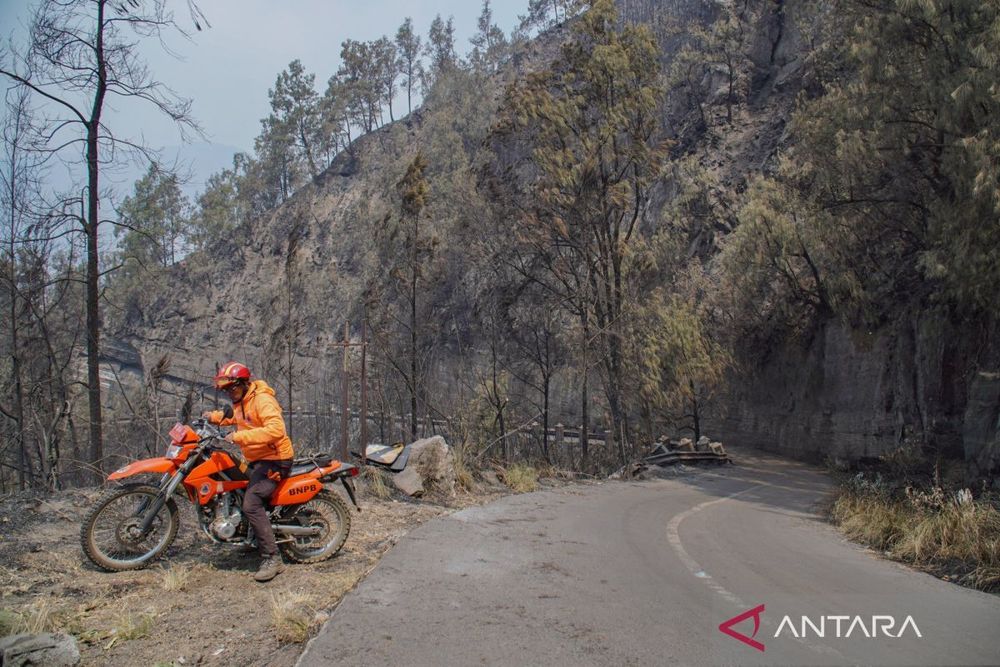
The blaze at Bromo Tengger Semeru, which ignited on August 3, had consumed approximately 899 hectares of savanna and forest by August 11, destroying expanses of dry grassland, vegetation and protected edelweiss flowers. The 50,276-hectare park, Indonesia's only conservation area featuring a sand sea, has been closed to tourists since August 8 to ensure public safety and facilitate firefighting operations.
We are coordinating with the East Java provincial government, the Forestry Ministry, and other relevant authorities to make every possible effort to extinguish the fires and prevent them from spreading further
The government has convened coordination meetings with the Meteorology, Climatology, and Geophysics Agency (BMKG) to plan weather modification operations. These operations involve deploying specialized aircraft to spray salt compounds such as sodium chloride into cloud formations to induce rainfall, though the technique requires the presence of rain-bearing clouds to be effective.
Hadi acknowledged that weather modification cannot reach every hotspot but emphasized that authorities are maintaining close surveillance of the situation. The government is also deploying water-bombing equipment, helicopters, and aircraft to tackle the fires, in accordance with directives from President Prabowo Subianto.
Critical months ahead as El Niño looms
The Meteorology, Climatology, and Geophysics Agency has warned that August and September 2026 are expected to be the most critical months for fire risk, particularly on the islands of Sumatra and Kalimantan. The agency predicts a 50-80 percent chance of El Niño conditions developing in the second half of 2026, potentially lasting through early 2027.
The early and severe start to the 2026 fire season was evident by February, when burned areas had already reached 32,637 hectares, approximately 20 times higher than the same period in 2025. Fire monitoring systems detected more than 23,500 hotspots in peatland areas since January.
Forestry Minister Raja Juli Antoni said President Subianto had directed all government agencies to safeguard the public against forest and land fires during the dry season.
President Prabowo Subianto's directive is clear: the government is ready to protect our citizens from the threat of forest and land fires. The state is present to prevent forest fires
The minister warned that the impact of forest and land fires extends beyond environmental damage, as they can trigger acute respiratory infections, force school closures, hamper economic activities, and disrupt airport operations.
Comparing to previous fire seasons
In 2023, Indonesia experienced forest and land fires covering 1.16 million hectares, a fivefold increase from 2022, largely attributed to El Niño conditions. Despite the challenging outlook, Antoni expressed optimism that Indonesia can contain forest and land fires this year.
Hopefully, the number of forest and land fires this year will be far lower than in 2023, with minimal impact on the community
Human activities have been identified as the primary driver of Indonesia's fire crisis. In 2023, such activities contributed to 98 percent of all fires in the country, primarily due to burning for land clearing for crops, particularly oil palm plantations.