
Indonesia activates 9 emergency health centers following magnitude 7.7 East Nusa Tenggara earthquake
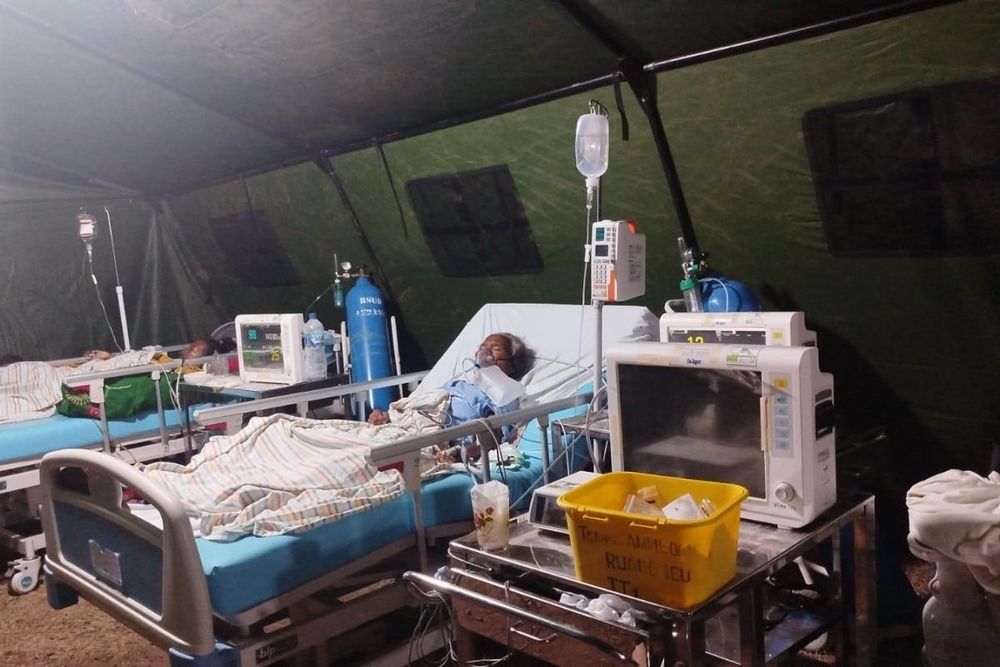
Indonesia's Health Ministry has established nine emergency operations centers across East Nusa Tenggara after a devastating earthquake struck Saturday morning, deploying medical teams and field hospitals to restore healthcare capacity in the disaster zone.
Indonesia activates 9 emergency health centers following magnitude 7.7 East Nusa Tenggara earthquake
Indonesia's Ministry of Health has activated nine emergency operations centers across East Nusa Tenggara following a magnitude 7.7 earthquake that struck on Saturday, August 15, 2026, at 5:58 a.m. local time. The epicenter was located 68 kilometers north-northwest of Ende at a depth of 10 kilometers.
Health Minister Budi Gunadi Sadikin announced on Tuesday that authorities are prioritizing the rapid restoration of regional hospital services to handle expected surge capacity, with a target of returning all hospitals in affected municipalities to full operational status within one week.
Aftershocks and tsunami warnings
The earthquake and its aftermath have created a complex emergency across the province of approximately 5.61 million people. As of August 17, more than 1,576 aftershocks with magnitudes ranging from 1.9 to 6.2 have been recorded, with 16 exceeding magnitude 5.0 and 46 being felt by residents. The initial quake triggered tsunami warnings, with waves measuring 1.61 meters observed in Riung, Ngada regency, and 0.94 meters in Maurole, Ende Regency. The warning was lifted approximately three hours after the quake.
Damage assessment
The disaster has impacted eight districts and municipalities: Sikka, Ende, Nagekeo, Ngada, East Flores, and the three Manggarai regencies. More than 1,300 homes were damaged, with over two-thirds severely damaged, along with healthcare facilities, schools, and government offices according to National Disaster Mitigation Agency reports.
Healthcare response priorities
Priority is being given to essential care, including trauma surgery, maternal and pediatric services, and hemodialysis.
The main priority is ensuring all hospitals in affected districts and cities can return to optimal function to anticipate a potential surge in patients
Sadikin said.
The ministry has deployed crisis management teams and Emergency Medical Teams alongside field hospitals and emergency supplies to Sikka and Ende districts, which have populations of 337,010 and 280,330 respectively. The response addresses pre-existing healthcare capacity challenges in the region, where physician densities remain below the World Health Organization's recommended ratio of 1 doctor per 1,000 population.
Relief supplies and coordination
On Sunday, initial relief shipments arrived containing basic medicine packages, emergency surgical kits, 10 oxygen concentrators, two health post tents, and tens of thousands of protective gloves and masks. Eight additional field tents remain on standby for immediate dispatch.
The province's geography, consisting of numerous islands including Flores, Sumba, and the western half of Timor, presents significant transportation and access challenges for emergency response operations. Sadikin noted that health authorities are coordinating closely with the National Disaster Mitigation Agency and the National Search and Rescue Agency to maintain medical staffing, accelerate facility repairs, and stabilize regional healthcare networks.
Seismic context
Indonesia sits on the Pacific Ring of Fire, one of the most seismically active areas in the world, making it prone to frequent earthquakes and volcanic activity. The same stretch of coastline was struck by a similarly powerful earthquake in December 1992, when the quake and resulting tsunami killed more than 2,500 people on Flores, according to Indonesia's geophysics agency.