
Indonesia airlifts 20 tons of emergency supplies to earthquake-stricken East Nusa Tenggara
Defense Minister Sjafrie Sjamsoeddin personally coordinated the delivery of relief supplies by military aircraft to communities devastated by the magnitude 7.7 earthquake that struck Flores Island on August 15, killing 68 people and displacing thousands.
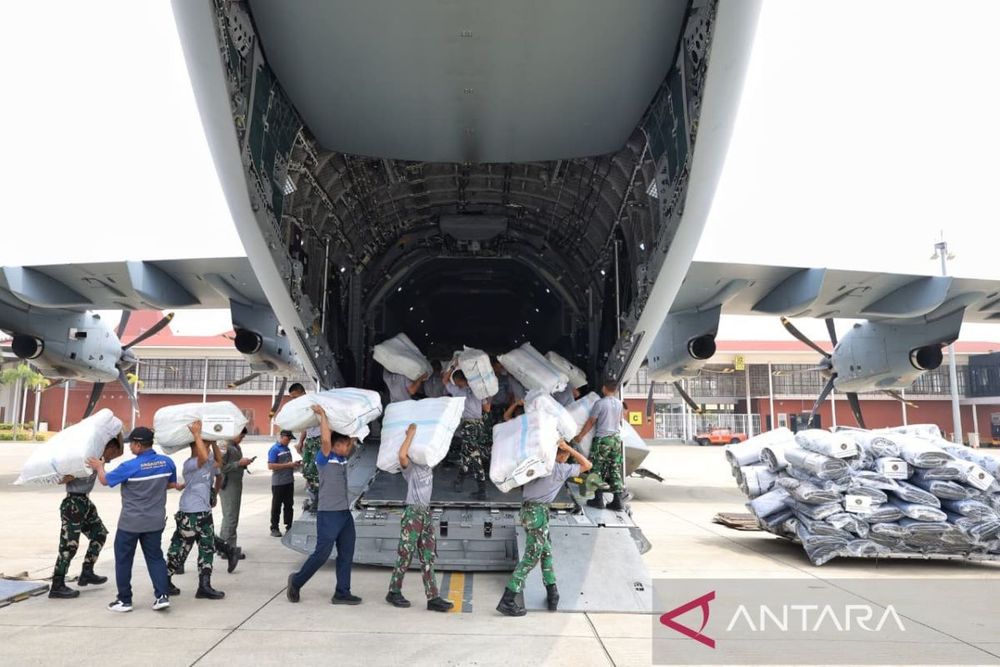
Indonesia airlifts 20 tons of emergency supplies to earthquake-stricken East Nusa Tenggara
Indonesia's Defense Ministry has deployed 20 tons of logistical aid and emergency equipment to East Nusa Tenggara (NTT) following the devastating magnitude 7.7 earthquake that struck the region on August 15, 2026.
Defense Minister Sjafrie Sjamsoeddin personally coordinated the relief operation after participating in Monday's national ceremony marking the 81st Anniversary of Indonesia's Independence Day in Jakarta. The minister accompanied the aid shipment to the disaster zone, bringing his aides to visit affected areas and meet with survivors.
Earthquake details and tsunami warnings
The earthquake struck at 5:58 a.m. local time on August 15 at a shallow depth of 10 kilometers, with its epicenter located more than 30 kilometers northeast of Mbay in Nagekeo District. The shallow depth intensified the ground shaking, causing extensive damage across multiple districts on Flores Island.
Indonesia's Meteorology, Climatology and Geophysics Agency (BMKG) issued tsunami warnings for four provinces: East Nusa Tenggara, West Nusa Tenggara, South Sulawesi, and Southeast Sulawesi. Minor tsunami waves reaching up to 1.6 meters were detected in some coastal areas. More than 230 aftershocks followed throughout the day, with the strongest measuring magnitude 6.2, further complicating relief efforts.
Relief supplies and delivery
The relief supplies were transported aboard an Airbus A400M military transport aircraft that had participated in the Independence Day aerial parade over Jakarta. The aircraft, capable of carrying up to 37 tons of cargo, delivered 25 tents, 484 folding beds, 15 Starlink satellite internet kits, 700 ready-to-eat meal packages, 500 boxes of liquid milk, 10 solar cells, 35 field mosquito nets, 101 mattresses, 1,480 blankets, two reverse osmosis water purifiers, and 18 packages of medicines. Additional items included instant noodles, baby food, children's diapers, and sanitary pads.
Casualties and damage assessment
The National Disaster Management Agency (BNPB) reported that at least 157 houses were destroyed and nearly 200 others damaged. Approximately 2,000 villagers in Nagekeo regency initially fled to temporary shelters, with the number of displaced persons reaching about 5,000 by Sunday. As of Monday, the death toll had reached 68, with 213 people sustaining injuries.
Infrastructure damage has complicated relief operations. Five of East Nusa Tenggara's 15 airports sustained earthquake damage, though their runways remained usable with damage concentrated in terminal buildings. Two port facilities and two ferry facilities were also heavily damaged, making military aircraft essential for delivering aid to remote areas.
Government response
During his visit, Minister Sjamsoeddin inspected the 834/Wakanga Mere Infantry Battalion in Nagekeo District, calling on soldiers to provide maximum assistance to victims in evacuation efforts and recovery measures. He expressed hope that the Defense Ministry and the military would accelerate the post-disaster recovery process.
Indonesia has mobilized numerous state institutions to carry out coordinated disaster response measures, supported by more than 1,200 military personnel delivering tons of relief supplies to affected communities.
Historical context
The region has a history of devastating seismic events. The same stretch of Flores coastline was struck by a magnitude 7.7 earthquake in December 1992 that killed more than 2,500 people. The area between Flores and surrounding islands has recorded 79 earthquakes larger than magnitude 6.0 between 1900 and 2022, with eleven generating tsunamis.
Indonesia sits on the Pacific Ring of Fire, an arc of intense seismic activity stretching from Japan through Southeast Asia and across the Pacific basin. The archipelago nation experiences frequent earthquakes due to its location along multiple tectonic plate boundaries. The 2004 Indian Ocean earthquake and tsunami killed approximately 220,000 people throughout the region, about 170,000 of them in Indonesia.