
Whoosh high-speed rail maintains operations as Mount Anak Krakatau ash blankets region
Southeast Asia's first high-speed railway continues normal service between Jakarta and Bandung despite volcanic ash from Mount Anak Krakatau, implementing comprehensive safety monitoring across its 142-kilometer route while air travel faces major disruptions.
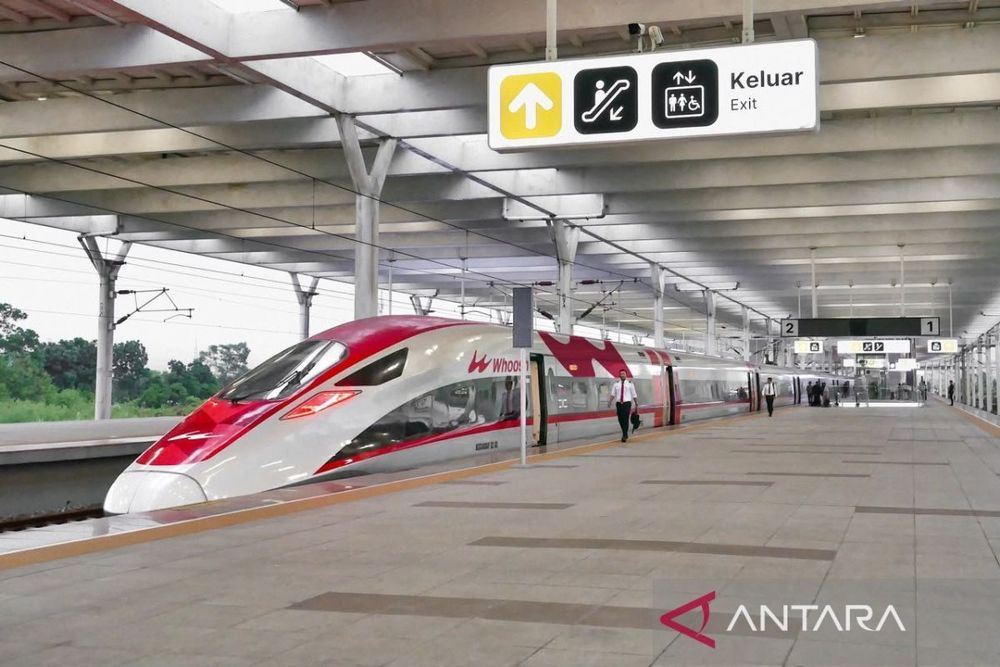
Whoosh high-speed rail maintains operations as Mount Anak Krakatau ash blankets region
The Whoosh high-speed railway linking Jakarta and Bandung maintained normal operations on Monday despite volcanic ash exposure from Mount Anak Krakatau, with operator PT Kereta Cepat Indonesia China (KCIC) implementing extensive safety protocols across the 142.3-kilometer corridor.
Eva Chairunisa, general manager of corporate secretary at KCIC, confirmed that comprehensive monitoring by operations, safety, rolling stock and infrastructure teams found no disruptions to the railway system, which has been Southeast Asia's first high-speed rail service since commencing commercial operations on October 2, 2023.
"Based on monitoring results so far, all Whoosh rolling stock and infrastructure are functioning normally and no problems have been found that disrupt operations. Whoosh continues to operate safely and normally, with passenger safety as the top priority," Chairunisa stated Monday.
Eruption impact and transport disruption
Mount Anak Krakatau, located in the Sunda Strait between Java and Sumatra approximately 40-50 kilometers from coastal populations, began a major eruption late on September 4 at approximately 11:07 PM local time. The eruption sent ash plumes soaring up to 15 kilometers above sea level, with ash particles detected at altitudes reaching 20,000 feet across Jakarta, Banten and West Java provinces including the Bandung area.
The volcanic event caused severe disruption to air travel, with eight airports including Jakarta's Soekarno-Hatta International Airport suspending operations over the weekend and stranding over 270,000 passengers according to Indonesia's Transport Ministry. The continued operation of the high-speed railway provided a critical alternative transportation link during the aviation shutdown.
The volcano has remained at Alert Level III (Siaga), the second-highest level on Indonesia's four-level volcanic warning scale, with heightened activity ongoing since July 2, 2026.
Comprehensive monitoring system
KCIC monitors the route through its Operation Control Center and direct track inspections, examining overhead catenary systems, power supplies, tracks, signaling systems and switches. The railway comprises 82.7 kilometers of elevated track, 42.78 kilometers of at-grade track and 13 tunnels spanning 16.82 kilometers.
Particular attention focuses on open sections with heightened volcanic ash exposure risk. Volcanic ash poses documented technical hazards to railway operations, including track circuit shunting malfunctions when ash thickness reaches 0.05mm and insulation flashover issues on electrical systems and overhead power lines.
Train drivers reported normal visibility along the corridor. The Whoosh trainsets, which use Chinese CR400AF electric high-speed train technology with a maximum operating speed of 350 km/h and capacity for 601 passengers across three classes, feature windshield wipers and fluid sprayers to maintain driver visibility if ash accumulates. Drivers will adjust speeds according to ground conditions and safety protocols if visibility degrades.
Infrastructure teams continue monitoring train air filters, closed-circuit television cameras tracking pantograph conditions, insulation components, overhead electrical systems, substations, signaling equipment and switches. All systems remain fully operational and unaffected by volcanic ash.
Risk assessment and passenger guidance
KCIC conducts a Volcanic Ash Risk Assessment guided by reports from the Meteorology, Climatology and Geophysics Agency (BMKG). The assessment will determine additional mitigation measures if volcanic ash intensity increases to levels potentially affecting operations.
The railway's Operation Control Center provides an additional safeguard, with monitoring systems generating alerts and automatically reducing operating speed if abnormal conditions are detected.
The operator advised passengers to wear masks and glasses, particularly in open station areas, maintain their health and follow staff instructions. Passengers should monitor updates through the Whoosh contact center and official social media channels as KCIC continues route assessment.
The high-speed service, which reduced travel time between Jakarta and Bandung from over three hours to 40-46 minutes, represents a significant regional connectivity improvement. Indonesia's disaster mitigation agency announced plans for weather modification measures including cloud seeding to encourage rainfall to help clear volcanic ash from affected areas.