
Indonesia seeks Chinese and Russian funding for Trans-Kalimantan railway expansion
Transportation Minister Dudy Purwagandhi announced Indonesia is pursuing domestic and international investment, including from China and Russia, to develop the Trans-Kalimantan railway network following President Prabowo Subianto's directive to accelerate railway expansion.
Indonesia seeks Chinese and Russian funding for Trans-Kalimantan railway expansion
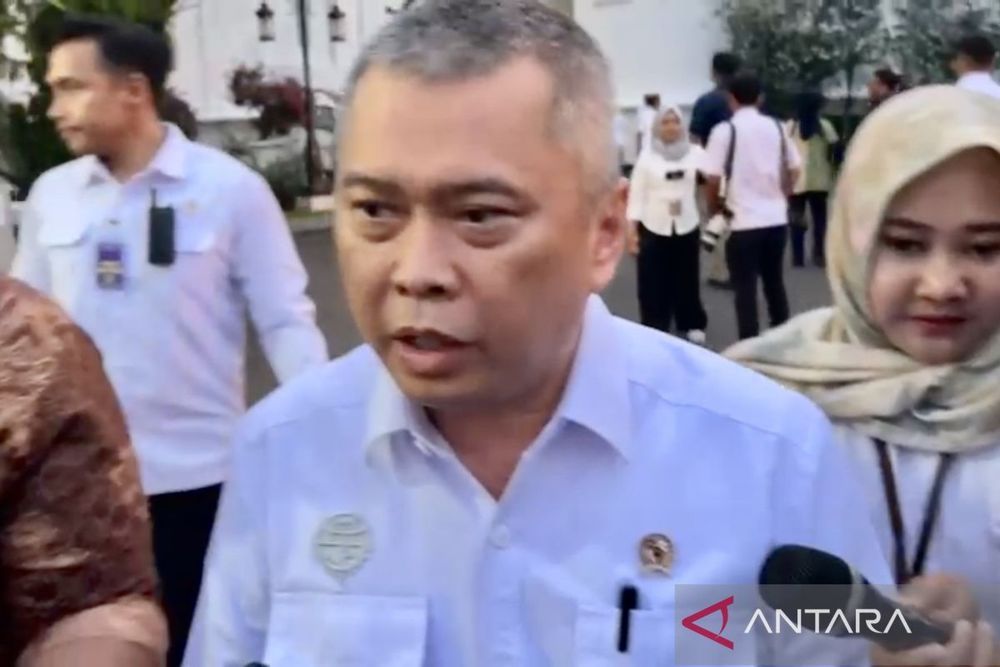
Indonesia is actively seeking investment from China, Russia, and domestic sources to finance the construction of the Trans-Kalimantan railway network, Transportation Minister Dudy Purwagandhi announced Thursday at the Presidential Palace in Jakarta.
The initiative follows President Prabowo Subianto's directive to the Ministry of Transportation and state railway operator PT Kereta Api Indonesia (KAI) to expedite railway development across Sumatra and Kalimantan. The president first issued instructions in November 2025 ordering KAI to complete 30 new rail extension points and train sets within one year, with the broader expansion targeted for completion during his first term.
Purwagandhi explained that KAI has prepared a comprehensive roadmap for both projects, though the sequence of implementation remains dependent on investor assessments and project viability. China and Russia have shown particular interest in the Kalimantan project, while KAI appears more focused on developing logistics infrastructure in Sumatra, according to the minister.
Investment landscape and foreign participation
The government has already established communication channels with potential foreign investors regarding construction plans. Indonesia's engagement with Russia on railway projects dates to June 2026, when Coordinating Minister for Infrastructure Agus Harimurti Yudhoyono met with Russian Transport Minister Andrey Nikitin in Moscow to discuss participation in railway developments across Sumatra, Sulawesi, and Kalimantan.
Russia's interest in Kalimantan railways has historical precedent. Russian Railways signed a memorandum of understanding with the Indonesian government in 2012 to build a 275-kilometer rail line in East Kalimantan province at an estimated cost of $2.4 billion, primarily for coal transportation. However, Russian Railways withdrew from the project in 2022, leading to its cancellation.
China's involvement in Indonesian rail infrastructure is already substantial. As the largest recipient of China's Belt and Road Initiative in Southeast Asia, Indonesia launched the Jakarta-Bandung high-speed railway, known as Whoosh, in October 2023. The flagship BRI project cost between $7.2 billion and $7.3 billion.
Ambitious expansion plans
PT Kereta Api Indonesia currently operates 6,945 kilometers of tracks across Sumatra, Java, and Sulawesi as of 2024. The company has a five-year plan running from 2025 to 2029 to expand the network from 7,000 kilometers to 10,500 kilometers.
The Trans-Sumatra railway represents an even more ambitious undertaking, estimated to span approximately 1,700 kilometers connecting Banda Aceh in the north to Bandar Lampung in the south. The project carries an estimated price tag of around Rp350 trillion, or approximately $25 billion. The first phase prioritizes a 380-kilometer rail link connecting Aceh province and Besitang in North Sumatra's Langkat regency, designed as a mixed-use system for both freight and passenger transport.
Current railway infrastructure in Sumatra remains fragmented, with active lines split into isolated corridors including Bandar Lampung-Palembang, Bandar Lampung-Lubuklinggau, and separate networks in North Sumatra and Aceh.
During last month's inauguration of the revitalized Semarang Tawang Station in Central Java, President Subianto emphasized that the Trans-Sumatra railway would take priority before moving forward with Trans-Kalimantan. He expressed hope that both projects could potentially proceed simultaneously if conditions allow.
The government plans to finance the Trans-Sumatra project without relying on the state budget, exploring alternative financing schemes including partnerships with BPI Danantara, the private sector, and foreign investors. A similar approach is expected for the Trans-Kalimantan development.
The president described both projects as mandatory targets for PT KAI and the Ministry of Transportation, underscoring the government's commitment to expanding railway connectivity beyond Java to support economic development across Indonesia's major islands.