
Indonesia offers incentives to attract Toyota's main production hub from Thailand
Finance Minister Purbaya Yudhi Sadewa says Indonesia will provide comprehensive incentives if Toyota relocates its primary manufacturing operations from Thailand, part of broader push to transform country into global automotive production base.
Indonesia offers incentives to attract Toyota's main production hub from Thailand
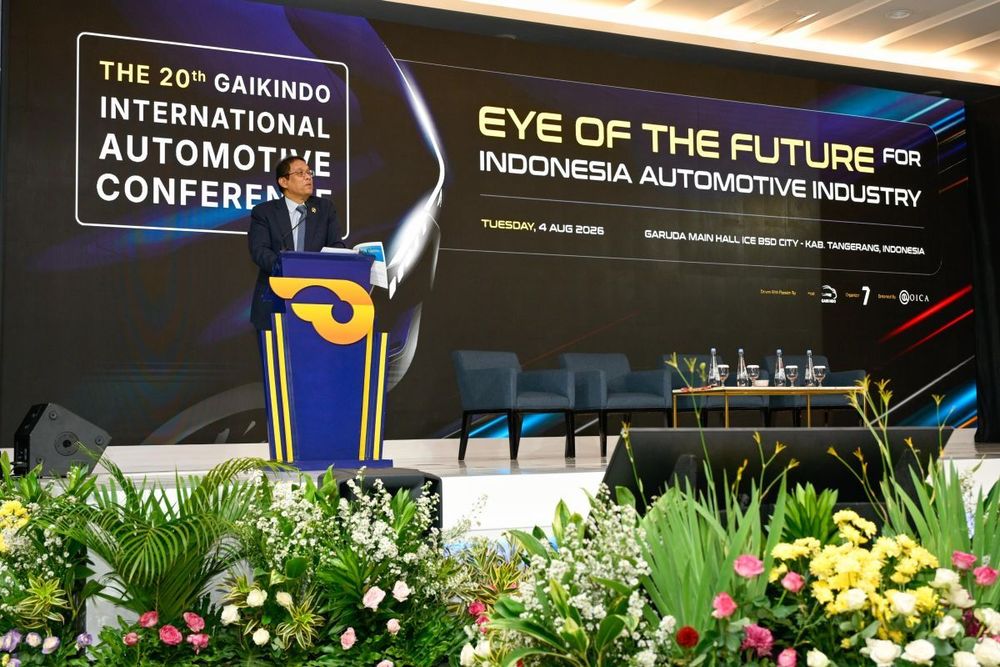
Indonesia has signaled it will offer substantial incentives to Toyota Motor Corp. if the Japanese automaker shifts its main vehicle production hub from Thailand to Indonesia, Finance Minister Purbaya Yudhi Sadewa announced at the 2026 Gaikindo Indonesia International Auto Show in Tangerang, Banten, on Tuesday.
The proposal targets Toyota's largest production base outside Japan, where the company operates three manufacturing facilities with a combined maximum annual capacity of 760,000 units through Toyota Motor Thailand, which has maintained operations in the country since 1962.
"We will support Toyota, but they must bring their main manufacturing operations from Thailand to Indonesia. We will provide all required incentives," Sadewa said at the industry exhibition, which runs from July 30 to August 9 and features more than 60 global automotive brands.
The minister emphasized that the offer extends beyond vehicle assembly to encompass Toyota's supply chain ecosystem. He urged the automaker to relocate supporting industries to Indonesia, noting that many materials and components used by local manufacturers remain imported, including steel, electronics and chemical products.
"If you bring your supporting industries here, we will provide sufficient, or even greater, incentives," Sadewa added.
Strong growth momentum in Indonesia's automotive sector
The proposal comes as Indonesia's automotive sector shows strong growth momentum. Production in the first half of 2026 reached 615,000 units, an 11.3 percent increase compared to the same period in 2025. The industry currently employs approximately 1.5 million workers and produces around 2.5 million vehicles annually, according to Sadewa.
Indonesia's push to attract major automotive manufacturers is supported by its position as holder of the world's largest nickel reserves, estimated at 21 million tons or approximately 22 percent of global reserves. The country is also the world's top nickel producer, giving it a strategic advantage in electric vehicle battery manufacturing. The government has set an ambitious target to produce EV batteries with a total capacity of 140 gigawatt hours per year by 2030.
The timing of Indonesia's offer coincides with challenges facing Thailand's automotive sector, where car production fell to 103,794 units in April 2026, down 0.44 percent year-on-year and representing the lowest level in recent months due to weakening exports.
Sadewa acknowledged that Indonesia's previous investment climate may not have been sufficiently competitive.
"Perhaps we previously did not provide enough incentives to foreign investors, or our investment climate was not mature enough. We will seriously improve it," he said.
Electric vehicle incentive package
In a separate announcement, the finance minister said President Prabowo Subianto would unveil incentives for approximately 500,000 electric motorcycles and cars within the next two to three weeks.
The package will include a luxury goods sales tax exemption of up to 100 percent and a 40 percent government-borne value-added tax reduction for qualifying vehicles. The measures will apply exclusively to battery electric vehicles, while hybrid and plug-in hybrid electric vehicles will not be eligible.
"There will also be a slight difference in incentives between nickel-based and lithium-based battery EVs," Sadewa said, adding that President Prabowo would announce final details.
The EV incentive program targets a market showing rapid expansion. Electrified vehicle sales in the first half of 2026 increased by 69.4 percent to 117,000 units, representing 26.8 percent of total national passenger vehicle sales.
The automotive industry has set a national car sales target of 850,000 units for 2026, aiming for recovery after wholesale sales fell 7.2 percent to 803,687 units in 2025.
The government's automotive manufacturing push is part of President Prabowo's broader economic nationalism strategy, which includes a national car manufacturing program with a 1,018-acre industrial site allocated in Subang, West Java.
Through targeted fiscal support and infrastructure development, Indonesia aims to accelerate electric vehicle adoption while attracting investment across its automotive ecosystem, transforming from a market-focused to production-based industry, Sadewa said.