
Indonesia's sports sector gains investment boost through ministerial partnership
The Ministry of Youth and Sports and Ministry of Investment sign agreement to streamline licensing and develop sports as economic driver, targeting global US$521 billion industry amid push for higher national growth.
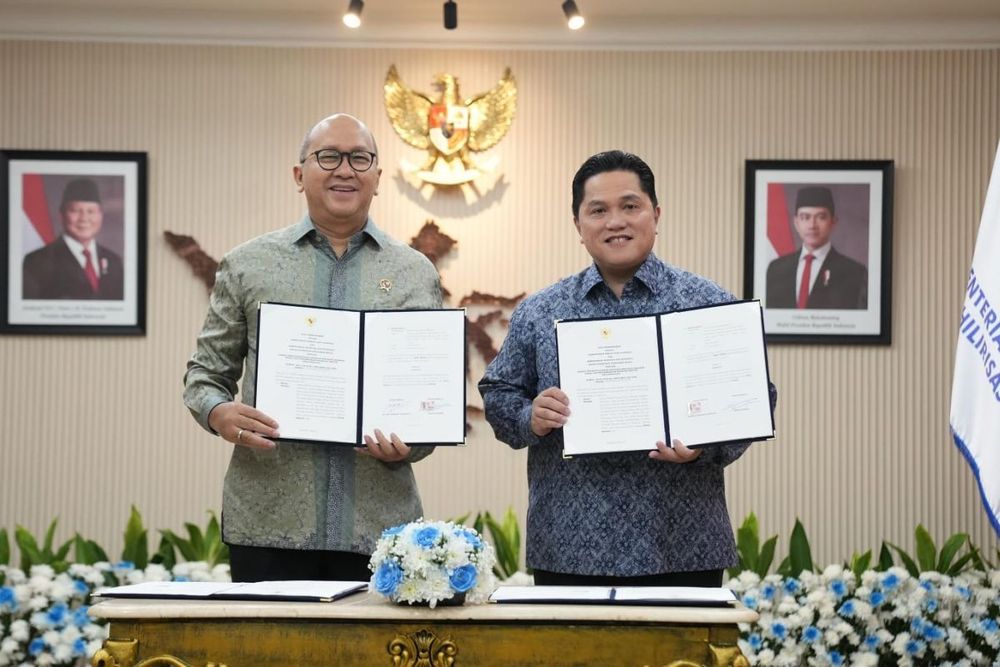
Youth, Investment ministries join forces to spur sports investment
Indonesia's Ministry of Youth and Sports has signed a memorandum of understanding with the Ministry of Investment and Downstream Development to accelerate business licensing and investment development in the sports sector, positioning athletics as a key economic growth driver rather than a cost burden.
Minister of Youth and Sports Erick Thohir announced the partnership in Jakarta on Friday, August 28, emphasizing the need to transform perceptions around sports economics. Thohir, who assumed his ministerial role on September 17, 2025, after serving as Minister of State-Owned Enterprises since 2019, brings extensive sports management credentials to the position, including leadership of Indonesia's 2018 Asian Games Organizing Committee and current chairmanship of the national football federation PSSI since February 2023.
To support national economic growth, we aim to shift the perception of sports from a cost center to a revenue opportunity.
Thohir stated at the signing ceremony with Investment and Downstream Minister Rosan Perkasa Roeslani, who took office on August 19, 2024, following distinguished service as Indonesian Ambassador to the United States and former chairman of the Indonesian Chamber of Commerce and Industry.
Global sports industry potential
The collaboration targets a global sports industry valued at approximately US$521 billion and growing at 8 percent annually, with sports tourism alone representing nearly US$600 billion worldwide. Indonesia's domestic sports industry expanded from Rp37.3 trillion to Rp39.4 trillion in 2024, accounting for roughly 0.19 percent of GDP, while sports tourism reached Rp18.79 trillion in economic value that same year.
Streamlining permits and regulations
The agreement addresses a critical bottleneck in event licensing that has hindered sports investment growth. Under Government Regulation No. 28 of 2025, the Investment Ministry can now utilize the Online Single Submission system to automatically issue permits when other ministries fail to respond within agreed service level agreements. More than 250 permits have already been processed through this expedited mechanism.
Thohir emphasized that sports must play a central role in achieving national economic objectives, particularly as the government pursues President Prabowo Subianto's target of 8 percent annual growth by 2029. Indonesia currently maintains growth around 5 percent, reaching 5.11 percent in 2025 as the second-highest among G20 countries in the fourth quarter after India, with official 2026 targets set between 5.2 and 5.8 percent.
Demonstrating economic impact
The economic potential of major sporting events has been demonstrated through concrete results. Indonesia's 2026 MotoGP event in Mandalika generated a US$278 million economic boost, illustrating the substantial returns possible from well-managed international competitions.
The ministry has documented 104 marathon races nationwide involving 10.4 million runners, representing just one segment of Indonesia's expanding sports calendar. Beyond running events, Thohir identified surfing and other sports as untapped opportunities for sports tourism development that can stimulate growth across multiple economic sectors.
This is the approach that we at the Ministry of Youth and Sports are now working to align with all stakeholders.
Thohir said, noting that sports-driven economic activity remains heavily dependent on coordinated planning and streamlined regulations.
Looking ahead to 2027
The ministry plans to launch an annual sports calendar in 2027 to synchronize scheduling of sporting events nationwide, enabling better planning among athletes, spectators, and government agencies while maximizing economic impact. The initiative aims to strengthen Indonesia's position in both the sports industry and sports tourism sectors as pillars of economic growth and job creation for younger generations.