
Indonesia seeks international royalty framework through WIPO proposal
Jakarta has submitted a proposal to the World Intellectual Property Organization calling for standardized global royalty mechanisms to ensure fairer compensation for content creators, particularly in developing nations.

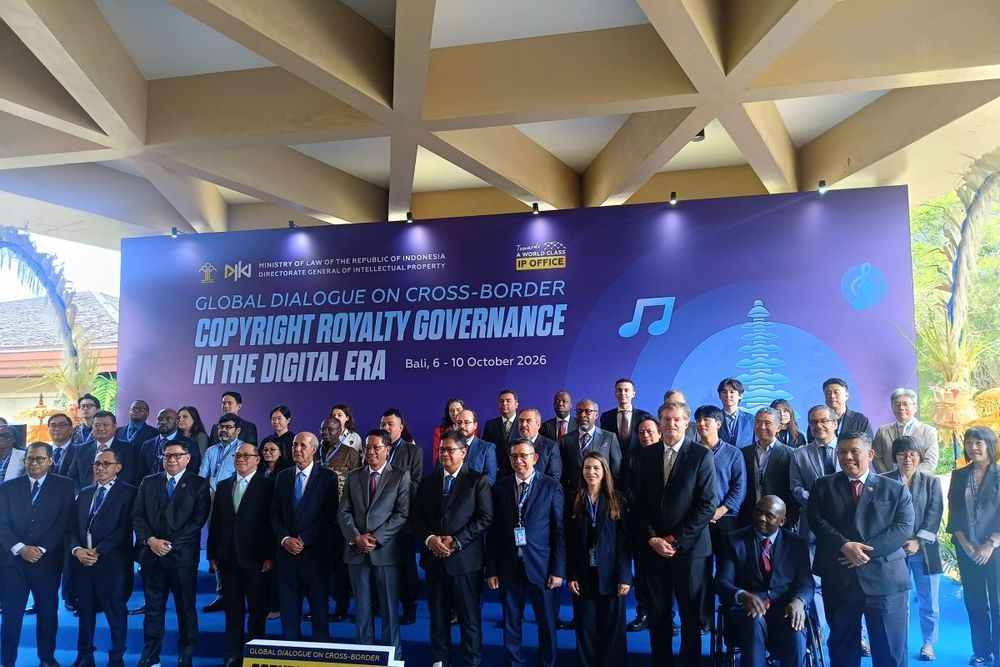
Indonesia seeks international royalty framework through WIPO proposal
Indonesia has formally presented a proposal to the World Intellectual Property Organization advocating for internationally standardized royalty mechanisms to create a more equitable compensation system for content creators worldwide.
Law Minister Supratman Andi Agtas announced the initiative in Bali on Wednesday, October 7, explaining that the proposal seeks to shift royalty negotiations from purely private corporate arrangements to internationally regulated frameworks with clear parameters.
"We hope WIPO will adopt a standard, because currently, negotiations are purely contractual - business-to-business (B2B) - and that is how it operates. Moving forward, we want there to be defined parameters for royalty increases - parameters that can be regulated by WIPO," Supratman stated.
The proposal targets the World Intellectual Property Organization, a United Nations specialized agency headquartered in Geneva, Switzerland, which comprises 194 member states and has coordinated international intellectual property matters since its establishment in 1967.
Economic stakes drive policy push
The initiative reflects Indonesia's growing creative economy, which contributes approximately 7 percent of national GDP, valued at around Rp 1,500 trillion (approximately $90 billion), and employs between 26.5 and 27.4 million workers across the archipelago.
The minister emphasized that the primary objective centers on ensuring creators, particularly those from developing nations, receive equitable economic returns for their intellectual property, thereby supporting a sustainable creative industry ecosystem.
Global music revenue topped $28 billion in 2024, with streaming accounting for more than two-thirds of the total, highlighting the economic magnitude of the royalty systems Indonesia seeks to regulate.
Current system challenges
Cross-border royalty payments currently rely on bilateral agreements between national performing rights organizations such as ASCAP and BMI in the United States, PRS in the United Kingdom, and SACEM in France. This process often takes months and remains largely manual, creating delays and opacity in compensation flows.
Streaming services typically do not pay fixed amounts per stream, but instead pool subscriber and advertising revenue each month and distribute it based on each track's share of total streams, with rates varying by subscription plan, country, and territory. This complexity contributes to the challenges facing creators seeking transparent and predictable compensation.
Diplomatic coordination underway
To build international consensus, Jakarta has launched early diplomatic outreach across regional blocs, including the Asia-Pacific group and the Group of Latin America and Caribbean Countries (GRULAC).
The inter-ministerial initiative involves the Foreign Affairs Ministry, Indonesian diplomatic missions abroad, and key stakeholders including Presidential Special Staff for Creative Economy Yovie Widianto, a prominent Indonesian musician and composer appointed to the role by President Prabowo Subianto in October 2024.
"This is a joint initiative, not something monopolized by the Law Ministry," Supratman noted.
Formal advancement through WIPO channels
The proposal will be formally advanced through international diplomatic channels during upcoming sessions of WIPO's Standing Committee on Copyright and Related Rights (SCCR), scheduled for late 2026.
The SCCR was established in 1998-1999 to examine substantive law topics in copyright and related rights, and makes recommendations to the WIPO General Assembly or diplomatic conferences. The committee held its 45th session in April 2024, addressing topics including copyright in the digital environment and protection of broadcasting organizations.
Beyond music and traditional creative media, Supratman indicated that Indonesia intends to expand its intellectual property diplomacy to advocate for global frameworks addressing fair compensation and royalty mechanisms for journalistic content in specialized WIPO forums.