
France opens attempted murder probe after protests; Germany sees unrest
France has opened an attempted murder investigation into petrol bomb attacks on security forces after hundreds of thousands protested rising living costs on October 31. Youth-led demonstrations also brought unrest to German cities, while Spain mourned the victims of its second major rail disaster this year.

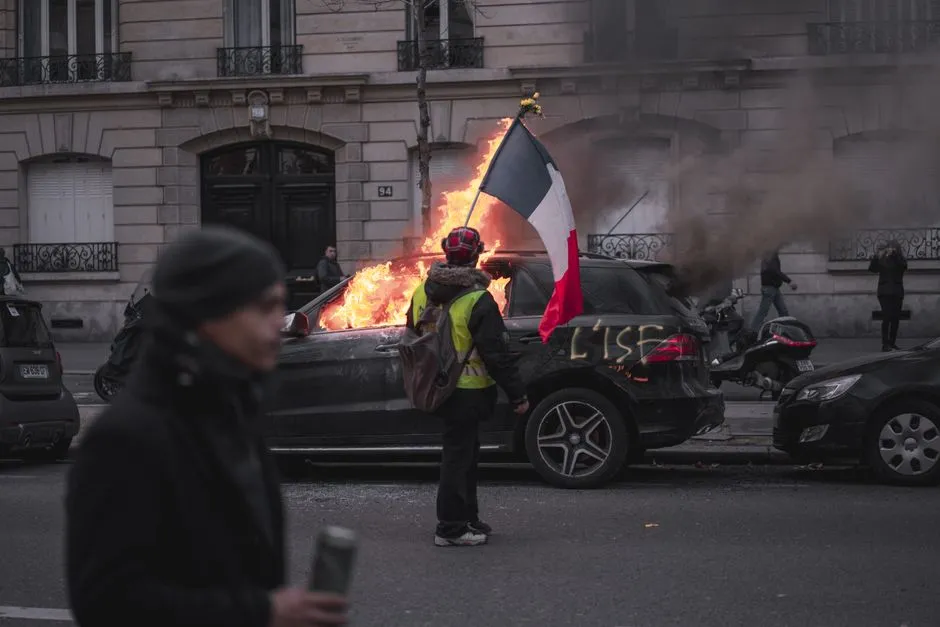
France investigates attacks on officers
Clashes followed a third weekend of cost-of-living demonstrations in Paris and other French cities. The interior ministry reported more than 770 arrests on October 31, roughly half the previous week's total, according to BBC News. The youth-led movement began in late September 2026.
One gendarme hit by a petrol bomb in Paris sustained ankle burns and minor injuries to his hand. Speaking to Le Figaro, he described the device as "particularly sophisticated" with "far greater burning capacity than a standard Molotov cocktail". Another 14 officers in his unit were wounded, including some hit by paving stones.
Police tactics have also faced scrutiny. BBC News reported that France stopped using one type of stun grenade at student demonstrations in early October after a 15-year-old lost a hand. According to Le Monde, officers used a different model at later protests.
Analysts cited by The Jakarta Post described the unrest as a sign of deep political and economic divisions before next year's presidential election.
German rallies turn violent as protests spread across Europe
Germany's Gen Z regelt, or Gen Z takes charge, campaign had scheduled October 31 demonstrations in 34 cities, among them Berlin, Frankfurt and Munich. More than 160,000 people were expected nationwide; that figure was a forecast, not a reported turnout.
At Berlin's Brandenburg Gate, police estimated attendance at about 5,000, while organizers put it at around 11,000, Euronews reported. Participants called for greater spending on schools and climate protection, affordable living costs and opposition to compulsory military service.
The campaign's former spokesperson, Gianni Matheja, had withdrawn, citing disagreements within the movement and concerns about whether the demonstrations would stay peaceful. By evening, some groups refused to leave, and violence erupted in Berlin, Cologne and Hamburg. The Jakarta Post reported looting.
Euronews placed the Berlin demonstration within a broader wave of youth-led protests, with rallies also reported in the Netherlands, Italy and Spain that Saturday. Earlier in October, Italian police had clashed with demonstrators in Milan and Bologna. In Milan, officers in riot gear sought to remove hooded protesters from the Galleria Vittorio Emanuele II shopping arcade after groups split off from a protest over living costs.
Spain mourns victims of the Toledo train collision
Spain's October 28 high-speed train collision involved Renfe AVE and Iryo trains near Urda in Toledo province, about 150 kilometers south of Madrid. The Jakarta Post initially reported 68 deaths. Wikipedia's article on the collision gives a revised toll of 69 dead and 179 injured, with 544 passengers aboard the two trains.
According to that account, Spanish government sources identified an ADIF rail infrastructure controller's error as the probable cause, rather than a confirmed finding. After the automatic LZB signaling system failed, the controller authorized the AVE train to resume normal operation despite the Iryo train remaining stopped ahead.
The required procedure was to proceed on sight at no more than 40 km/h. The AVE train was traveling at 160–200 km/h when it hit the stationary Iryo train.
Wikipedia's account lists 54 Spanish citizens and 12 foreign nationals among those killed, including four Americans. Former Spanish Employment Minister Fátima Báñez also died; she had been traveling in the Iryo train's last carriage.
The crash followed January's Adamuz disaster on the same Madrid–Seville high-speed line, which killed 46 people. Spain's heavily funded high-speed network has become the world's second-largest after China's and a source of national pride. The Jakarta Post said the second disaster this year would prompt renewed questions about rail safety.
Prime Minister Pedro Sánchez declared three days of national mourning. All 24 Copa del Rey first-round soccer matches set for October 28 were postponed, and every political party except the far-right Vox suspended campaigning for the forthcoming general election.
Ukraine war: ceasefire agreement and recruitment concerns
In a separate development, Russia and Ukraine agreed to a ceasefire in an embattled town and to hold peace talks. The sides said the truce would begin October 27, with humanitarian corridors intended to let aid reach residents and allow civilians to evacuate.
Ukraine also claimed that another Indonesian recruited into Russia's military had been killed. The Jakarta Post reported calls from analysts for Indonesia's government to suspend job offers from Russia. The Indonesian Embassy in Moscow and researchers pointed to increasing recruitment of Indonesians through a third party to serve with Russian forces in the Ukraine war.