
India-ASEAN maritime cooperation sets agenda ahead of Manila summits
Indian Prime Minister Narendra Modi is set to attend the ASEAN and East Asia summits in Manila later this month, following a joint naval exercise that marked the 2026 ASEAN-India Year of Maritime Cooperation. In a Nov. 5 commentary for The Jakarta Post, Gurjit Singh argues that the next task is to turn such initiatives into durable arrangements for security and connectivity, even as a review of the two sides' trade agreement remains unfinished.

From a maritime declaration to naval drills
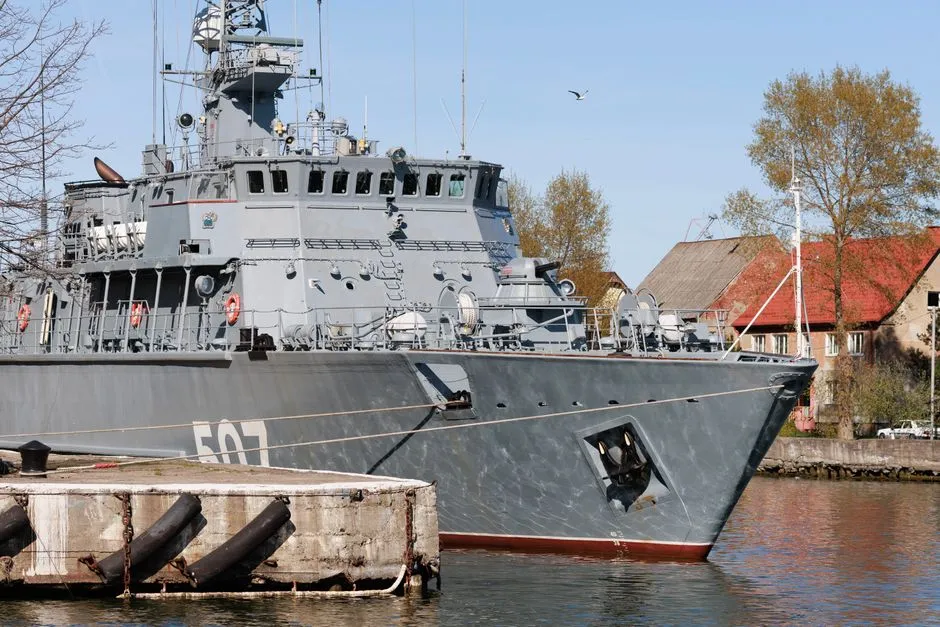
Indian ships INS Sahyadri and INS Kulish joined regional navies in the Philippines for the second ASEAN-India Maritime Exercise in September and October 2026. Conducted under the banner "Anchored in Trust, United at Sea", the exercise included humanitarian assistance, disaster relief, complex operational coordination, and visit, board, search and seizure procedures.
Singh views the drills as a step from diplomatic commitments toward greater familiarity between naval forces and a stronger ability to operate together. He also sees significance in the Philippine venue, given the importance Manila and neighboring archipelagic countries place on secure, stable waters and compliance with international maritime law.
An earlier ASEAN Secretariat overview, published in August, had provisionally placed the exercise in Zambales from September 26 to October 2. It also listed plans for an ASEAN-India Defence Ministers' Informal Meeting during the maritime cooperation year.
The year's program builds on the ASEAN-India Joint Statement on Maritime Cooperation, adopted in Jakarta on September 7, 2023, at the 20th ASEAN-India Summit to advance maritime cooperation under the ASEAN Outlook on the Indo-Pacific. India submitted a draft work plan for the 2026 observance in March; according to the August overview, that plan was still being finalized.
Proposals for sustained cooperation at sea
For Singh, the priority now is to establish arrangements that last beyond individual exercises. He identifies exchanges of maritime information, white-shipping awareness, protection of fisheries, operations against trafficking and coordinated search and rescue as areas for further work.
India's Information Fusion Centre–Indian Ocean Region in Gurugram already works with six ASEAN member states, four of which have resident international liaison officers there. Singh proposes building a connected maritime awareness framework spanning the eastern Indian Ocean and the waters approaching the Malacca Strait. Such a framework, he argues, should support ASEAN-led institutions without overriding national sovereignty concerns.
Indonesia offered related proposals at the ASEAN-India Post Ministerial Conference in Manila in July 2026. According to ANTARA News, Foreign Minister Sugiono called for more joint search-and-rescue drills, expanded coast guard training and mechanisms to deliver humanitarian aid rapidly.
Sugiono also pointed to Sabang, Indonesia's northernmost city, as a possible center for trade, cruise tourism and cultural exchanges. It lies less than 200 km from India's Andaman Islands. Indonesia's other proposals included a shared platform to monitor food and energy reserves in real time and an ASEAN-India Health Resilience Track.
A broader strategic relationship
Singh places the maritime initiatives within a relationship that has continued to expand despite global economic uncertainty, sharper Indo-Pacific strategic competition and lengthy trade negotiations. His argument is not that one breakthrough has transformed ties, but that India's Act East policy and ASEAN's priorities increasingly overlap on maritime security, resilient supply chains, digital transformation and regional strategic autonomy.
The relationship's formal framework includes the Comprehensive Strategic Partnership established in 2022 and the Plan of Action for 2026-2030. Singh argues that both sides can help sustain a regional balance without agreeing on every external issue.
He also notes that five Southeast Asian leaders attended the recent BRICS Summit in New Delhi. Among them was Philippine President Ferdinand Marcos Jr., participating as ASEAN chair.
Trade review continues as commerce grows
The review of the ASEAN-India Trade in Goods Agreement, or AITIGA, remains unresolved. The latest negotiating round brought the 15th AITIGA Joint Committee to the ASEAN Secretariat in Jakarta on October 6-9, 2026, according to India's Press Information Bureau.
India's Additional Secretary of Commerce Nitin Kumar Yadav and Malaysia's Deputy Secretary General for Trade Mastura Ahmad Mustafa co-chaired the meeting. The committee instructed all eight subcommittees to accelerate work on outstanding chapters and set time-bound deliverables. Its next meeting is scheduled for January 2027 in India.
ASEAN's August 2026 overview shows the scale of the economic relationship: India ranked eighth among its merchandise trading partners, with two-way goods trade reaching US$114.05 billion in 2025, up 6.61% from US$106.98 billion in 2024.
India also ranked ninth among external sources of foreign direct investment into ASEAN. Investment inflows from India increased from US$3.06 billion in 2024 to US$7.08 billion in 2025, according to ASEAN's figures.
Shipping routes and digital infrastructure
Connectivity is another part of Singh's argument for closer cooperation. Routes between India's eastern coast and Singapore, Malaysia, Thailand and Indonesia serve busy merchant shipping networks while also carrying subsea digital infrastructure. He considers the data cables strategically important to economic security, alongside the shipping lanes themselves.
A planned cable project illustrates that connection. NEC Corporation announced in July 2026 that it had signed a supply contract for the India-Southeast Asia, or I-2SEA, submarine cable system with a consortium including Lightstorm, Microsoft, Singtel and Tata Communications.
The approximately 3,600 km system will connect India, Malaysia and Singapore, with operations scheduled to start in 2029. It is designed to connect AI and hyperscaler data center clusters in Hyderabad and Chennai with Singapore and Kuala Lumpur.
Academic and tourism links
Cooperation also extends to regional expertise and travel. India's Nalanda University inaugurated its Centre for Southeast Asian Studies on March 31, 2026. India had proposed the center at the 22nd ASEAN-India Summit to build expertise on the region.
ASEAN recorded 6.95 million visitor arrivals from India in 2025, compared with 5.88 million in 2024. India had designated 2025 as the ASEAN-India Year of Tourism, with Modi allocating US$5 million for related activities.