
Torkham Border Crossing Reopens After Afghanistan-Pakistan Firefight
Fighting between Pakistani border guards and Afghan forces near Torkham on November 1, 2026, disrupted migrant returns and closed the crossing for nearly five hours. Pakistan's Dawn newspaper said it reopened after officials from both sides agreed through intermediaries to stop construction near the border.

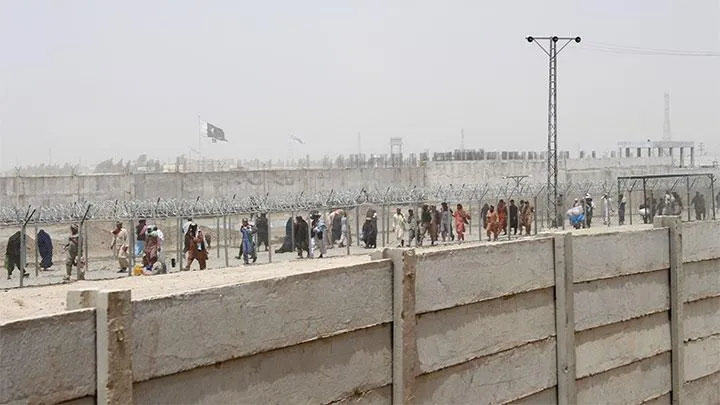
Construction dispute at the border
Khaama Press, citing local sources, reported that Sunday's exchange began after Afghans attempted to establish a security post in Jangal, a border area near the Durand Line. Kabul does not recognize the line as the border between Afghanistan and Pakistan.
Dawn described the trigger as renewed Afghan construction at the disputed Zangali check post, within 100 meters of the border on the Afghan side. The newspaper said the countries had previously agreed to keep security structures at least 100 meters from the border. Its account said the crossing reopened only after the two sides agreed to halt all nearby construction.
At the time of Khaama Press's report, Afghan authorities had not commented on the clash, and no casualties or damage had been reported.
Local sources cited by Hasht-e Subh Daily (8AM Media) described the fighting as the third clash at Torkham between Taliban and Pakistani forces in a week.
Migrant returns and civilian safety
Torkham is a major route for travelers and goods moving between the two countries. The fighting reportedly interrupted Afghans returning from Pakistan. Sources told 8AM Media that humanitarian staff left the area and that the Taliban moved returnees out of a camp for migrants deported from Pakistan.
The crossing handled more than 600,000 returns to Afghanistan from January through early October 2026, according to OCHA figures reported by Khaama Press. That represented nearly 85 percent of recorded returns from Pakistan during the period.
Afghan and Pakistani military units have clashed repeatedly along the border since October 19. An October 28 firefight near Torkham reportedly killed two Afghan teenagers and wounded a UN staff member. The UN Office for the Coordination of Humanitarian Affairs, or OCHA, has warned that fighting around the crossing in Nangarhar Province endangers civilians and aid workers.
Separate reports described fighting elsewhere along the frontier on November 1. Kabul Now cited the Taliban police command in Paktika province as saying Pakistani forces struck civilian homes in Sordagh village, Shkin district, at about 3 p.m. local time. The command reported that a young man was killed, two other civilians were wounded and several homes were damaged. Pakistani officials had not commented on that reported attack.
In Pakistan, the deputy commissioner of Lower South Waziristan said security forces responded to incoming fire in Angoor Adda by striking several Afghan Taliban border posts, mortar positions and defensive installations, according to The News International. He reported no casualties on the Pakistani side and said Taliban personnel had fled their posts.
Kabul Now also reported that the United Nations Assistance Mission in Afghanistan had documented more than 1,700 civilian deaths and injuries in Afghanistan from cross-border armed violence between October 2025 and September 2026.
Military warnings and mediation efforts
Pakistan's military spokesperson, Lt. Gen. Ahmed Sharif Chaudhry, warned in remarks broadcast by state media on November 1 that Pakistan could impose a cost on Afghanistan's interim leadership if terrorism continued to originate from Afghan territory. According to Dawn, he said the Afghan Taliban "won't be able to bear" the punishment. He also accused India of being the "prime contractor" behind anti-Pakistan terrorism, with the TTP and BLA acting as proxies.
Dawn reported that US Secretary of State Marco Rubio expressed willingness to help ease tensions. Speaking to reporters at the G20 foreign ministers meeting in Atlanta, Georgia, Rubio said the United States shared Pakistan's concerns about terrorist attacks coming across the border from Afghanistan.
Mediation efforts involving China, Russia, Turkey and Saudi Arabia have not yet secured an agreement between Afghanistan and Pakistan to end the hostilities, according to Kabul Now.