
Indonesia's Regional Representatives Council proposes green democracy framework to advance national development goals
The DPD RI has introduced a green democracy approach aimed at balancing political progress with environmental sustainability while capitalizing on Indonesia's demographic advantage to achieve the Golden Indonesia 2045 vision.
Indonesia's Regional Representatives Council proposes green democracy framework to advance national development goals
Indonesia's Regional Representatives Council (DPD RI) has proposed adopting a green democracy framework to guide national governance, linking democratic efficiency with environmental sustainability and socioeconomic advancement.
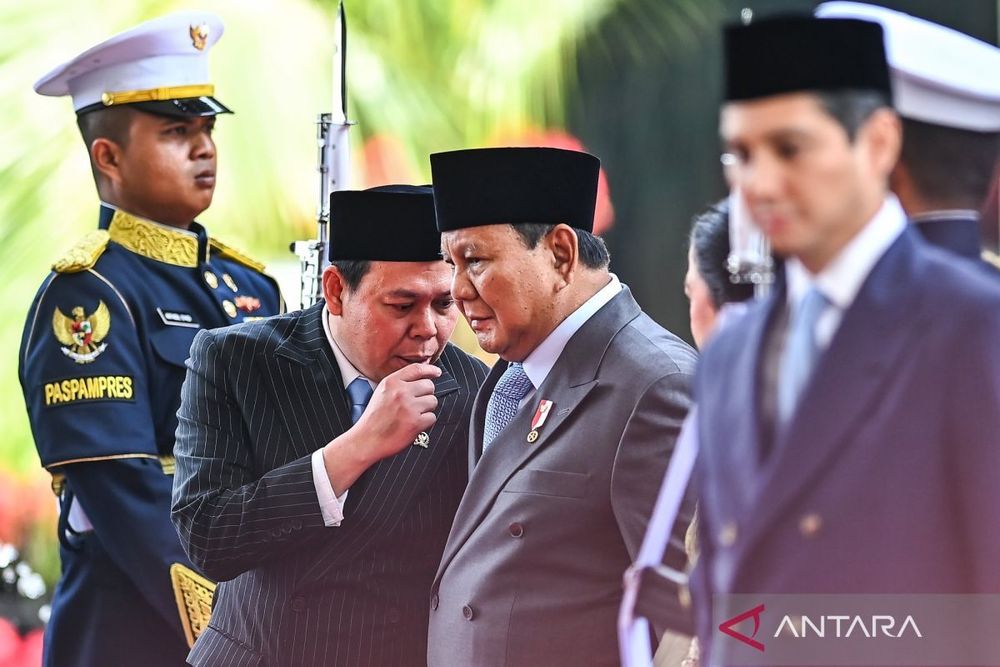
DPD RI Speaker Sultan B. Najamuddin presented the proposal during a joint parliamentary session with the House of Representatives (DPR RI) at the Parliament Complex in Jakarta on Friday, arguing that Indonesia must address the rising costs of democratic processes while confronting climate change impacts.
"To address these challenges, the DPD RI has proposed the idea of green democracy to balance political development with social, economic, and ecological sustainability," Najamuddin told the assembly.
The concept of green democracy, developed by environmental political theorists in the 1990s, advocates for strengthened democratic participation rather than authoritarian approaches to tackle ecological crises. It emphasizes public participation, transparency, and accountability in environmental decision-making, principles reflected in international frameworks such as the Rio Declaration Principle 10.
Institutional context and authority
The DPD RI, established on October 1, 2004, as part of Indonesia's constitutional reforms, comprises 152 members representing the nation's provinces through a nonpartisan electoral system. Each province sends four senators regardless of population size. The council's constitutional mandate focuses on proposing and advising on legislation related to regional autonomy, natural resource management, and central-regional financial relations, though it lacks full legislative power compared to the DPR.
The joint session formed part of the People's Consultative Assembly (MPR RI) annual meeting, which brings together all 732 members of Indonesia's bicameral legislature—580 DPR representatives and 152 DPD senators. President Prabowo Subianto delivered his State of the Nation Address during the gathering, attended by Vice President Gibran Rakabuming Raka and former presidents including Joko Widodo, alongside former vice presidents Jusuf Kalla, Boediono, and Ma'ruf Amin.
Demographic opportunity and economic targets
Najamuddin emphasized that green democracy could enable Indonesia to capitalize on its current demographic bonus, a period when the working-age population outnumbers dependents. Indonesia's population of approximately 287.9 million people ranks as the world's fourth-largest, with a median age of 30.7 years. The working-age population (15-64 years) currently represents about 68 percent of the total, creating favorable conditions for economic growth.
However, this demographic advantage is time-sensitive. Indonesia's dependency ratio stood at approximately 45 percent in 2025 but is projected to rise above 54 percent by 2050 as the elderly population expands, underscoring the urgency of the DPD's proposal.
"Through the green democracy paradigm, we seek to ensure that our huge demographic bonus does not become a liability. It must be regarded as both an opportunity and an asset to nurture quality generations for the Golden Indonesia 2045 vision," the speaker said.
The Golden Indonesia 2045 vision, officially launched by President Joko Widodo on May 9, 2019, sets ambitious targets for the nation's centennial: achieving the status of the world's fifth-largest economy with a GDP of US$7.3 trillion and per capita income of US$25,000.
Efficiency and statesmanship
Najamuddin argued that the green democracy approach could make Indonesia's political system more cost-effective by reducing expensive democratic practices while strengthening leadership quality in support of national development priorities.
The parliamentary sessions took place as part of state commemorations marking Indonesia's 81st Independence Day under the theme "Sovereign, Just, and Prosperous Indonesia."