
Indonesia's 2027 Budget Focuses on Eight National Priorities to Drive Growth and Welfare
President Prabowo Subianto presented the 2027 Draft State Budget centered on eight national priority programs, emphasizing food sovereignty, education, health, and infrastructure development with coordinated fiscal policy execution.
Indonesia's 2027 Budget Focuses on Eight National Priorities to Drive Growth and Welfare
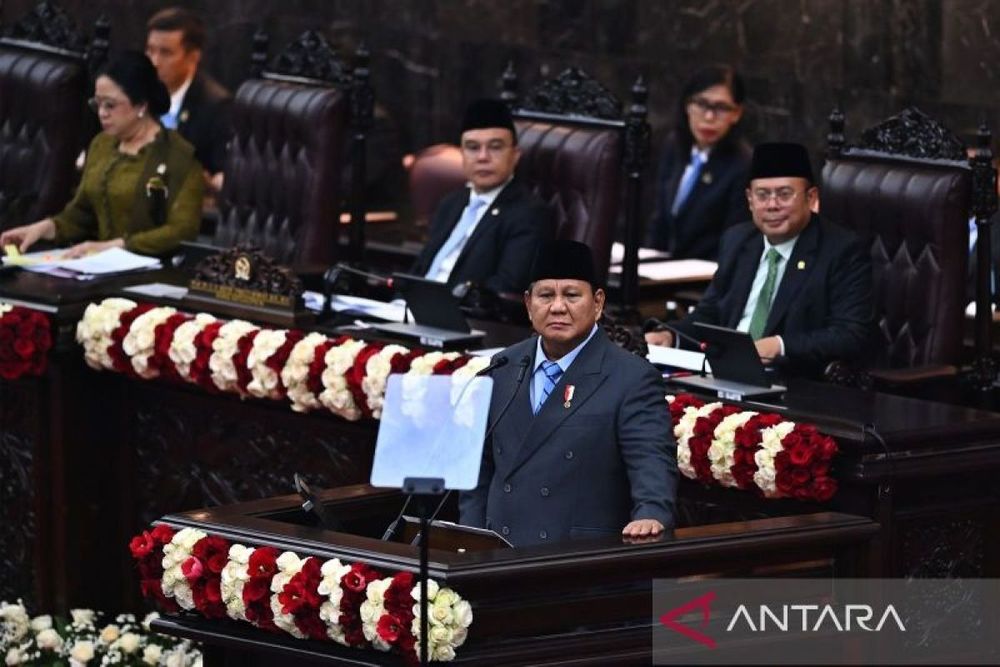
President Prabowo Subianto unveiled the 2027 Draft State Budget framework on Friday, outlining eight National Priority Work Programs designed to accelerate economic expansion and improve public welfare across Indonesia.
Speaking at the Parliament Complex in Jakarta on August 14, 2026, the President explained that the budget architecture builds upon economic performance from the first half of 2026, when Indonesia recorded 5.61 percent year-on-year growth in the first quarter—the highest rate since the third quarter of 2022.
The eight priority areas comprise food sovereignty; energy and water self-sufficiency; education; health; downstreaming and industrialization; infrastructure, housing, and disaster resilience; strengthening the people-centered economy and village development; and poverty reduction. These priorities are reinforced by enhanced defense and security, law enforcement, good governance, accelerated digitalization, and economic diplomacy.
Economic Context and Recent Achievements
The 2027 budget follows the 2026 fiscal framework, which set spending at Rp3,842.7 trillion with a deficit target of 2.68 percent of GDP, remaining within the legal ceiling of 3 percent. President Prabowo, who was inaugurated as Indonesia's eighth president on October 20, 2024, alongside Vice President Gibran Rakabuming Raka, emphasized that the new budget aims to maintain a collaboratively expansive, targeted, and measurable approach to foster structural economic growth toward high-value-added activities.
The food sovereignty priority reflects recent progress in agricultural self-sufficiency. Indonesia achieved rice self-sufficiency in early 2026, with production reaching 34.7 million tons, enabling the government to halt imports of rice, sugar, and corn. By February 2026, the country had achieved self-sufficiency in nine strategic food commodities, including rice, feed corn, consumer sugar, large chilies, cayenne pepper, shallots, chicken meat, and eggs, though soybeans, garlic, and beef remain deficit commodities.
Fiscal Policy Coordination and Danantara's Role
To maximize fiscal impact, President Prabowo stressed the importance of unified policy execution across regulatory and financial institutions, particularly highlighting the role of Danantara—the Daya Anagata Nusantara Investment Management Agency. Launched on February 24, 2025, Danantara serves as Indonesia's second sovereign wealth fund, managing state-owned enterprises with assets valued at approximately US$900 billion. The fund oversees seven major state-owned companies, including Pertamina in oil and gas and PT PLN, the national electricity utility, which provide the largest dividend contributions.
The synergy of fiscal, monetary, financial sector, and Danantara policies must work in synergy and become increasingly solid.
The President stated, adding that policy harmonization between central and regional governments will be tightened alongside unwavering anti-corruption measures.
Social Programs and Development Priorities
The President underscored the government's commitment to reliable social protection programs and continued support for micro, small, and medium enterprises. The 2026 budget allocated Rp820.9 trillion for education, with substantial resources directed to the Free Nutritious Meal program managed by the National Nutrition Agency, demonstrating the administration's focus on human capital development.
Empowerment of MSMEs must continue to be stimulated, and support for farmers, fishermen, teachers, and vulnerable workers must also be strengthened.
President Prabowo said, reaffirming that anti-corruption enforcement will proceed without discrimination.
The budget presentation marks a critical step in Indonesia's fiscal planning as the government seeks to balance development priorities with economic stability while pursuing structural transformation across key sectors.