
Hong Kong researchers develop advanced membrane to boost marine biodiversity monitoring through eDNA technology
City University of Hong Kong scientists have created a novel molybdenum disulfide-coated membrane that significantly improves the detection of environmental DNA in seawater, offering a more efficient tool for tracking marine fish populations and ecosystem health.

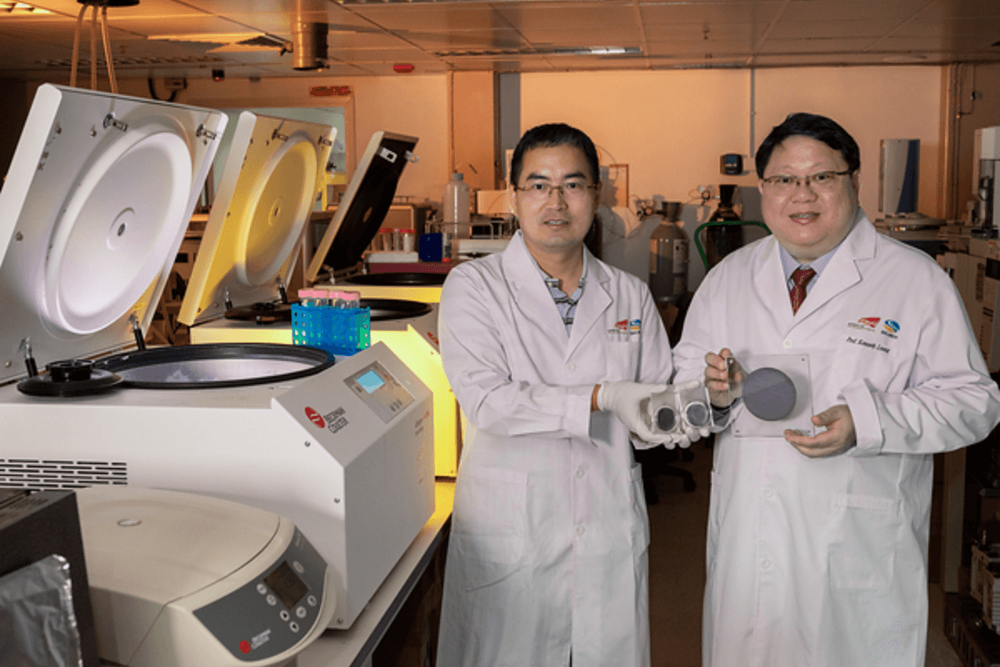
Breakthrough Membrane Technology Enhances Marine Life Detection
Researchers at City University of Hong Kong have developed an innovative membrane technology that dramatically enhances the ability to monitor marine life through environmental DNA analysis, addressing a critical challenge in ocean conservation and fisheries management.
The breakthrough, published in National Science Review—a prestigious journal with a 2021 impact factor of 23.178 published by Oxford University Press under the Chinese Academy of Sciences—centers on a functionalised membrane coated with an ultra-thin layer of molybdenum disulfide (MoS₂). This two-dimensional material exhibits distinct adsorption properties that allow it to capture trace amounts of genetic material released by marine organisms into the water far more effectively than conventional filtration methods.
Understanding Environmental DNA Technology
Environmental DNA, or eDNA, refers to genetic fragments shed by organisms through skin cells, mucus, and excreta. This metabarcoding approach enables scientists to simultaneously detect multiple species from a single water sample without physically capturing or observing the animals—a transformative alternative to traditional survey techniques that require costly boat and aerial operations limited by weather conditions and daylight hours. Studies have shown eDNA metabarcoding can detect 94.1% of species identified in conventional trawl surveys while identifying additional native species missed by traditional methods.
Addressing Key Challenges in Marine Monitoring
The research team was led by Professor Kenneth Leung Mei-yee, Vice-President (Research) and Director of the State Key Laboratory of Marine Environmental Health, and Professor Zeng Zhiyuan from the Department of Materials Science and Engineering. The innovation addresses a persistent obstacle in marine monitoring: DNA concentrations in seawater are extremely low, and traditional membrane technologies struggle to capture sufficient material for reliable species identification. Additionally, conventional vacuum filtration processes are time-consuming, and DNA continuously degrades from the moment of sample collection until laboratory processing.
The molybdenum disulfide coating proves particularly effective due to its excellent fluorescence quenching ability and differential affinity for single-stranded versus double-stranded DNA—properties that have previously been exploited in DNA hybridization detection applications. By leveraging these characteristics, the research team created a membrane that binds DNA molecules more efficiently during water filtration.
Laboratory and field validation
In controlled laboratory experiments, the membrane successfully identified multiple tropical coral reef fish species, including Acanthurus dussumieri, Chrysiptera cyanea, Dascyllus trimaculatus, Microcanthus strigatus, and Paracanthurus hepatus. The technology demonstrated significantly improved detection sensitivity compared to standard filtration methods.
Field testing took place at Hoi Ha Wan Marine Park, one of Hong Kong's first marine protected areas established in 1996. Covering 260 hectares, this biodiversity hotspot houses 64 hard coral species—representing 70% of Hong Kong's total coral diversity—and more than 120 reef fish species, making it an ideal location to validate the membrane's real-world performance. The on-site trials revealed that the novel membrane detected a broader range of fish species, including anchovies, flathead gray mullet, and carangid fish, without compromising the overall assessment of fish community composition.
Practical applications and policy alignment
The membrane's straightforward preparation process and cost-effectiveness position it for integration into existing water sampling workflows. Professor Leung noted the technology holds particular promise for marine areas rich in biological resources but difficult to survey through conventional means, supporting applications in marine conservation, ecological surveys, and long-term environmental monitoring.
The innovation arrives as China's Ministry of Ecology and Environment promotes eDNA technology for biodiversity surveys, part of broader monitoring initiatives including the China-BON network initiated in 2011, which now encompasses more than 440 observation sites. Professor Leung emphasized that the team's technology will support and advance these governmental biodiversity assessment efforts.
The study represents a collaboration between City University of Hong Kong and several partner institutions. Co-corresponding authors include Professor Huang Bolong from CityUHK's Department of Chemistry and Professor Qiu Jianwen from the Department of Biology at Hong Kong Baptist University. The research demonstrates how interdisciplinary integration of advanced materials science and environmental ecology can yield practical tools for more precise and sensitive marine biological monitoring.