
Indonesia's leading orangutan conservationists demand urgent habitat safeguards amid devastating fires
The Borneo Orangutan Survival Foundation has called on Indonesia's government to strengthen protection for orangutan habitats as wildfires continue to threaten critically endangered populations across Kalimantan.

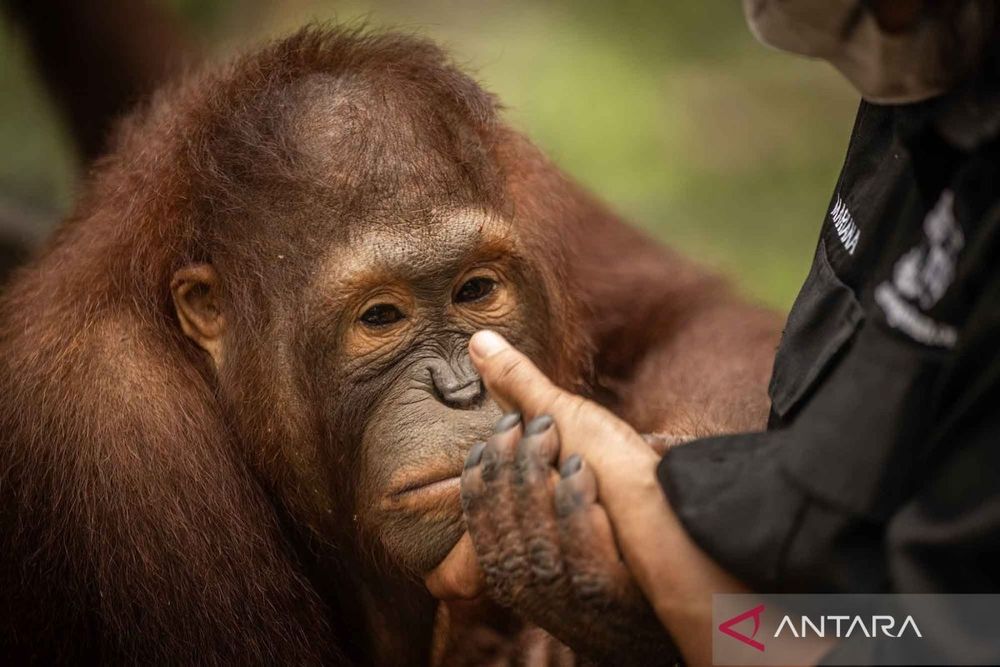
Indonesia's leading orangutan conservationists demand urgent habitat safeguards amid devastating fires
The world's largest orangutan conservation organization has issued an urgent appeal to Indonesian authorities to bolster protection measures for forest habitats as devastating wildfires continue to endanger critically endangered orangutan populations and other wildlife across the archipelago.
Dr Jamartin Sihite, CEO of the Borneo Orangutan Survival Foundation, emphasized that the current crisis affecting orangutans reflects a broader threat to Indonesia's wildlife. Speaking in Jakarta on Monday, he stressed that the government's conservation commitments must be matched by concrete action to safeguard remaining forest ecosystems.
"If orangutans are affected, imagine the impact on other wildlife in the forest. This should be a concern for the president and vice president," Sihite said, following Vice President Gibran Rakabuming Raka's recent visit to an orangutan rehabilitation center in Central Kalimantan.
The foundation, established in 1991 by forestry scientist Dr Willie Smits and teacher Peter Karsono, currently cares for nearly 650 orangutans with support from 400 staff members across two rehabilitation centers in Kalimantan. Since 2012, the organization has successfully released more than 500 rehabilitated orangutans back into protected forests.
Wildfire crisis intensifies habitat threats
Indonesia's 2026 wildfire season has proven particularly severe, with Minister of Forestry Raja Juli Antoni reporting that 202,000 hectares of forests and land had burned across the country by mid-August—a 110% increase compared with the same period in 2023. West Kalimantan has been hardest hit, with over 38,000 hectares burned, while Central and East Kalimantan have also experienced dramatic surges in fire hotspots.
Central Kalimantan has declared an emergency alert status extending through October 31, covering districts including Palangka Raya, where the Nyaru Menteng rehabilitation center operates. The facility, founded in 1999 and now the world's largest orangutan conservation center, houses hundreds of orangutans requiring specialized care.
The fires are primarily driven by human activities involving open burning in peatland areas for agricultural and mining land clearing, a situation worsened by the dry season associated with the developing El Niño event.
Conservation leader addresses government response
Sihite, who has been nominated for the 2027 Indianapolis Prize for over three decades of orangutan conservation work, acknowledged improvements in government attention to wildlife protection while calling for stronger measures. He particularly emphasized the need to protect forested areas that remain legally vulnerable to conversion under current spatial planning regulations, if proven to be essential wildlife habitats.
"We believe things are better now than before, but they must be improved further," Sihite stated.
During his visit to Central Kalimantan, Vice President Gibran observed smoke-affected orangutans receiving medical treatment, including nebulizer therapy for respiratory distress. The Forestry Ministry has provided nebulizers, oxygen equipment and firefighting gear to support emergency response efforts.
Sihite welcomed the vice president's engagement, noting that direct observation of conservation work and its challenges demonstrates commitment beyond rhetoric.
"From what he saw and from our experience, he showed considerable concern for wildlife, not just orangutans," he said.
Critical endangered status underscores urgency
The International Union for Conservation of Nature classifies all three orangutan species as critically endangered, with fewer than 119,500 individuals remaining in wild populations. The ongoing habitat destruction and fragmentation from fires and land conversion poses an existential threat to these great apes, which are found only in Indonesia and Malaysia.
The foundation's call for strengthened protection measures comes as Indonesia grapples with balancing economic development pressures against biodiversity conservation imperatives in one of the world's most biologically diverse regions.