
Indonesia makes case for creative economy-led growth at WCCE 2026
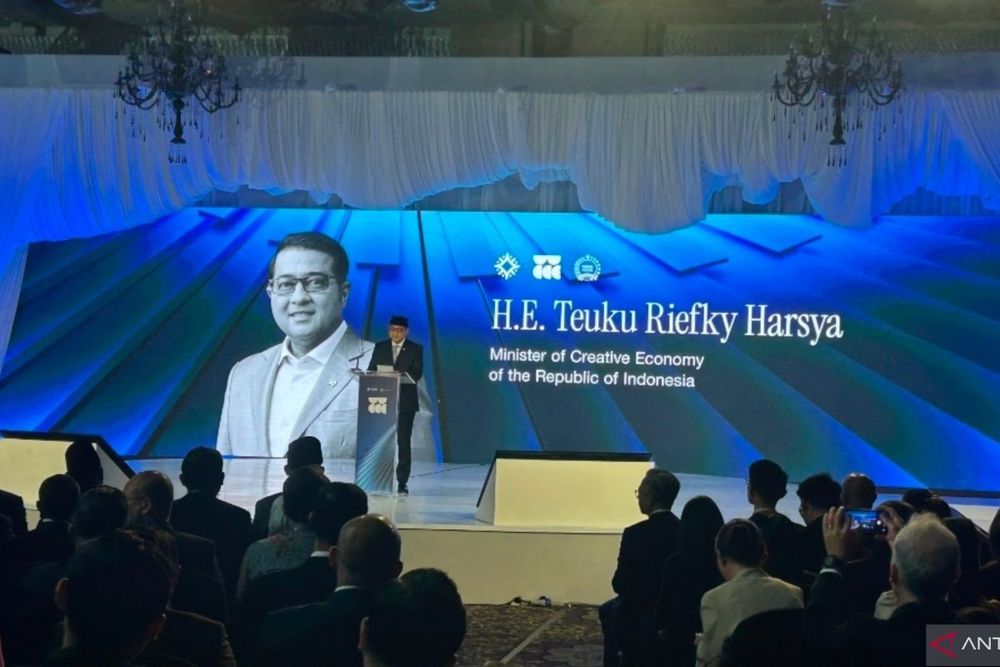
Indonesia is urging developing countries to treat the creative economy as a source of jobs, growth and business opportunities, rather than viewing it solely as a cultural sector. Creative Economy Minister Teuku Riefky Harsya made the case at the opening of the fifth World Conference on Creative Economy in Jakarta on October 22.

Jobs and national development
"For many countries in the Global South, the creative economy is the real pathway toward growth, job creation, and pride in our own stories," Harsya said.
The minister pointed to the sector's economic footprint in Indonesia: about 7.38 percent of gross domestic product and 27.4 million jobs. He also cited United Nations Conference on Trade and Development figures putting worldwide exports of creative goods and services at $1.7 trillion in 2024. Harsya said those figures demonstrated the sector's contribution to growth and employment.
He described hosting WCCE as part of Indonesia's work to develop the creative economy and secure its place on the international development agenda. Building the conditions for the sector to thrive, he said, requires collaboration among governments, creators, businesses, academia, communities and the media.
Harsya also linked the conference to Presidential Regulation No. 37 of 2026 on the Creative Economy Master Plan (RINDEKRAF) 2026–2045 and the National Medium-Term Development Plan (RPJMN) 2025–2029. He presented the event as evidence of those policies, which place the creative economy among the main pillars of national growth.
From the Jakarta Vision to the UN
Under the theme "Inclusively Creative, Collective Continuity," WCCE 2026 has four pillars: technology; artificial intelligence and digital transformation; intellectual property and creative rights; and inclusion, creative ecosystems, and community empowerment. Together, they will underpin the Jakarta Vision on the Creative Economy.
The Ministry of Creative Economy says the Jakarta Vision is intended to support a proposed Creative Economy Resolution at the United Nations. It is also meant to strengthen the sector's role in the global development agenda beyond the Sustainable Development Goals, which end in 2030.
That effort builds on Indonesia's earlier diplomacy at the UN General Assembly. Harsya cited resolutions adopted in 2019 and 2023 and said the Indonesian delegation in New York was seeking updates during the assembly's 81st session, scheduled to continue through September 7, 2027. He said he hoped the creative economy would remain an international development priority in line with the Sustainable Development Goals.
Meetings and public events in Jakarta
The ministry's conference schedule runs from October 21 to 23 at Hotel Indonesia Kempinski in Jakarta. The Friends of Creative Economy Meeting opened the agenda on October 21, followed by the Ministerial Meeting on October 22. Plenary sessions, Creative Sessions and B2B Matchmaking are scheduled for October 22–23.
As of October 15, organizers had confirmed 1,395 participants representing 51 countries and seven international organizations, with attendance still potentially increasing. The program was set to include 45 speakers from 12 countries.
WCCE began as an Indonesian initiative in 2018 and is jointly organized by the Ministry of Creative Economy and the Ministry of Foreign Affairs. The first edition took place in Bali. Dubai hosted in 2021, Bali again in 2022 and Tashkent in 2024, before the conference came to Jakarta in 2026.
Public activities are also taking place across Jakarta's SCBD area in three Creativillage zones. The initiative involves 20 Indonesian creative partners and associations and aims to attract 20,000 visitors. Through the OktoberKreasi program, the series also coincides with National Creative Economy Day on October 24.