
Vice President Gibran Champions Tourism as Key Pillar of Indonesia's Global Influence
Vice President Gibran Rakabuming emphasizes tourism and creative industries as essential components of Indonesia's soft power strategy, calling for technology integration and community empowerment to maximize economic benefits while preserving cultural heritage.

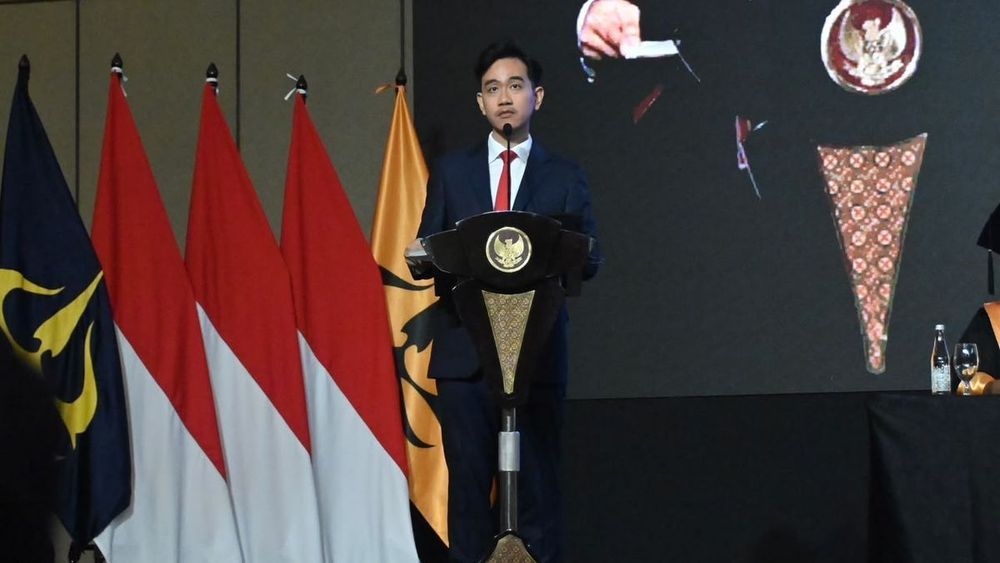
Gibran: Tourism is One of Indonesia's Soft Power Instruments
Vice President Gibran Rakabuming has identified tourism and the creative industry as central pillars of Indonesia's soft power strategy, positioning the nation's cultural richness and creativity as tools to strengthen global relationships and enhance international appeal.
Speaking at the Trisakti Institute of Tourism graduation ceremony in South Jakarta on Tuesday, October 13, 2026, Gibran outlined his vision for leveraging technology to amplify Indonesia's natural and cultural assets, thereby expanding the country's tourism footprint worldwide and stimulating local economies.
"Tourism is one of the crucial instruments in Indonesia's soft power. Soft power is the strength of a nation to be loved by the world," Gibran stated during the event.
Indonesia currently ranks 45th globally in the 2026 Global Soft Power Index with a score of 42.0 out of 100, maintaining its position from the previous year. The nation places 10th among 18 countries in the Asia Pacific region, reflecting steady international visibility.
The Vice President emphasized that effective tourism development requires a balanced approach combining cultural preservation, technological innovation, and community empowerment. He argued that Indonesia's wealth should serve not only as a magnet for visitors but also as a source of inspiration and national pride on the global stage.
Tourism Growth and Economic Impact
Indonesia's tourism sector has demonstrated significant momentum throughout 2026. Between January and August, the country welcomed 10.58 million foreign tourist arrivals, marking a 5.38 percent increase compared to the same period in 2025. Domestic tourism has shown even more robust growth, with 842.15 million trips recorded during the same timeframe—a 4.29 percent rise representing the highest domestic travel activity for this period since 2019.
The nation is targeting between 16.5 and 17 million foreign visitors for the full year 2026, which would surpass the pre-pandemic 2019 peak of 16.1 million arrivals. According to projections from the World Travel & Tourism Council, tourism's contribution to Indonesia's GDP is expected to reach 5.5 percent in 2025 with IDR 1,269.8 trillion, and is forecast to contribute IDR 1,897 trillion by 2035 while supporting nearly 17 million jobs.
Gibran stressed that realizing tourism's economic potential requires more than showcasing beautiful destinations. Innovation and technology must play integral roles in broadening promotional reach and enhancing direct economic benefits for communities.
"What we need to consider now is how technology can add value to our tourism, how technology can directly enhance benefits for the community, and how technology can showcase Indonesia's beauty to the world. We aim to create high quality tourism," he explained.
Community-Centered Development Model
The Vice President highlighted the importance of ensuring tourism growth strengthens local business capacities around tourist destinations. He advocated for involving local communities in supply chains and tourism activities as a strategy to distribute economic benefits more widely.
Gibran cited Plataran Bromo Hotel as an exemplary model of community-integrated tourism. Located at the gateway of Bromo Tengger Semeru National Park, a UNESCO-recognized biosphere reserve, the property has earned recognition among TripAdvisor's Top 20 Family-Friendly Hotels in the World.
"I appreciate how they collaborate with local farmers as suppliers for the restaurant's raw materials, local MSMEs as vendors for Bromo Jeep tours, and indigenous communities for educational tourism related to the Tengger Tribe, so that the presence of large corporations does not replace or undermine but rather enhances the business capacities of the communities involved in promotions," Gibran revealed.
The hotel offers cooking classes with local chefs where guests can pick vegetables from farms worked by community farmers and participate in farm-to-table experiences using ingredients sourced from the surrounding agricultural area, demonstrating practical integration of tourism with local livelihoods.
Cultural Exports Beyond Tourism
Gibran expanded his discussion of Indonesia's global appeal beyond tourism to include music and the creative industry, noting several recent international successes by Indonesian artists.
He mentioned Tulus's song "Teh Hijau," released on June 30, 2026, which gained popularity in Malaysia following the artist's performance at Festival Latihan Pesta Pora 2026 in Kuala Lumpur in August. The release marked Tulus's first single after a four-year gap since his 2022 album "Manusia."
The Vice President also highlighted the vocal group No-Na, which topped a South Korean music platform, and singer Silet Open Up, whose work received a nomination for best Asian song in Japan.
"This phenomenon is evidence that Indonesia's cultural richness and creativity can serve as a means to expand Indonesia's recognition on a global level," Gibran concluded, framing these achievements as components of a broader soft power strategy that positions Indonesia as a culturally influential nation in the international arena.