
Mount Rinjani tourism generated Rp443 billion for local communities in 2021-2025
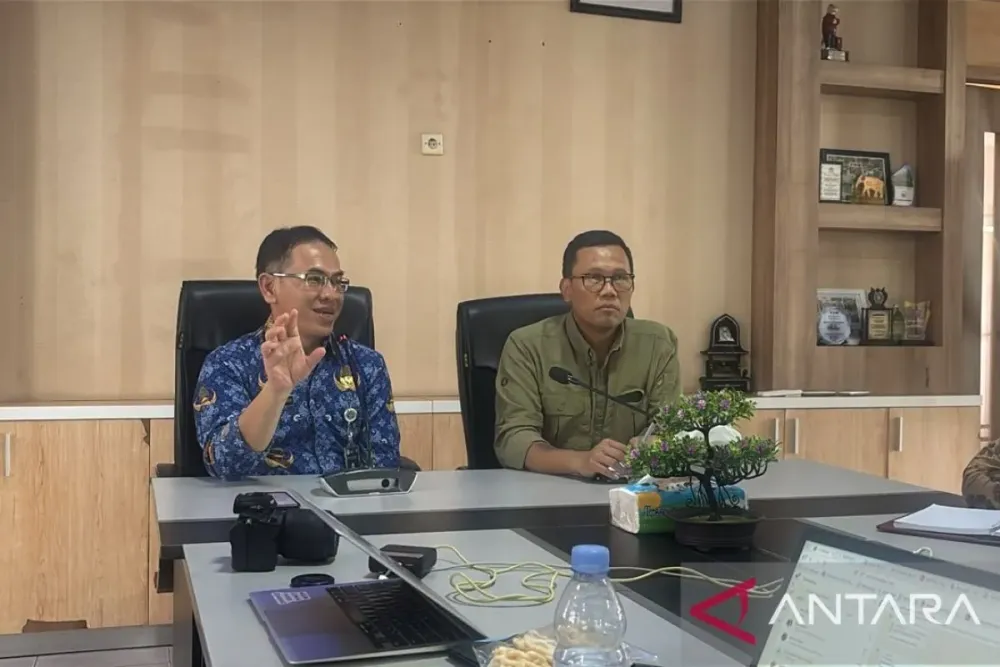
Communities around Indonesia's Mount Rinjani National Park saw Rp443 billion (about US$24.37 million) in economic turnover from tourism and ecosystem services over 2021-2025, park head Budhy Kurniawan reported on October 28, 2026.

Spending supports local businesses
At a meeting in Mataram with visiting Ministry of National Development Planning (Bappenas) delegates, Kurniawan put the average economic multiplier for park-related activities at 3.7. He said each rupiah visitors spent generated up to 3.7 times that amount in economic circulation, benefiting local accommodation, transportation, dining, porter and trekking businesses.
"This significant multiplier effect demonstrates that Mount Rinjani delivers wide-ranging benefits for local livelihoods and the regional economy, while simultaneously establishing a crucial foundation for sustainable conservation funding," Kurniawan said.
The Ministry of Forestry had offered another estimate of the area's economic activity earlier in the year: about Rp500 million a day, or Rp15 billion a month, from climbing and related tourism. Nunu Anugerah, Director of Environmental Services Utilisation at the KSDAE directorate, presented those figures at the Rinjani Begawe Festival in Mataram on March 28, 2026.
The national park is on Lombok Island in West Nusa Tenggara and covers 41,330 hectares. ANTARA reported on July 30, 2025, that it holds UNESCO geopark and biosphere reserve designations.
Non-tax revenue reaches a new high
Separately from the turnover benefiting nearby communities, Kurniawan reported Rp96.9 billion (US$5.33 million) in non-tax state revenue, known as PNBP, for the period from 2021 through September 2026.
The annual figures he cited show a rise from Rp577.5 million (US$31,776) in 2021 to Rp4.9 billion (US$269,615) in 2022. Collections then increased to Rp14.7 billion (US$808,847) in 2023, Rp22.5 billion (US$1.24 million) in 2024 and Rp25.9 billion (US$1.42 million) in 2025.
By September 2026, the Mount Rinjani National Park Office had collected a record Rp28.3 billion (US$1.56 million). Kurniawan attributed the growth to better management of nature tourism and continued interest from Indonesian and international visitors.
An earlier ANTARA report, published July 30, 2025, put non-tax revenue from Rinjani climbing tourism at Rp276 million in 2020 and Rp577 million in 2021. At the March 2026 festival, the Ministry of Forestry estimated the park's annual non-tax revenue contribution at about Rp26 billion.
2025 hiking numbers below the previous year
During the October 28 Bappenas visit, National SDGs Secretariat Head Pungkas Bahjuri cited park records showing 80,214 hikers in 2025. International visitors accounted for 54 percent, or 43,236 people.
Non-hiking visitors added another 52,108 people that year: 51,311 Indonesians and 797 foreign tourists. Budi Soesmardi, Head of Forest Ecosystem Control at the park office, gave those figures in Mataram on January 12, 2026, putting total visits to the Rinjani area in 2025 at 132,322.
The hiking total was lower than in 2024. Tempo's January 12, 2026, report cited park data listing 93,796 hikers for 2024, with 47,716 foreign and 46,126 domestic hikers. Total national park attendance that year was 189,091.
Waste management and route closures
Bahjuri also presented park data on the waste associated with hiking: 30,359.52 kilograms annually, averaging 0.38 kilograms per hiker.
The park temporarily closed six climbing routes from January 1 through March 31, 2026, to mitigate hydrometeorological disaster risks and allow ecosystem recovery. Announced by the park office on social media in December 2025, the closure covered Senaru, Torean, Sembalun, Timbanuh, Tetebatu and the Aik Berik education route.