
Indonesia's Financial Sector Shows Resilience Two Years Into Prabowo-Gibran Administration
OJK Chairwoman Friderica Widyasari Dewi emphasizes financial stability amid global challenges as President Prabowo Subianto approaches the two-year mark of his administration, with economic growth projected at 5.0% for 2026.

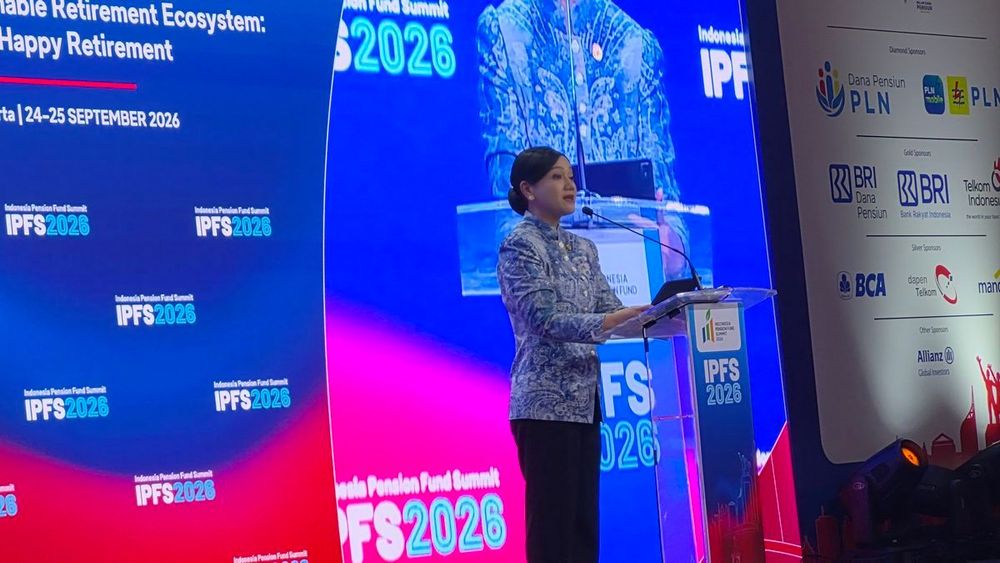
Indonesia's Financial Services Authority (OJK) has underscored the resilience of the country's financial sector as President Prabowo Subianto and Vice President Gibran Rakabuming Raka approach the two-year milestone of their administration, which began on October 20, 2024.
Speaking after a meeting at the Presidential Complex in Jakarta on Monday, OJK Chairwoman Friderica Widyasari Dewi highlighted the authority's ongoing coordination with the Ministry of Finance, Bank Indonesia, and the Deposit Insurance Corporation to maintain financial stability across banking, capital markets, and other sectors.
"This is indeed our duty, especially for OJK to ensure stability in our financial sector, whether from banking, the capital market, and so on," Friderica stated.
The chairwoman, who became the first woman to lead OJK when she was appointed in March 2026 following the resignation of former chairman Mahendra Siregar, emphasized that the financial watchdog remains committed to enhancing the sector's contribution to national development and improving community welfare.
Navigating Global Economic Headwinds
Friderica acknowledged the significant challenges posed by the current international environment, noting that many countries are grappling with geopolitical upheavals. The World Economic Forum's Global Risks Report 2026 identified geoeconomic confrontation as the top global risk this year, followed by state-based armed conflict.
Global economic pressures intensified in March 2026 when armed conflicts in the Middle East triggered dramatic energy price surges, with oil prices rising over 60% and gas prices doubling, creating economic shocks particularly for developing economies.
Despite these external pressures, Indonesia's economic fundamentals have remained robust. The International Monetary Fund projects Indonesia's GDP growth at approximately 5.0% for 2026, while other international institutions forecast growth in the 4.7% to 5.0% range, placing the country above the projected global average of 3.0%.
"The challenges geopolitically and otherwise are very, very significant. But if we look at Indonesia's economic fundamentals, they are very good, very solid," Friderica remarked.
Indonesia's economy demonstrated strong momentum earlier this year, growing 5.61% year-on-year in the first quarter of 2026, the fastest yearly growth since the third quarter of 2022, followed by 5.29% growth in the second quarter.
Capital Market Reforms and Presidential Support
During the meeting, Friderica informed President Prabowo that OJK will continue implementing comprehensive reforms in the capital market. These reforms gained urgency following a January 2026 warning from MSCI that Indonesia risked being downgraded from 'Emerging Market' to 'Frontier Market' status due to concerns about stock ownership transparency and trading practices. The warning triggered market turbulence that resulted in approximately 80 to 120 billion dollars in market value losses.
In response, Indonesia implemented major regulatory changes in early 2026, including doubling the minimum free float requirement to 15% for listed companies and enhancing disclosure of ultimate beneficial ownership. The reforms, finalized on March 31, 2026, aimed to address concerns about shareholding opacity and concentrated ownership patterns.
"He is very supportive of various efforts to make our capital market even more solid, efficient, resilient, and increasingly a place for long-term investment," Friderica said of the President's stance on the reforms.
The reform efforts have received international validation. On October 1, 2026, the Asian Development Bank approved the first subprogram of Indonesia's Financial Market Deepening Program, supporting reforms in capital markets, digital financial services, and sustainable finance.
As the Prabowo-Gibran administration continues its five-year term through October 2029, OJK's focus remains on strengthening financial sector stability while navigating the complex global economic landscape characterized by geopolitical tensions and trade fragmentation.