
Jakarta Stocks Close at 5,050 Despite Global Selloff
Indonesian shares recovered on Friday, Nov. 6, with the Jakarta Composite Index gaining 20 points, or 0.40%, to finish at 5,050. The advance contrasted with losses across Asia as investors weighed U.S. artificial intelligence regulation concerns and escalating tensions in the Middle East.

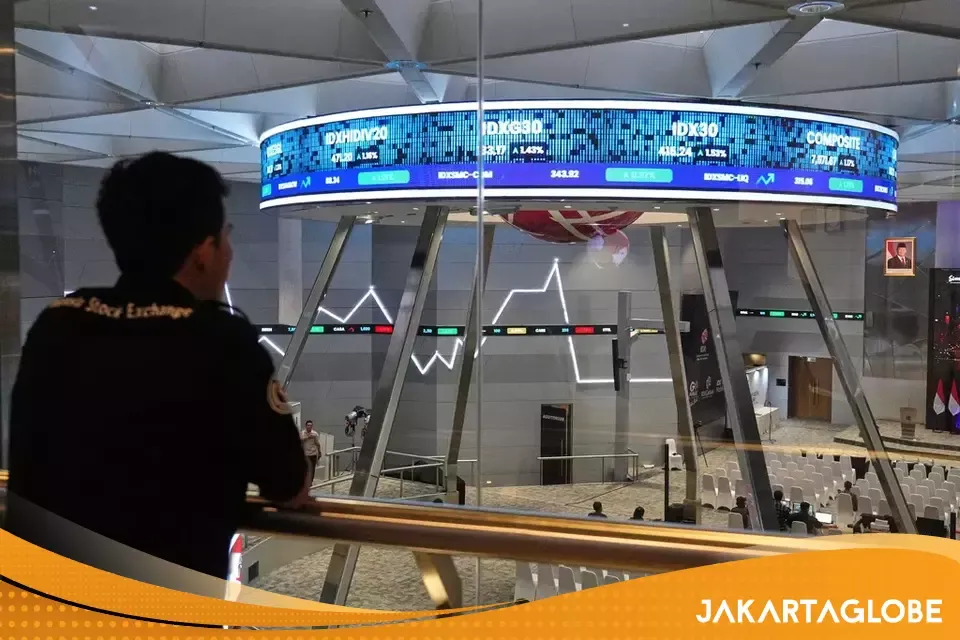
Index gains despite more stocks falling
The Jakarta Composite Index (JCI) traded as low as 4,925 before ending the session above 5,000. Its gain did not reflect a broad advance: 381 stocks declined, compared with 192 that rose and 141 that finished unchanged.
More than 1.1 million transactions involved 47.38 billion shares, with turnover totaling Rp 10.32 trillion ($570.83 million). Despite Friday's rebound, the index remained far below its January 2026 record of 9,174.47, according to Trading Economics.
Elsewhere in Asia, the declines were led by South Korea's Kospi, which lost 6.02%, and Japan's Nikkei 225, down 6.0%. Hong Kong's Hang Seng fell 1.27%, while the Shanghai Composite ended 0.39% lower.
U.S. election sharpens focus on AI restrictions
Pilarmas Investindo Sekuritas linked the Asian retreat to a Wall Street selloff, saying technology shares came under greater pressure after the Democrats' decisive U.S. midterm election victory. Investors were concerned that tighter AI regulation could slow data center expansion, the brokerage said in its Friday research note.
Democrats won control of Congress in the Nov. 3 elections, after which Sen. Bernie Sanders renewed his demand for a national moratorium on data center construction, according to Quartz. Pilarmas said his appeal added to market concerns. Sanders called for the pause to protect the environment, jobs and communities from the dominance of large technology companies.
The proposal predates the election. On March 25, 2026, Sanders and Rep. Alexandria Ocasio-Cortez introduced the Artificial Intelligence Data Center Moratorium Act (S.4214). It would halt construction or upgrading of new AI data centers requiring at least 20 megawatts of power until Congress establishes protections addressing electricity prices, environmental damage and local community consent.
Quartz reported that Democratic control could help the bill advance, though a presidential veto could still prevent it from becoming law. Support is not unanimous within the party: Color of Change CEO Nadine Smith said some Democrats worry a freeze could hinder AI and weaken national security. Separately, Pilarmas noted that several House Democrats have made a temporary pause in AI development a top priority.
Oil-market risks also weighed on investors. Pilarmas said worsening Middle East tensions had pushed crude prices higher, while attacks on tankers in the Gulf raised fears of interruptions to global oil distribution.
Growth and reserves offer domestic support
For Indonesia, Pilarmas cited fiscal concerns alongside the external market pressure. Persistently elevated global oil prices, continued foreign capital outflows and volatility in the rupiah were among the domestic risks it identified.
The brokerage nevertheless expected stronger-than-forecast third-quarter economic growth and stable foreign exchange reserves to help contain further JCI losses. Bank Indonesia put reserves at $146.8 billion at the end of October 2026, little changed from $146.3 billion a month earlier.
Statistics Indonesia's Nov. 5 release showed that third-quarter GDP grew 5.47% from a year earlier, accelerating from the second quarter's 5.29%. The result exceeded the 5.18% median estimate from seven economists surveyed by The Wall Street Journal, according to Morningstar / Dow Jones Newswires. GDP rose 1.59% from the previous quarter.
Growth averaged 5.5% over the first nine months of 2026. Barclays kept its full-year growth projections at 5.4% for both 2026 and 2027, compared with 5.1% growth in 2025. Following Finance Minister Suahasil Nazara's comment that growth could reach around 5.5% this year, the bank judged the risks to its forecast to be tilted slightly more toward the upside than the downside.