
Indonesia and India Alone in Disclosing Shareholders Above 1%, IDX Chief Says
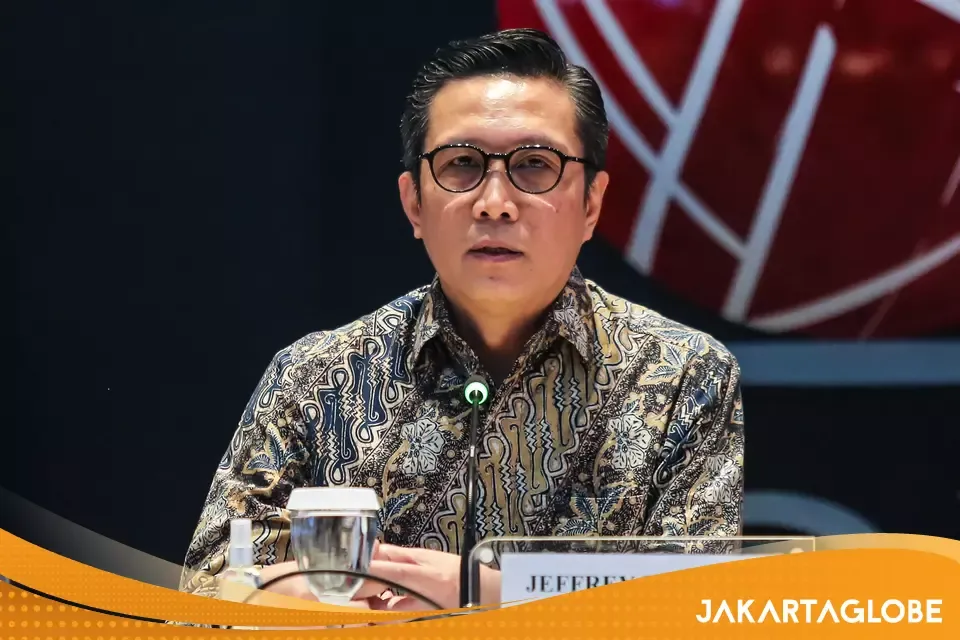
Indonesia and India are the only countries that publicly identify shareholders with stakes above 1% in listed companies, Indonesia Stock Exchange President Director Jeffrey Hendrik said Saturday at a seminar in Mandalika, Lombok.

More detail on ownership
"Only Indonesia and India do this worldwide," Jeffrey said, describing the disclosure requirement as one element of a broader effort to give investors better information and build confidence in Indonesia's capital market.
Indonesia previously used a 5% disclosure threshold. According to the Financial Services Authority (OJK), the Indonesia Central Securities Depository (KSEI) began releasing monthly ownership data identifying shareholders with stakes above 1% on March 3, 2026.
The exchange is also working to reveal affiliations among shareholders. Jeffrey said this would help investors recognize connections between people or entities owning shares in the same company, even when those relationships are not evident from their names. He said the ownership disclosures were being improved in stages.
Another change gives investors a more detailed breakdown of ownership: the IDX expanded its investor classification system from nine categories to 39. The OJK said monthly publication under that framework began on April 1, 2026.
Public shareholder data is distinct from Ultimate Beneficial Owner (UBO) reporting. Amendments issued on April 1, 2026, require listed companies to report UBO information for shareholders owning at least 10%. According to a joint OJK-IDX-KSEI press release, that information is not made public; it is available only to interested parties who request it from the exchange.
Reforms follow MSCI concerns
An October 2026 research note from Mirae Asset Sekuritas Indonesia attributed the transparency reforms to concerns raised by global index provider MSCI. Since January 27, 2026, MSCI has frozen increases in Foreign Inclusion Factors (FIF), additions of Indonesian stocks to its indices and their upward migration across size segments.
MSCI also warned that insufficient progress on transparency could prompt it to consult on moving Indonesia from Emerging to Frontier Market status, according to the note.
The disclosure measures fall under the Eight Action Plans to Accelerate Indonesia's Capital Market Integrity Reform. The joint OJK-IDX-KSEI press release said the OJK and Self-Regulatory Organizations launched the plans on February 1, 2026. Jeffrey said the measures aim to improve market disclosures and strengthen confidence among both domestic and international investors.
Concentrated holdings and free-float rules
The IDX has also begun flagging stocks with high shareholding concentration. When a small group holds a substantial share of a company, it can affect how much stock is available for public trading.
According to the OJK and the Mirae Asset Sekuritas Indonesia note, the first High Shareholding Concentration (HSC) list appeared on April 2, 2026. HSC stocks were removed from the IDX30, LQ45 and IDX80 indices on May 4. By August 21, 2026, 57 issuers had been designated as having HSC status.
Separately, amendments to IDX Regulation No. I-A issued on March 31, 2026, raised the minimum free-float requirement for listed companies from 7.5% to 15%. The OJK and the Mirae Asset Sekuritas Indonesia note describe phased compliance deadlines running from March 2027 through March 2029.