
Indonesia pushes blockchain financing to boost creative sector and strengthen middle class
Minister of Creative Economy Teuku Riefky Harsya and research institute InFast Bestari are promoting blockchain technology to expand financing access for creative economy players and create quality middle-class jobs, addressing declining middle-class population and youth unemployment.

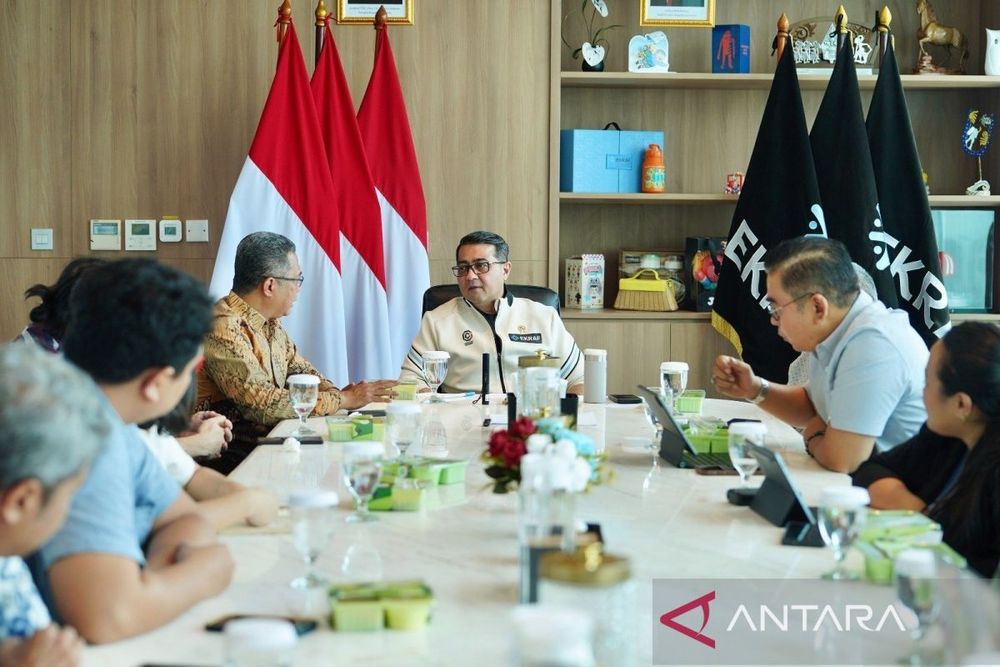
Indonesian govt promotes blockchain to widen creative financing
Indonesia's government is advancing blockchain technology as a financing tool to support the country's creative economy sector and strengthen the middle class, according to Minister of Creative Economy Teuku Riefky Harsya, who met with independent research institute Indonesia Facilitator (InFast) Bestari in Jakarta on Tuesday.
Harsya, who assumed office under President Prabowo Subianto in October 2024, emphasized the strategic role of the creative economy in generating employment for younger generations while bolstering middle-class incomes and purchasing power. The sector has shown robust performance, with GDP reaching IDR 1,757.87 trillion in 2025 and growing at 6.86 percent, outpacing the national economic growth rate of 5.11 percent.
The creative economy currently employs approximately 27.4 million workers, representing 18.7 percent of Indonesia's total national workforce across 21 subsectors. Around 63 percent of these workers are Generation Z and millennials, positioning the sector as a key solution to youth unemployment. Of Indonesia's 7.47 million unemployed people, approximately 82.6 percent are from these younger generations.
Blockchain as an alternative financing mechanism
Blockchain is a digital system that records and stores transaction data securely and transparently, with each record linked and protected. The technology enables transactions to be tracked without relying solely on banks or other intermediaries, reducing fraud and errors while improving efficiency, lowering costs and increasing business accountability.
Harsya outlined plans to leverage blockchain to provide alternative financing for creative economy players with limited capital access. The ministry is promoting collaboration among government, academia, businesses, communities, media and financial institutions through a hexahelix approach.
We want to introduce an innovative financing solution that leverages digital technologies such as blockchain to strengthen Indonesia's creative economy ecosystem.
The initiative could be developed in collaboration with Bank Indonesia and the Financial Services Authority (OJK), which now oversees crypto-assets and digital financial assets following a regulatory transfer from the Commodity Futures Trading Authority in January 2025. OJK has launched a 2024-2028 roadmap for developing financial sector technology innovation, digital financial assets and crypto assets, aiming to encourage innovation while mitigating risks and ensuring consumer protection.
Indonesia officially recognized blockchain technology through Government Regulation No. 28 of 2025 concerning Risk-Based Business Licensing, which came into effect in June 2025, classifying blockchain technology development as a formal business activity. Investment in the creative economy sector reached Rp 183.01 trillion (approximately US$10.1-11.1 billion) in 2025, representing a 32.33 percent increase compared to the previous year.
Addressing the 'missing middle' challenge
The financing scheme is seen as essential for sustaining Indonesia's middle class, which has been declining from approximately 47.9 million people in 2024 to 46.7 million in 2025. Meanwhile, the 'aspiring middle class' group has reached approximately 142 million people. Together, these groups drive economic consumption, with the middle class contributing 36.88 percent of household consumption in 2025 and the aspiring middle class accounting for 44.34 percent, combining for more than 81 percent of total household spending.
InFast Bestari Director of Research and Database Hizkia Yosias Polimpung highlighted the vulnerability of the economically pressured middle class, describing them as the "missing middle" who face economic pressures but do not qualify for social assistance.
The middle class is financially above the social assistance threshold but still struggling to make ends meet. We propose providing scaffolding, a cushion to prevent their economic situation from plummeting further.
The ministry considers wider funding access critical not only for business growth but also for sustaining the middle class. Enhanced financing is expected to help creative entrepreneurs expand production, create jobs and increase incomes. Programs such as Ekraf Data and Dana Ekraf could support this ecosystem development, Harsya noted.
Each subsector has significant potential to create jobs, increase incomes and strengthen purchasing power.
The minister emphasized the sector's role in driving both employment growth and middle-class consumption.