
Indonesia convenes global tax leaders at 7th BRITACOF to advance digital tax cooperation
Indonesia's Directorate General of Taxes hosts the 7th Belt and Road Initiative Tax Administration Cooperation Forum in Jakarta, bringing together 38 countries and 30 international institutions to address digital taxation challenges and share best practices in tax administration.

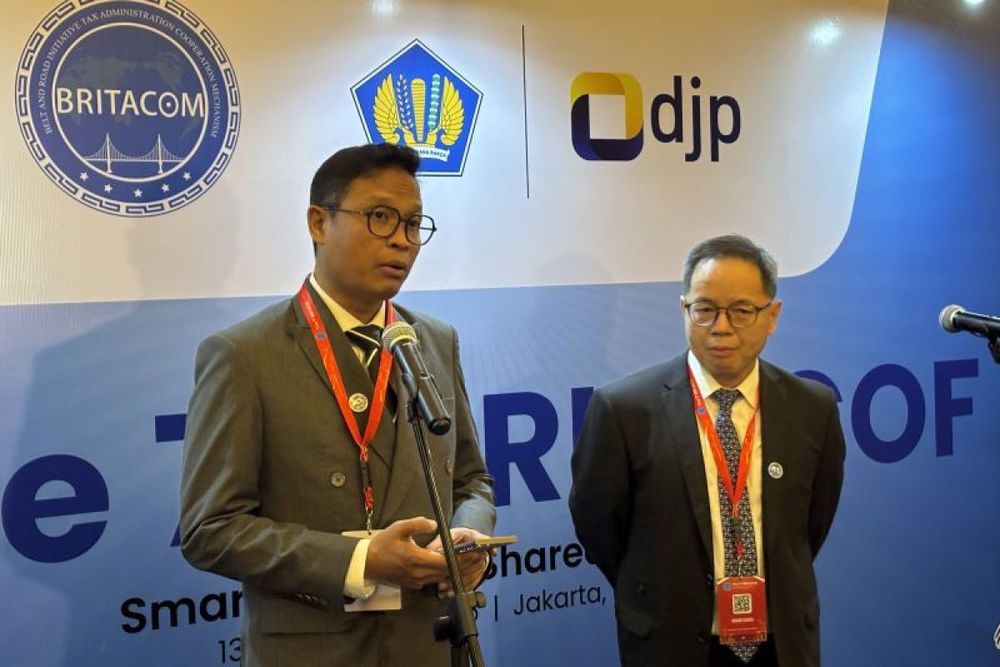
Indonesia hosts BRITACOF to strengthen tax administration
Indonesia is hosting the 7th Belt and Road Initiative Tax Administration Cooperation Forum (BRITACOF) in Jakarta, gathering representatives from 38 countries and 30 international institutions to strengthen tax administration and improve taxpayer services amid the challenges of digital economies.
The forum, convened by the Finance Ministry's Directorate General of Taxes (DGT) on Tuesday, focuses on addressing the growing complexity of cross-border transactions and evolving business models driven by digitalization.
"Through this forum, we have an opportunity to learn from one another and improve the way we administer taxes and serve taxpayers," Director General of Taxes Bimo Wijayanto said during the opening session.
BRITACOF operates under BRITACOM, the Belt and Road Initiative Tax Administration Cooperation Mechanism, which was established in April 2019 in Wuzhen, China. At the inaugural conference, 34 tax administrations signed as Council Members and 22 as Observers, including representatives from G7 countries. The forum has since become an annual event, hosted in rotation by member jurisdictions. The previous edition took place in Hong Kong in September 2024, following Georgia's hosting in September 2023.
The organization aims to facilitate cross-border trade and investment while fostering regional economic growth by building a growth-friendly tax environment through cooperation, sharing best practices, raising tax certainty, expediting tax dispute resolution, and improving taxpayer services.
Focus on digital taxation and technology
Discussions at the Jakarta forum center on four main areas: the use of technology in tax administration, improvements to taxpayer services, strengthening institutional capacity, and enhancing dialogue with businesses and industries.
A key topic is the challenge of taxing digital services, where existing international tax rules based on physical presence fail to allocate taxing rights when highly digitalized companies earn substantial profits in jurisdictions without maintaining a physical location. This issue has prompted broader international cooperation, with the OECD/G20 Inclusive Framework on Base Erosion and Profit Shifting bringing together over 140 countries and jurisdictions to address taxation challenges in the digitalized economy.
Wijayanto emphasized the importance of international cooperation in identifying taxpayers and transactions, developing tax approaches for digital services, and exchanging data between countries.
The forum is also examining artificial intelligence and its implications for economic activity and tax administration. According to Wijayanto, AI offers opportunities to improve the effectiveness of tax administration while requiring authorities to adapt to changing business models.
Indonesia has been advancing its own digital transformation through the Coretax system, formally known as the Tax Administration Core System. Introduced as part of Tax Reform Volume III, the platform aims to centralize data, automate services, and build an integrated taxation ecosystem to increase tax revenue and taxpayer compliance.
Indonesia's tax performance context
The forum comes as Indonesia continues to record strong tax revenue growth. Through August 2026, tax revenue grew 24.1 percent year-on-year, reaching approximately Rp1,409.1 trillion, representing 59.8 percent of the 2026 State Budget target of Rp2,357.7 trillion. In the first quarter of 2026 alone, tax revenue reached Rp394.8 trillion, growing 20.7 percent year-on-year, with value-added tax and luxury goods sales tax contributing the largest share at Rp155.6 trillion, a surge of 57.7 percent compared to the same period in 2025.
Wijayanto stressed that stronger international cooperation could improve tax certainty, ease tax compliance, and support trade and investment across participating jurisdictions.
New resource portfolios launched
BRITACOF 2026 features the launch of two updated resources: the Tax Administration Product Portfolio (TAPP) 2.0 and the Taxpayer Service Product Portfolio (TSPP) 2.0. Both initiatives compile practical approaches and best practices in tax administration and taxpayer services, providing references for participating jurisdictions seeking to develop systems tailored to their specific needs and circumstances.
"If these two products are managed properly, I believe we can help strike a balance between the interests of tax authorities and taxpayers," said Huang Suhua, Executive Secretary of the BRITACOM Secretariat.
The Hong Kong forum in 2024 produced several outcomes, including the Hong Kong Action Plan (2025-2027), the admission of the Maldives Inland Revenue Authority as a new BRITACOM Council member, and the establishment of BRITA·Algiers, demonstrating the forum's ongoing evolution and expansion.