
Indonesia broadens financial inclusion policy to focus on family well-being
Indonesia is making household financial well-being the focus of its financial inclusion policy, expanding its goals beyond bank account ownership. Coordinating Minister for Economic Affairs Airlangga Hartarto said the shift is reflected in the replacement of the National Council for Financial Inclusion (DNKI) with the National Council for Family Welfare (DNKK).

A broader mandate for the council
President Prabowo Subianto inaugurated the DNKK on October 22, 2026, during the National Coordination Meeting of Regional Financial Access Acceleration Teams (TPAKD) at the Jakarta International Expo in Kemayoran, Central Jakarta. Presidential Regulation No. 42/2026 established the council.
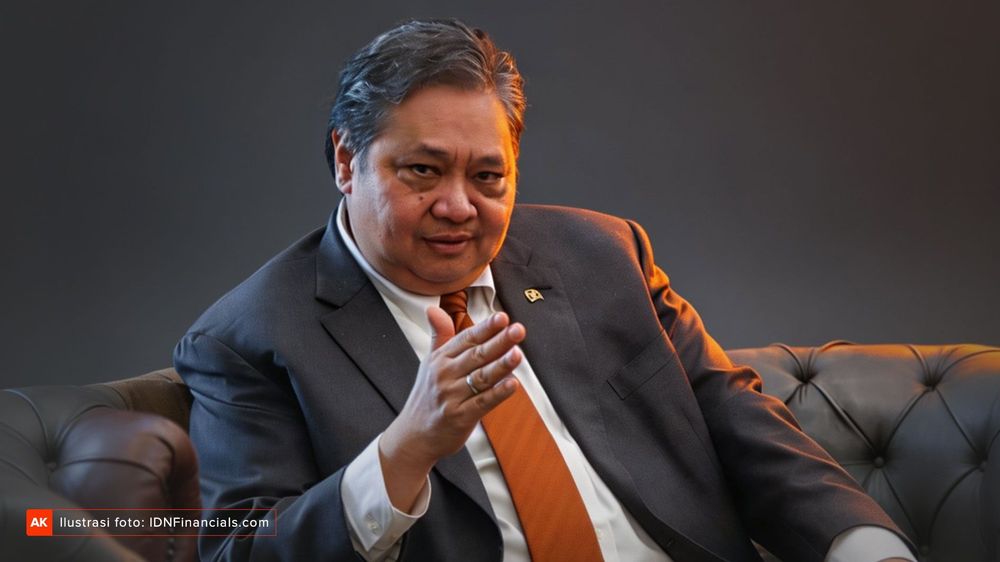
In a ministry press release issued October 23, Airlangga said the DNKI "focused only on inclusivity, on getting people to have bank accounts. But the President has changed the focus towards family financial well-being." He described families as society's smallest economic units and the starting point for improving financial well-being.
The policy addresses three dimensions: financial wellness, or the condition of a household's finances; financial resilience, its capacity to absorb financial shocks; and financial security, the confidence people feel in managing their money. A national strategy has also been prepared, with regional implementation focused on financial literacy and financing access for micro, small and medium-sized enterprises (MSMEs).
The DNKK reports directly to the president, with Airlangga serving as executive chair. Its executive deputy chairs are Financial Services Authority (OJK) chief Friderica Widyasari Dewi, Bank Indonesia Governor Destry Damayanti, Home Affairs Minister Tito Karnavian and Finance Minister Suahasil Nazara.
Prabowo also said Indonesia's natural resources and national wealth should be managed to deliver the greatest prosperity for its people. The policy calls for central and regional governments to work with financial services institutions to widen economic opportunities, help households withstand financial shocks and extend development benefits to communities across the country.
Financial health push began before the launch
The council initiative followed Queen Máxima's November 24-27, 2025, visit to Indonesia as the UN Secretary-General's Special Advocate for Financial Health (UNSGSA). After meetings with Prabowo and senior officials, the visit concluded with the president's announcement that Indonesia would establish a National Council for Financial Health.
The UNSGSA described financial health in terms of handling daily finances, weathering unexpected shocks, investing toward future goals and feeling confident about one's financial life. It cited two challenges: six in ten Indonesians said their income did not meet basic living costs, while seven in ten faced attempted digital scams every week.
Survey shows higher access and literacy
The policy shift comes as Indonesia's financial inclusion index reached 93.61% in the 2026 National Survey on Financial Literacy and Inclusion (SNLIK), while the financial literacy index reached 69.57%. The government sees those results as a basis for improving how people use financial services and broadening the benefits.
OJK, the Indonesia Deposit Insurance Corporation (LPS/IDIC) and Statistics Indonesia (BPS) released the results on August 11, 2026. Inclusion rose from 92.74% in the 2025 survey, and literacy increased from 66.64%. Both measures surpassed the respective 2029 targets of 93% and 69.35% in the 2025-2029 National Medium-Term Development Plan (RPJMN).
The latest survey also had a larger sample and geographic reach. Fieldwork ran from January 26 through February 18, 2026, covering 75,000 people ages 15 to 79 in 514 cities and regencies across 38 provinces. The 2024 and 2025 surveys each covered 10,800 respondents in 120 cities and regencies across 34 provinces.
Results differed sharply between conventional and sharia finance. Conventional finance registered 69.57% literacy and 93.53% inclusion, compared with 43.07% literacy and 13.24% inclusion for sharia finance.
Financial inclusion remains a main national development indicator under Law No. 59 of 2024, which sets out the 2025-2045 National Long-Term Development Plan. Its target is 98% inclusion by 2045.
Credit plans and support for workers
At the October 22 TPAKD meeting, Prabowo announced plans to distribute Rp 400 trillion in credit by 2027. The intended recipients include farmers, fishermen, rural communities, low-income urban residents and people in 3T areas, designated as frontier, outermost and least developed.
According to Kompas.id, Airlangga said People's Business Credit (KUR) disbursements had reached Rp 257.14 trillion as of October 20, 2026, against a Rp 300 trillion ceiling. The lending covered about 4 million accounts.
Airlangga also reported the launch of a Job Loss Guarantee program offering laid-off workers assistance equal to 60% of their wages for six months. He said 13.3 million workers would receive Rp 300,000 monthly, with payments made through bank accounts of partner implementers of the One Person One Account program.
The meeting included a symbolic handover of financing agreements and credit facilities distributed from August through October 2026. The Jakarta Globe reported that 343 financial services institutions provided Rp 53.15 trillion (US$2.9 billion) to 2,106,401 borrowers.