
West Bandung assists 16 migrant workers who faced abuse, unpaid wages abroad
West Bandung authorities in West Java handled 16 Indonesian migrant workers this year who encountered problems including sexual harassment, unpaid wages and illness while working in eight countries through unofficial channels.
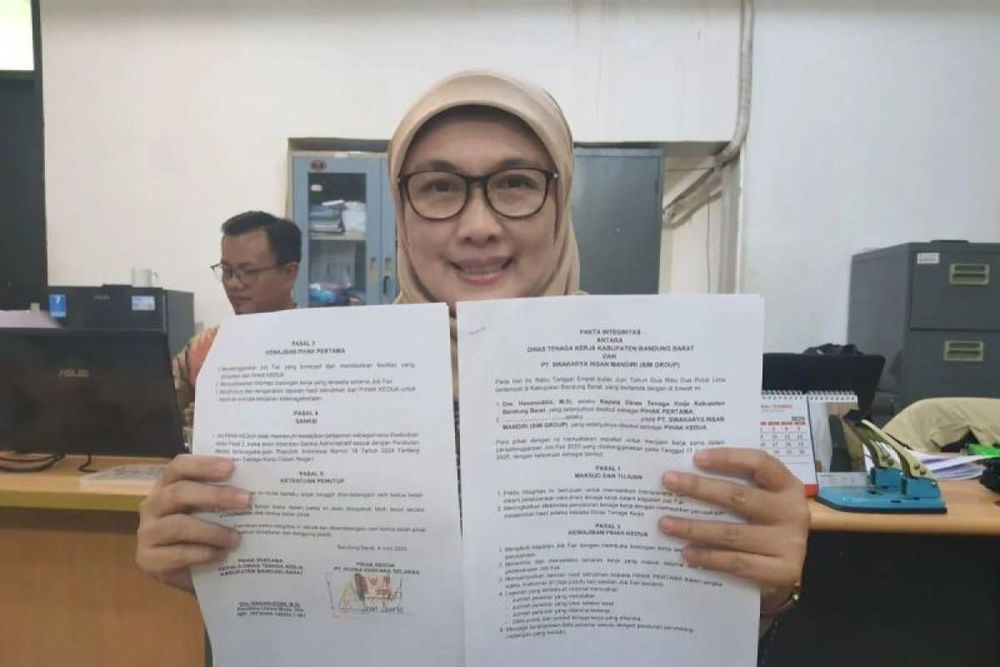
West Bandung assists 16 migrant workers who faced abuse, unpaid wages abroad
Authorities in West Bandung, West Java, have provided assistance to 16 Indonesian migrant workers who faced serious problems while working abroad this year, including sexual harassment, unpaid wages and illness, a local official reported Thursday.
Dewi Andani, an official with the West Bandung Manpower and Transmigration Office, said the workers sought help returning home after encountering difficulties in eight countries and territories: Saudi Arabia, Libya, Hong Kong, Dubai, Cambodia, Malaysia, Turkey and Taiwan.
All 16 workers had left Indonesia through unofficial channels, Dewi said, exposing them to risks that official procedures are designed to prevent. The cases reflect a broader national pattern, as BP2MI received 2,849 complaints from Indonesian migrant workers throughout 2025, with repatriation requests being the most common at 846 cases.
Economic pressures drive unofficial migration
West Bandung, a regency of approximately 1.9 million people established in 2007, is part of Java island, which accounts for about 64% of Indonesian migrant workers according to BP2MI data from early 2026. In the first half of 2026 alone, BP2MI reported that 153,049 Indonesian migrant workers were placed in various countries, with Taiwan being the main destination for 32% of workers.
Dewi explained that unofficial recruitment remains popular because workers perceive it as faster and easier, requiring fewer documents than official procedures. Economic pressures, limited information, brokers or sponsors, and invitations from relatives abroad also influence people to choose unofficial channels.
People choose unofficial channels because they seem faster and easier, with fewer requirements. But that is wrong and carries high risks.
The importance of migrant worker protection extends beyond individual welfare. Indonesian migrant worker remittances reached US$4.536 billion in the first quarter of 2026, with Malaysia being the largest single corridor at US$1.209 billion, followed by Saudi Arabia at US$1.005 billion.
Deaths and repatriation
The West Bandung government also facilitated the repatriation of remains for five migrant workers who died from illnesses while working abroad.
Five people died from illness, and we facilitated their return. This shows the state remains present.
Historical data shows that from 2017 to 2022, approximately 30% of complaints from Indonesian migrant workers came from Saudi Arabia and 17% from Malaysia, involving recruitment fraud, employer harassment and unpaid wages.
Government response
Indonesia launched the National Movement for Safe Migrants in May 2026 to address issues including non-procedural placement, fraud and human trafficking during overseas employment. The initiative operates under Law 18 of 2017 on the protection of Indonesian migrant workers, which established a comprehensive approach covering pre-departure, employment abroad, and post-return and reintegration.
In 2025, government efforts successfully prevented 5,913 individuals from attempting to migrate through irregular channels, according to statements at a UN committee meeting.
The West Bandung Manpower and Transmigration Office urged people seeking overseas jobs to use official channels to obtain protection and avoid risks while working abroad.