
Indonesia expands AI literacy training for students through education ministry, police partnership
Indonesia's Education Ministry and National Police formalize cooperation to train students in AI literacy across 12 provinces, addressing cybercrime risks as the country advances its national digital transformation strategy.
Indonesia expands AI literacy training for students through education ministry, police partnership
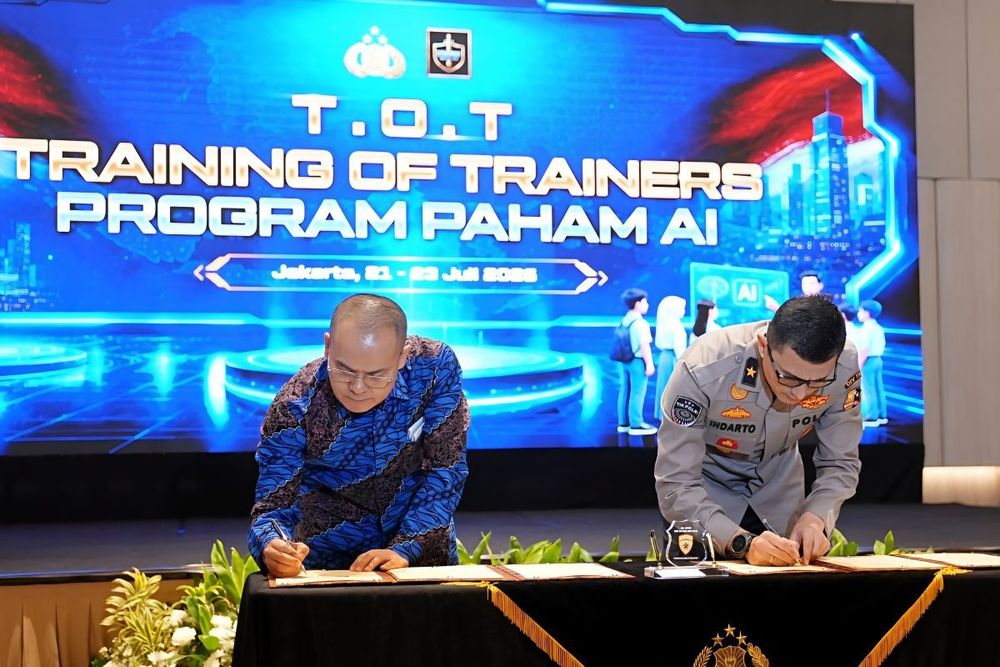
Indonesia's Ministry of Primary and Secondary Education and National Police signed an agreement Wednesday in Jakarta to expand artificial intelligence literacy training for students, marking a significant step in the country's digital education transformation.
The partnership establishes a Training of Trainers program under the "Paham AI" (AI Literacy) initiative, targeting senior and vocational high school students across 12 provinces. Personnel from provincial police forces will be trained to deliver instruction in their respective regions.
Integrating AI into the world's fourth-largest education system
The initiative comes as Indonesia manages the world's fourth-largest education system, encompassing over 50 million students, 3.3 million teachers, and 430,000 schools. The country introduced AI and coding as elective subjects in 59,000 schools at the start of the 2025-2026 academic year, part of a broader push to integrate digital skills into national education.
Tatang Muttaqin, director general for secondary and special education at the ministry, emphasized that rapid digital transformation is reshaping how people think and learn. While artificial intelligence offers significant opportunities to improve education quality and productivity, he noted the technology also poses risks including misuse, cybercrime, disinformation, privacy breaches, and ethical challenges.
"Digital competence goes beyond technical skills. Building digital character is equally important so students can use AI wisely and maximize its benefits," Tatang said.
Rising cybercrime highlights program urgency
The urgency of the program is underscored by rising cybercrime rates. The Indonesian National Police Cyber Crime Unit recorded a 32 percent increase in cybercrime cases in 2024, with the 18-25 age group, predominantly students, being the most frequent victims. Meanwhile, nearly half of Indonesian students already utilize AI tools for academic tasks at least several times monthly, finding them helpful for generating ideas and improving time efficiency.
Indonesia's national digital literacy score stood at 3.54 out of 5 in 2022, classified as moderate by the Ministry of Communication and Information Technology, indicating room for improvement in digital competencies nationwide.
Police as educational partners
Indarto, head of the National Police's Technology and Communication Bureau, described the Training of Trainers program as a long-term effort to improve AI literacy among students and teachers. He noted that young people's adoption of AI is advancing much faster than regulatory frameworks, creating both opportunities and challenges.
"This creates an opportunity to build trust between police and students. We must act early through prevention, serving as educational partners and facilitators for teachers and students," Indarto said.
The police force has developed institutional capacity for digital education, establishing dedicated units including the Directorate of Cyber Crime and integrating digital literacy into officer training programs covering digital ethics, cyber laws, and intelligence analysis.
Part of broader national AI strategy
The education-police cooperation aligns with Indonesia's broader National Artificial Intelligence Roadmap, with a presidential regulation expected in the first quarter of 2026 to guide ministries and agencies in formulating AI policies. The roadmap targets a 25 percent annual increase in AI-trained professionals through education reforms and digital literacy programs.
However, significant challenges remain. Despite having over 204 million internet users and more than 4,500 higher education institutions, readiness for AI adoption remains uneven across regions due to digital infrastructure disparities.
The initiative is part of a multi-stakeholder approach to AI education in Indonesia. Private sector efforts, including Microsoft's Elevate program targeting 500,000 AI-certified talents by 2026, complement government programs in building digital capacity among educators and community advocates.
Through the partnership, the ministry and police aim to help Indonesia's youth become not only proficient in using AI but also wise, ethical, and responsible in its application, preparing them for continued digital transformation in education and the workforce.