
Travel Agency Director Explains $554,500 Return to State in Hajj Quota Corruption Case
Khalid Basalamah testified that he returned funds to the KPK after learning the money from Ibnu Mas'ud needed to be submitted to the state, as part of the ongoing trial over alleged corruption in Indonesia's 2023-2024 hajj quota management.

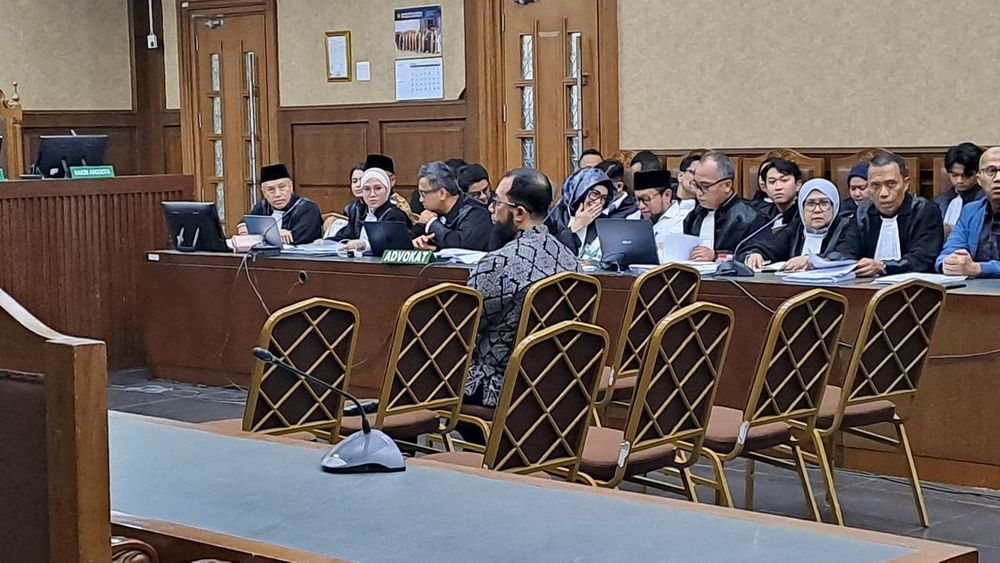
Khalid Basalamah Reveals Origins of $554,500 Payment to KPK in Hajj Quota Trial
Khalid Zeed Abdullah Basalamah, director and owner of PT Zahra Oto Mandiri (Uhud Tour), testified in court on Tuesday that he returned $554,500 to state coffers after the Corruption Eradication Commission (KPK) explained that funds previously returned to him by a business associate needed to be submitted to the government.
The KPK, established in 2003 under Law No. 30 of 2002, operates independently from the executive, legislative, and judicial branches with authority to conduct investigations, prosecutions, and corruption prevention activities. The commission is currently investigating alleged irregularities in the management of Indonesia's hajj quota for 2023-2024.
Appearing as a witness at the Jakarta Corruption Court on October 20, 2026, Khalid detailed how his travel agency facilitated pilgrim departures through PT Muhibbah Mulia Wisata, including the payment process and subsequent returns after pilgrims returned from Saudi Arabia in 2024.
During questioning, Khalid explained that after two meetings with KPK investigators, he was informed that money originally returned by Ibnu Mas'ud, a commissioner of PT Muhibbah Mulia Wisata, had to be transferred to the state.
After being questioned in two meetings, the KPK indicated to me that this money, which had originally been returned by Ibnu Mas'ud, had to be returned to the state.
Cash and Transfers Deposited to KPK Account
Prosecutors confirmed evidence of $354,500 in cash and several transfers totaling $200,000 that were deposited into a KPK holding account, bringing the total to $554,500. Khalid acknowledged that his staff delivered the cash and confirmed the transfer deposits.
He explained that initially neither he nor his staff fully understood why the funds were being returned. According to his testimony, Ibnu Mas'ud contacted his staff for a meeting where they requested no cameras or media presence. Following that meeting, Khalid's staff received a sum of money described as a reimbursement.
At first, we thought this money might be a miscalculation. Because as pilgrims, when we pay the travel agency, and then there's a reimbursement, it could just be a miscalculation,Khalid told the court. Due to uncertainty about the purpose of the returned funds, he instructed his staff to hold the money temporarily.
Background of the Hajj Quota Case
The case centers on alleged corruption in the management of Indonesia's 2024 hajj quota of 241,000 pilgrims, the largest in the country's history. This quota comprised 221,000 regular pilgrims plus an additional 20,000 granted by Saudi Arabia's King Salman. The distribution included 221,720 regular hajj pilgrims and 19,280 special hajj pilgrims.
Special hajj pilgrimage, organized by private travel agencies known as PIHK, offers shorter waiting periods in exchange for higher prices compared to regular subsidized hajj. Under Indonesian law, special hajj is legally capped at 8 percent of the total quota. The corruption allegations stem from accusations that an additional quota was split equally between regular and special categories, violating this legal limit.
The hajj quota allocation is a highly sensitive matter in Indonesia, where waiting times for pilgrimage range from 11 to 47 years. Many elderly prospective pilgrims die before their scheduled departure, making the management of quotas a critical issue affecting millions of citizens.
Four Defendants Face Corruption Charges
The KPK has charged four individuals in connection with the case: Yaqut Cholil Qoumas, who served as Minister of Religious Affairs from 2020 to 2024 under President Joko Widodo; Isfah Abidal Aziz (known as Gus Alex), former Special Staff to the Minister of Religious Affairs; Ismail Adham, Operational Director of PT Makassar Toraja (Maktour); and Asrul Azis Taba, Chairman of Kesthuri and Commissioner of PT Raudhah Eksati Utama.
The Ministry of Religious Affairs is legally responsible under Law No. 8 of 2019 for setting Indonesian hajj quotas transparently and proportionally, as well as issuing permits for and supervising private special hajj and Umrah travel organizers.
According to the KPK's charges, the management of the additional hajj quota for 2023-2024 resulted in state losses of at least IDR 622.09 billion. This figure comes from an Investigative Audit Report by the Audit Board of the Republic of Indonesia (BPK), which conducts investigative audits at the request of law enforcement agencies to calculate state losses in corruption cases.
The state losses consist of a difference between revenue and expenses of special hajj organizers totaling IDR 438.2 billion, revenues from the sale of special hajj quota for 2024 amounting to IDR 39.95 billion, and fees for accelerating the filling of the additional hajj quota for 2023 and 2024 totaling IDR 143.92 billion.
The defendants are charged with violations of Article 3 in conjunction with Article 18 of Law Number 31 of 1999 on the Eradication of Criminal Acts of Corruption, as amended by Law Number 20 of 2001, in conjunction with Article 20 letter c of Law Number 1 of 2023 on the Criminal Code. Under Indonesian corruption law, these violations can result in criminal penalties for abuse of authority that enriches oneself or others and causes state losses.