
Prabowo Calls for Further Study of Indonesia's Corruption Definition
Indonesian President Prabowo Subianto has ordered a closer examination of proposed changes to the legal definition of corruption, without endorsing the National Economic Council's recommendations, Coordinating Minister Yusril Ihza Mahendra said on October 26, 2026.

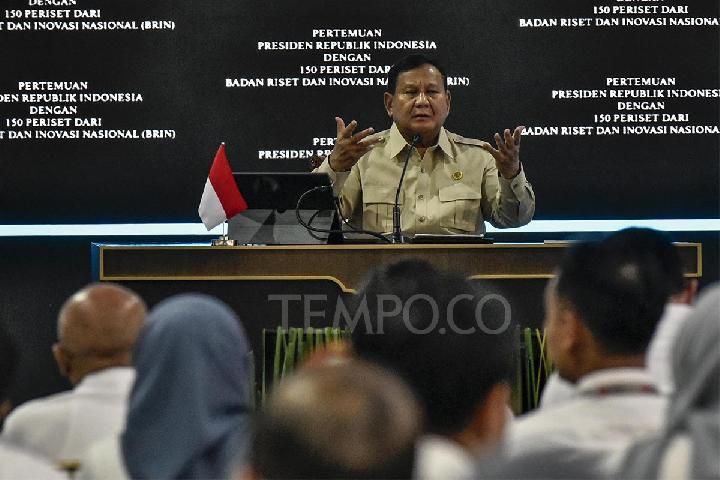
Study ordered, not approval granted
Speaking after a meeting at the Presidential Palace complex in Jakarta, Yusril said Prabowo wanted the government to examine how the definition could better reflect Indonesia's circumstances. The review concerns Law No. 31 of 1999 and Law No. 20 of 2001, which govern corruption offenses.
The National Economic Council (DEN), led by Luhut Binsar Pandjaitan, presented its proposal to Prabowo at Jakarta's Merdeka Palace on October 20. Reports that the president had approved the study fueled debate over the proposal; Yusril stressed that Prabowo's request for further examination did not amount to approval of DEN's recommendations.
Yusril, the coordinating minister for law, human rights, immigration, and prisons, said the aim was to strengthen enforcement and protect state wealth through rules suited to Indonesia's needs.
Dispute over the state-loss provisions
Luhut has argued that the Anti-Corruption Law's state-loss clause constrains business decisions by the Investment Management Agency Danantara. In his view, revising the definition would give the agency greater legal certainty.
After criticism, Luhut said DEN was not seeking to delete the state-loss element from Articles 2 and 3 of the Anti-Corruption Law or Articles 603 and 604 of the Criminal Code. He described two priorities: making the requirements for proving an offense clearer so enforcement is more predictable, objective, and consistent; and adding offenses covered by the United Nations Convention Against Corruption (UNCAC) but not yet addressed in Indonesian law.
Ibrahim, who heads the Law and Investigation Division at Indonesia Corruption Watch, warned that eliminating the state financial loss provision would undermine anti-corruption enforcement. He said it had been central to prosecutions, with state-loss provisions used in 83.5% of convictions and 91.3% of corruption investigations in 2024.
According to Jakarta Globe, Corruption Eradication Commission (KPK) Chairman Setyo Budiyanto also opposed removing state financial losses from the definition. He urged lawmakers instead to criminalize four outstanding UNCAC offenses: foreign bribery, trading in influence, private-sector bribery, and illicit enrichment.
The issue has also reached the courts. Kompas.com reported that the Constitutional Court rejected a petition in December 2025 seeking to eliminate the state-loss provision in Articles 2 and 3.
What alignment with UNCAC could cover
Indonesia ratified UNCAC through Law No. 7 of 2006. Yusril said the convention addresses more than bribery and provides guidance for national anti-corruption laws. He said the government would pursue alignment while accounting for Indonesia's characteristics, needs, and national interests.
The convention does not make harm to state property a universal requirement for corruption offenses. Article 3(2) says such a loss is unnecessary unless a particular provision specifies otherwise. Kompas.com noted that this extends the reach of anti-corruption enforcement rather than restricting it.
Yusril said his discussion with Prabowo included practices that deplete national wealth or damage the economy, such as mining under-invoicing and illegal fishing. These warrant attention alongside bribery, gratification, extortion, and abuse of authority. He argued that the national-economy element of the existing law remained insufficiently developed and that these practices should fall within the corruption definition.
He also called for a study of how state finances are defined. Clearer boundaries, he said, would help authorities apply the law accurately and avoid misinterpreting financial management and business activities.
According to Kompas.id, UNCAC identifies 11 criminal offenses, several of which Indonesia had not criminalized as of October 2026. They include bribery of foreign public officials, trading in influence, also known as influence peddling, and illicit enrichment.
The review also has an international membership dimension. Yusril said explicit criminal penalties for foreign bribery are a mandatory requirement for Indonesia's bid to become a full member of the Organisation for Economic Co-operation and Development (OECD) by 2028. Meeting that requirement is one purpose of the Anti-Corruption Law review.
Legislative steps still required
The Anti-Corruption Law revision is listed in the National Medium-Term Legislation Program for 2025-2029, according to Kompas.id. Deliberations cannot begin until the House of Representatives (DPR) and the government both agree to add it to the annual legislative agenda.
Kompas.id also reported that the Asset Forfeiture Bill was expected to pass in December. That bill addresses implementation of UNCAC Articles 31 and 54 on the seizure and forfeiture of criminal assets, including the possibility of forfeiture without a criminal conviction.