
Mining Executive Charged in Rp 401 Billion Nickel Export Corruption Scheme
Indonesia's Attorney General names DS, president director of PT CNI, as suspect in corruption case involving illegal nickel exports from 2017-2020. State losses calculated at Rp 401 billion as investigation reveals violations of domestic market obligations and bribery of officials.

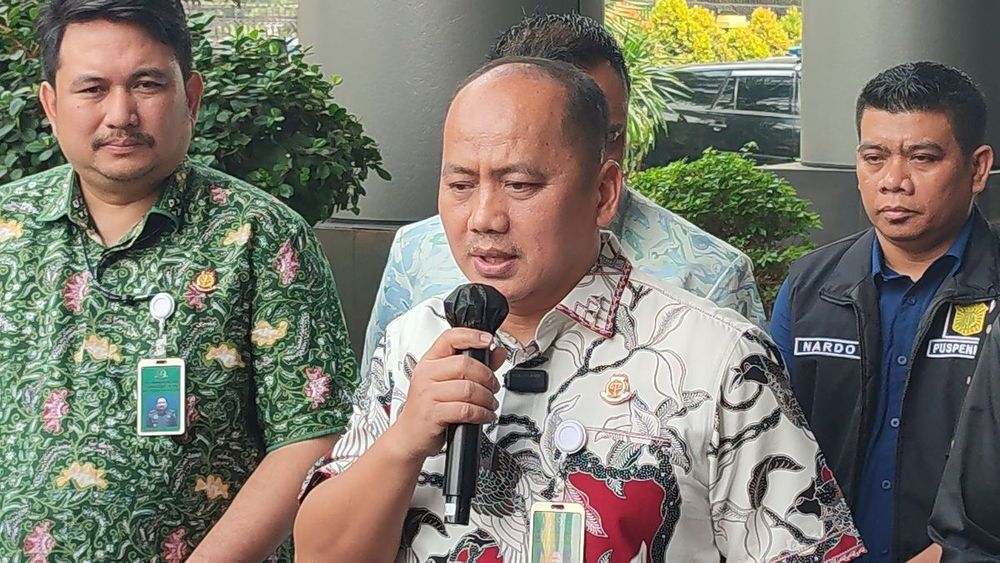
Attorney General Names Mining Tycoon as Suspect in Nickel Corruption Case
Indonesia's Attorney General's Office has designated a mining industry executive as a suspect in a major corruption case involving illegal nickel exports that caused state losses of Rp 401 billion between 2017 and 2020.
Head of the Legal Information Center Anang Supriatna announced Thursday that investigators named DS, who serves as president director and shareholder of PT CNI, as a suspect after examining multiple witnesses and collecting evidence.
The charges center on allegations that DS unlawfully exported nickel without fulfilling Indonesia's Domestic Market Obligation, a regulatory requirement mandating that mining companies reserve a specified percentage of their mineral production for domestic use before being permitted to export. Fulfillment of these DMO quotas serves as a prerequisite for obtaining export licenses.
According to investigators, DS allegedly used falsified documents including nickel grade test results, export recommendations, and approval of the Work Plan and Budget that were issued through processes deviating from established regulations. The suspect allegedly provided payments to government officials and related parties to facilitate the processing of these licensing documents.
Regulatory Context and Economic Stakes
The alleged violations occurred during a critical transition period in Indonesia's nickel industry policy. The country imposed a complete export ban on nickel ore in 2014, then relaxed restrictions in 2017 to allow exports of certain nickel ore with concentration below 1.7 percent. In September 2019, authorities announced they would reinstate the full export ban effective January 2020, two years ahead of the originally planned 2022 timeline.
Indonesia implemented the export ban as part of its downstreaming policy to encourage construction of domestic nickel smelters and increase the value of exports beyond raw materials. The strategy proved transformative: Indonesia's refined nickel production surged from around 22,000 tonnes in 2014 to more than 1.4 million tonnes in 2023, a more than 60-fold increase that elevated the country's share of global refined nickel production from approximately 1 percent to 41 percent.
Indonesia now accounts for approximately 62 percent of global mined nickel production and holds the world's largest proven nickel reserves at 21 million metric tons, underscoring the strategic importance of proper oversight in this sector.
Investigation Findings and Asset Recovery
The Financial and Development Supervisory Agency, Indonesia's internal government auditor responsible for state financial oversight, calculated the state losses at Rp 401 billion. During the investigation, the Attorney General's Office received partial restitution of state losses from PT CNI totaling less than the full amount.
Investigators seized USD 120,400 and Rp 6.21 billion in cash during searches, and received Rp 1.27 billion in returned bribe money.
DS has been detained for 20 days beginning October 15 at the Salemba Detention Center of the South Jakarta District Attorney's Office. The suspect faces charges under multiple provisions of corruption law, including Article 603 in conjunction with Article 20 letter a or c of the Criminal Code as the primary accusation, and Article 3 in conjunction with Article 18 of the Law on the Eradication of Corruption as the subsidiary accusation.
Additional charges include violations of Article 12 letter a or Article 12 letter b of the Corruption Act, as well as Article 606 paragraph 2 in conjunction with Article 20 letter a or c of Law Number 1 of 2023 on the Criminal Code.
Broader Investigation
The Attorney General's Office previously named BS, former Director of Mineral Business Development at the Directorate General of Mineral and Coal of the Ministry of Energy and Mineral Resources from 2017 to 2018, as a suspect in the same case on September 25.
Three other individuals have also been designated as suspects: NRH, who served as Head of the Sucofindo Unit in Kendari from 2012-2019; MHI, Head of the Mineral and Coal Division of the South East Sulawesi Provincial Energy and Mineral Resources Agency from 2017-2019; and one additional suspect whose identity has not yet been disclosed.
The investigation reflects broader challenges with natural resources corruption in Indonesia, where extractive industries including mining account for a significant percentage of the country's GDP and require extensive land permitting and ownership processes.