
Indonesia intensifies regional battle against online scam networks and human trafficking
Two years into the Prabowo-Gibran administration, Indonesia has accelerated efforts to dismantle transnational cybercrime syndicates through ASEAN cooperation, repatriating thousands of citizens from scam compounds while blocking hundreds of thousands of fraudulent accounts domestically.

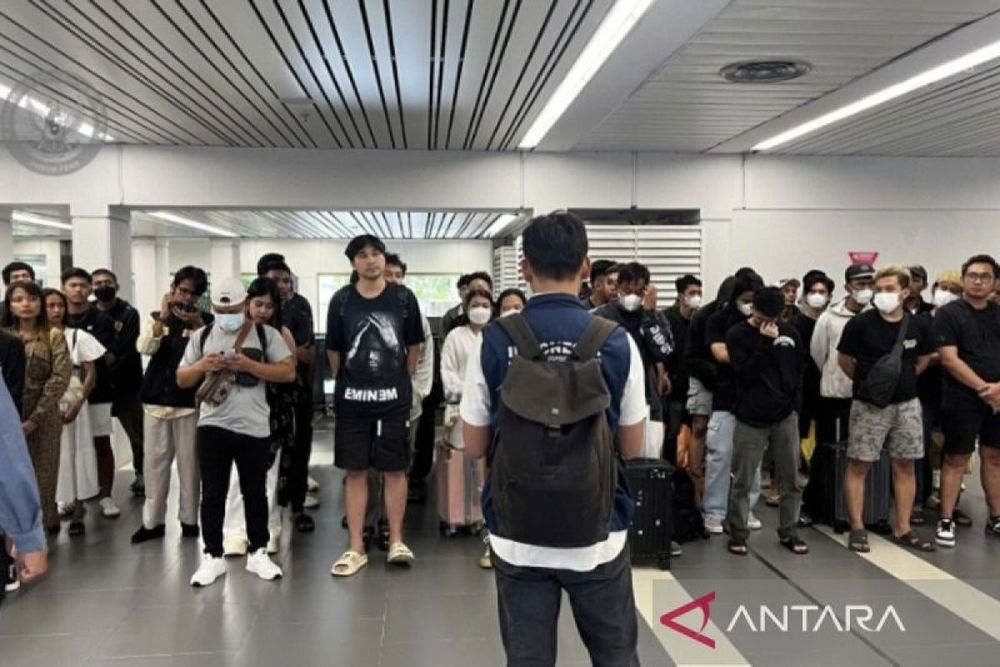
Indonesia fights cyber syndicates and human trafficking across ASEAN
As President Prabowo Subianto and Vice President Gibran Rakabuming Raka mark two years in office, Indonesia has placed the protection of citizens from digital fraud and the dismantling of transnational crime networks at the center of its national security agenda. The government has deployed integrated strategies combining diplomatic engagement, law enforcement action, and technological systems to combat online scams and human trafficking that have ensnared thousands of Indonesians both at home and across Southeast Asia.
The scale of digital fraud facing Indonesia has reached alarming proportions. The Financial Services Authority's Indonesia Anti-Scam Centre, launched on November 22, 2024, recorded financial losses totaling Rp9.1 trillion (approximately US$556 million) between its establishment and December 2025, processing more than 411,000 reported cases. Indonesia now receives an average of 874 scam reports daily, far exceeding the global average of 115 reports per day, making it the country with the highest number of financial scam reports worldwide.
The broader impact becomes clearer when examining comprehensive data. The Global Anti-Scam Alliance's State of Scams in Indonesia 2025 report found that 66 percent of the population has encountered a digital fraud attempt, with 14 percent of Indonesian adults actually losing money to scams over a 12-month period. Total losses across the country reached Rp49 trillion (US$3.3 billion), averaging approximately Rp1.7 million per person affected. These figures underscore why aggressive government intervention has become necessary.
Human trafficking crisis spans borders
Behind the financial statistics lies a severe human cost. Foreign Affairs Ministry data reveals more than 7,600 cases linked to online scam syndicates across Southeast Asia between 2021 and 2025. Cambodia emerged as a major epicenter, with over 4,300 Indonesian citizens trapped in forced-labor scam compounds. Myanmar accounted for around 1,100 Indonesians caught in similar illegal facilities. During this period, authorities identified at least 1,508 Indonesians directly tied to human trafficking pipelines.
According to a UN report from August 2023, credible estimates indicate at least 120,000 people have been held in scam compounds in Myanmar and 100,000 more in Cambodia, with the problem in Cambodia centered on the coastal casino town of Sihanoukville. An Amnesty International investigation released in June 2025 identified 53 scam compounds operating across 16 Cambodian towns, documenting abuses including human trafficking, torture, forced and child labor, unlawful detention, and modern slavery.
In Myanmar, the challenge proves particularly complex. Scam operations concentrate in volatile border zones like Myawaddy, controlled by armed groups including the Karen Border Guard Force and the Democratic Karen Benevolent Army, operating outside central government authority. In May 2024, the United States sanctioned BGF leader Saw Chit Thu and his family members for facilitating scams and human trafficking. The Indonesian Embassy in Yangon has engaged in intensive coordination with local authorities and various stakeholders to navigate these conflict zones, successfully evacuating thousands of Indonesian citizens through specialized rescue operations, most crossing via the Thai border.
Coordinated rescue and repatriation efforts
The national Human Trafficking Task Force, working alongside the Criminal Investigation Agency of the Indonesian National Police, the Foreign Ministry, and commercial banks, has accelerated emergency response operations. The Indonesian Embassy in Phnom Penh oversaw the phased rescue and repatriation of thousands of citizens from scam hubs in Cambodian regions including Kampot, Sihanoukville, and Poipet.
Indonesian humanitarian diplomacy secured the waiver of overstay fines for more than 4,300 citizens stranded abroad. Diplomatic missions provided emergency documentation, issuing Travel Documents in Lieu of Passports free of charge to ensure safe passage home. However, authorities are tracking a troubling pattern where repatriated citizens fall back into the same criminal networks due to economic pressures.
Strengthened bilateral and regional cooperation
Progress depends on strengthened bilateral synergy between Indonesia and neighboring countries, particularly Cambodia, Thailand, and Myanmar. In cooperation with Cambodia, the Indonesian government has tightened mechanisms through a Joint Working Group involving the National Police of Cambodia. This partnership includes real-time intelligence sharing on scam locations, joint border raids, and coordinated deportation procedures, bolstered by a Memorandum of Understanding on combating transnational crime aimed at freezing illicit money flows and securing evidence.
President Prabowo specifically highlighted online scam operations during a bilateral meeting with Thai Prime Minister Anutin Charnvirakul in Jakarta last August. The two leaders agreed to boost intelligence sharing, conduct joint investigations, and track suspicious financial transactions to dismantle criminal networks. They also supported the creation of a Transnational Referral Mechanism designed to accelerate the identification and safe, dignified repatriation of victims. President Prabowo expressed appreciation for Thailand's help in facilitating the return of 1,000 Indonesian scam victims.
Given that Thailand's borders frequently serve as a primary transit route for illegal trafficking of Indonesian citizens toward online scam operations in Myanmar and Cambodia, Indonesia is intensifying coordination with the Royal Thai Police through integrated immigration patrols at air and land border entry points, as well as establishing a fast-track repatriation channel for victims trapped in border zones.
ASEAN institutional frameworks
At the regional level, ASEAN has adopted multiple frameworks to combat the crisis. The ASEAN Declaration on Combating Cybercrime and Online Scams, adopted at the 19th ASEAN Ministerial Meeting on Transnational Crime on September 10, 2025, covers information sharing, mutual legal assistance, extradition, and the tracing, freezing, and seizure of criminal proceeds.
The ASEAN Plan of Action in Combating Transnational Crime for 2026-2035, adopted in September 2025, designates cybercrime and online scams as one of eight priority areas, reflecting the organization's commitment to addressing this evolving threat over the next decade. Within the framework of the ASEAN Senior Officials Meeting on Transnational Crime, Indonesia has taken the lead in automating early warning systems and standardizing the protection of migrant workers through information technology to prevent recruitment via fraudulent job offers.
Practical implementation follows these policy frameworks. The ASEANAPOL Scam Combat Task Force held an investigative workshop in Semarang from June 29 to July 3, 2026, with more than 60 participants. The training covered digital evidence, financial investigations, blockchain and cryptocurrency, and international law enforcement cooperation.
At an international conference on online scams in Phnom Penh last September, Indonesian Deputy Foreign Minister Arif Havas Oegroseno stressed that addressing online fraud and gambling requires a rapid, cross-border response. Indonesia views online fraud and gambling as organized crime involving multiple actors and jurisdictions—ranging from recruiters, operators, and technology providers to money mules and money launderers. Because each link in the chain may be located in a different country, an effective response requires strong connectivity between institutions and across national borders.
The event culminated in the Phnom Penh Declaration on Combating Online Scams, bringing together 28 nations and 7 international organizations to advance law enforcement, information exchange, asset tracing, and victim protection. The regional context underscores the scale of the challenge: according to the Global Anti-Scam Alliance's State of Scams in Southeast Asia 2025 report, scam losses in the region reached US$23.6 billion in 2024, with many cases remaining unreported.
Domestic technological response systems
Domestically, the government has built rapid response systems against social engineering tactics. The Communication and Digital Affairs Ministry, working with the OJK, Bank Indonesia, and the police, introduced automated systems to block bank accounts and phone numbers used by fraudsters. The ministry handled 141,110 scam reports between 2016 and 2026, mostly from platforms under Meta.
Between November 2024 and August 2026, the OJK and PASTI Task Force processed 668,441 reports, verifying 1,276,688 accounts and blocking 659,419 of them. These actions froze Rp771.2 billion (US$46.7 million) in illicit funds and returned Rp206 billion (US$12.5 million) to victims across 19 banks.
Indonesia showcased its operational models at the Phnom Penh conference, including the Task Force for Combating Illegal Financial Activities, the IASC, and the Frontier+ platform. These domestic structural interventions are reinforced by strict updated regulations governing the digital space and enhanced screening protocols at international departure gates to identify potential trafficking victims before they embark on fraudulent job offers abroad.
As the Prabowo-Gibran administration reaches its two-year milestone, these consolidated diplomatic and technological efforts highlight a proactive state strategy dedicated to upholding citizen safety and uprooting transnational cybercrime networks at their roots.