
Indonesia's Police Chief Says Wiretapping Case Is Law Enforcement, Not Internal Rivalry
Indonesia's National Police Chief Gen. Suyudi Ario Seto said on November 6 that the illegal wiretapping investigation involving senior officers was unrelated to internal rivalries or particular interests within the force. Four suspects have been named in the case, which concerns surveillance of President Prabowo Subianto and other public figures.

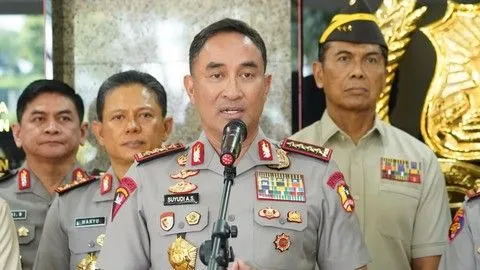
Suyudi urges officers to stay focused
Speaking on Metro TV's Selamat Pagi Indonesia program on Friday, November 6, 2026, Suyudi described the arrests as a warning to the force. "Several high-ranking police officers have been arrested in connection with the wiretapping case we are currently handling, and this should be a lesson for all of us," he said.
Suyudi said the investigation served the institution's interests by helping it fulfill its duty to protect the public, the nation and the state. He urged officers nationwide not to let the case distract them from their work maintaining public security and order.
He also expressed confidence that the force remained united and called on personnel to stand with the public, citing the motto "Police Together With the People."
Four suspects and a presidential dismissal
Police have identified four suspects, according to Reuters and Tempo. They include Gen. Listyo Sigit Prabowo, a former National Police chief who also served as presidential chief of staff, and Insp. Gen. Ahrie Sonta Nasution, head of the National Police Legal Division.
The other suspects are Insp. Gen. Eko Hadi Santoso, a senior instructor at the National Police Education and Training Institute, and Insp. Gen. Slamet Uliandi, former head of the Information and Communication Technology Division. Three senior officers were detained on November 3, 2026; investigators named Slamet as the fourth suspect later.
Prabowo dismissed Listyo as chief of staff on November 4, a day after his arrest, Reuters reported. The news agency described Listyo as a loyalist of former President Joko Widodo and said the scandal exposed a deepening rift between Prabowo and Widodo.
Investigators examine targets, methods and funding
Suyudi ordered the creation of a special investigative team led by Criminal Investigation Agency, or Bareskrim, chief Comr. Gen. Asep Safrudin. National Police Public Information Bureau head Brig. Gen. Trunoyudo Wisnu Andiko said on November 5 that the team was examining whether the wiretapping involved potential treasonous motives against the president. Investigators were also profiling the victims and tracing the funding.
Trunoyudo said the investigation would proceed carefully and professionally under applicable law. He pledged objective handling of each stage and accountability to the public.
According to Asep, the alleged surveillance took place between 2025 and 2026. Besides Prabowo, targets included state officials, political figures, journalists, civil society leaders, nongovernmental organizations and business figures. Asep said the suspects entered target phone numbers into the Lawful Interception Management System (LIMS) server without following mandatory verification procedures.
Tempo reported that investigators found indications of orders issued around October 2026 to delete records of intercepted communications. An officer who knew about the incident filed an official police report on October 30.
Ahrie's lawyer, Krisna Murti, disputed allegations concerning his client in a statement reported by Tempo on November 3. He said Ahrie denied tapping anyone within the presidential palace precinct or targeting Prabowo's phone line. According to the lawyer, Ahrie was following a superior's orders to analyze numbers supplied to him.
Government alleges threat to national leadership
Presidential spokesperson Prasetyo Hadi said the wiretaps were the work of "rogue individuals," Reuters reported. He characterized their actions as indicating treason and tending toward acts that endangered state interests and the safety of the country's leadership, including the president.
The military also mobilized thousands of troops in Jakarta in connection with the scandal, according to Reuters. Navy spokesperson Tunggul said late on November 4 that the deployment was intended to "safeguard and protect the stability of Indonesia's security."