
Indonesia launches Prima program to drive evidence-based policymaking
BRIN and the Finance Ministry have launched Prima, a development policy research program designed to ensure government policies are grounded in robust applied research, with 177 projects planned for this year.
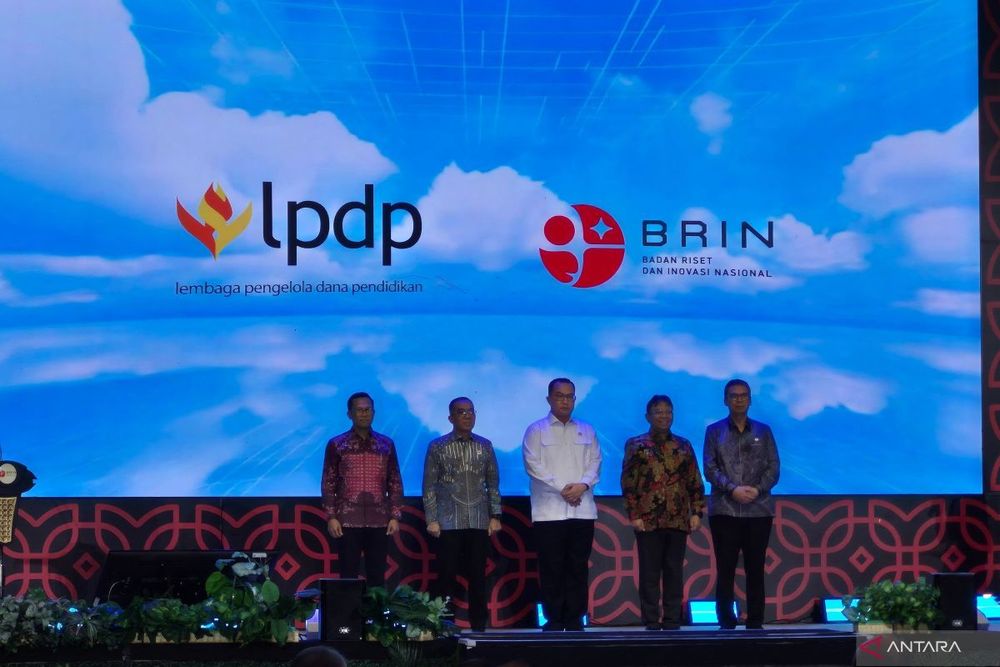
Indonesia launches Prima program to drive evidence-based policymaking
Indonesia's National Research and Innovation Agency (BRIN), in partnership with the Finance Ministry, has launched Prima, a strategic development policy research program aimed at establishing science-driven policymaking across all government institutions.
BRIN Head Arif Satria, who was appointed to lead the agency in November 2025, announced at the Jakarta launch event on Monday that the program will execute 177 research projects this year to address challenges faced by various ministries. BRIN, which gained cabinet-level status in August 2021 through Presidential Decree No. 78/2021, consolidated 48 governmental research bodies including the Indonesian Institute of Sciences, the Agency for the Assessment and Application of Technology, the National Nuclear Energy Agency, and the National Institute of Aeronautics and Space.
"We have decided to carry out 177 research projects this year to contribute to resolving a wide range of challenges faced by ministries," Satria said during the launch.
He emphasized that Prima is designed to ensure that ministries and state agencies base their policies strictly on robust, evidence-based applied research.
Addressing fragmentation in national research
The program addresses a longstanding challenge in Indonesia's research landscape, where the national research budget of approximately Rp26 trillion per year has historically been fragmented across multiple ministries and agencies, sometimes resulting in overlapping efforts. Satria stressed that Prima, supported by the Indonesia Endowment Fund for Education Agency (LPDP), aims to drive state institutions to align their visions through comprehensive joint research projects.
Implementation will require active participation from multiple institutions, including the National Development Planning Ministry, the National Search and Rescue Agency, and technical ministries.
"God willing, we will succeed in aligning national policies and producing applied research involving institutions across sectors through Prima," Satria stated.
LPDP to fund research projects
LPDP, established in December 2011 as a public service agency under the Ministry of Finance, will fund the research projects. The agency manages Indonesia's education endowment fund, which has grown to approximately Rp154 trillion. As of mid-2025, LPDP had funded 669,144 scholarships, 3,460 research projects, and 928 cultural programs, demonstrating substantial capacity to support the Prima initiative.
LPDP President Director Yon Arsal underscored the program's significance given Indonesia's increasingly complex development challenges. He asserted that the government must move beyond experience-driven policymaking to produce more relevant public policies.
"This way, we can expect to make sure that every rupiah of the public funds invested is based on accountable risk calculations and impact analyses," Arsal said.
Strengthening Indonesia's research capacity
The initiative comes as Indonesia works to strengthen its research capacity. The country's research and development expenditure stands at approximately 0.28% of GDP as of 2020, significantly below the world average of 1.18% and the ASEAN average of 0.70%, with government funding accounting for 84.6% of total spending. BRIN operates with an annual budget of approximately Rp10.51 trillion and employs over 14,000 staff members.
Prima represents part of Indonesia's broader efforts to institutionalize evidence-based policymaking, building on previous initiatives such as the Knowledge Sector Initiative, a joint program between Indonesia and Australia focused on improving the use of research in policy development.
Arsal noted strong institutional enthusiasm for the program, which complements the Innovation Research for an Advanced Indonesia funding scheme. He emphasized that success will be measured not solely by scientific publications but by whether resulting recommendations can be translated into policies, regulatory revisions, or government programs.