
Indonesia expands overseas training opportunities for civil servants to support Golden Indonesia 2045
The Ministry of Home Affairs commits to strengthening civil servant capacity through expanded overseas scholarships and training programs, aiming to build a globally competitive bureaucracy aligned with Indonesia's national development vision.
Indonesia expands overseas training opportunities for civil servants to support Golden Indonesia 2045
The Ministry of Home Affairs has committed to expanding access to overseas training and scholarship programs for civil servants from the ministry and regional governments, as part of efforts to build a professional, globally competitive bureaucracy.
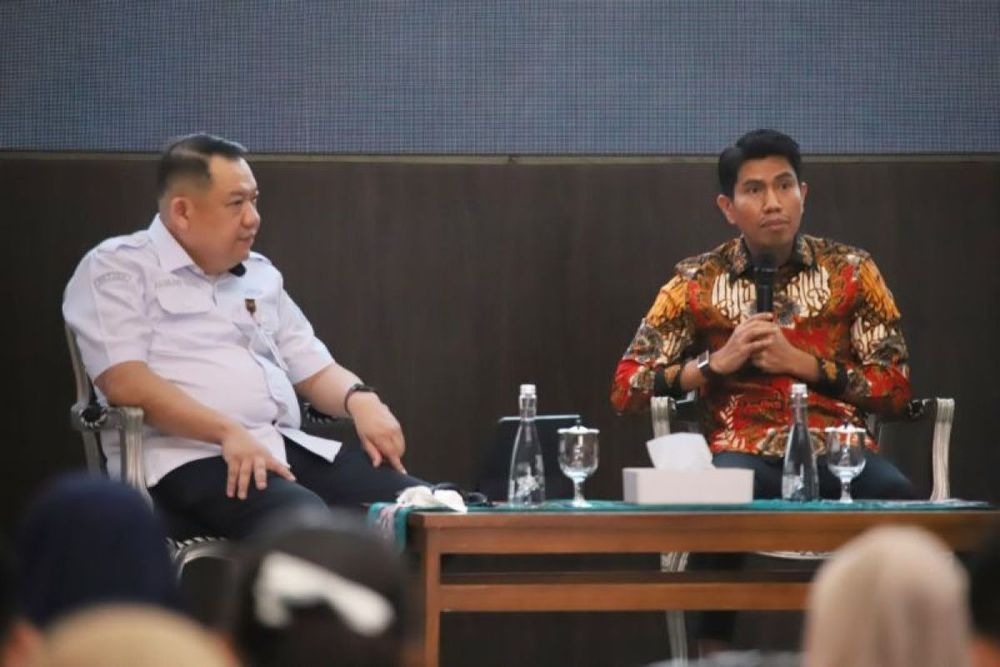
The commitment was reaffirmed during a workshop on overseas training and scholarship opportunities for civil servants, organized by the ministry's Center for Cooperation Facilitation in Jakarta on Wednesday.
Building capacity for Golden Indonesia 2045
Deputy Chair of the House of Representatives' Commission II, Bahtra Banong, emphasized that enhancing civil servant capacity is fundamental to realizing the Golden Indonesia 2045 vision. Officially launched by President Joko Widodo on May 9, 2019, this national development blueprint targets Indonesia becoming the world's fifth largest economy with a GDP of US$7.3 trillion and per capita income of US$25,000 by 2045.
"The transformation of public governance will only succeed if it is supported by civil servants who are competitive, adaptive, innovative, and globally minded," Bahtra said during a discussion titled "Strengthening Civil Servant Capacity Through Overseas Training and Scholarships to Support Professional and Globally Competitive Governance," held at Sasana Bhakti Praja, the Ministry of Home Affairs headquarters.
The Golden Indonesia 2045 Vision rests on four strategic pillars: human development and mastery of science and technology, sustainable economic development, equitable development, and strengthening national resilience and governance. Civil servant capacity building directly supports the governance and human development pillars of this framework.
Bureaucratic reform and legal framework
Bahtra, whose Commission II oversees domestic administration and regional autonomy, state apparatus and bureaucratic reform, elections, and land and agrarian reform, noted that efforts to improve civil servant competency must go hand in hand with bureaucratic reform through regulatory simplification, adoption of information technology, and implementation of transparent, accountable, effective, and efficient governance.
Law No. 20 of 2023 on State Civil Apparatus provides the legal foundation for these initiatives. The law, which marks a significant normative reconstruction in civil service governance, explicitly affirms principles of meritocracy, professionalism, and bureaucratic modernization through digitalization. It creates opportunities for civil servants to develop competencies through training, seminars, study assignments, short courses, overseas scholarships, internships, fellowships, and employee exchange programs.
Reaching regional civil servants
According to the Indonesian National Civil Service Agency, Indonesia employed approximately 4.28 million civil servants as of the first semester of 2023. Following decentralization reforms after 2001, only 22% of these civil servants are classified as central government employees, while the rest work directly for provincial and district-level governments. This distribution underscores the importance of including regional civil servants in overseas scholarship programs.
Bahtra described these capacity-building initiatives as important instruments for accelerating workforce development while narrowing competency gaps. He noted that studying abroad provides valuable experience and fresh perspectives applicable to public administration in Indonesia.
Creating agents of change
"Civil servants who study abroad are expected to return as agents of change, bringing back best practices to strengthen policymaking, governance, and public service delivery in Indonesia," Bahtra said.
He added that overseas study not only enhances knowledge and foreign language proficiency but also expands international networks, accelerates technology and cultural transfer, and broadens participants' perspectives.
With stronger capabilities, civil servants are expected to become key drivers of bureaucratic reform by delivering high-quality public services while supporting sustainable development.
Bahtra reaffirmed Commission II's support for the Ministry of Home Affairs' efforts to expand access to education and training for civil servants, including through overseas scholarship programs, describing the development of civil servant competency as a long-term investment in building a professional, adaptive bureaucracy capable of competing globally.