
Indonesia Links Health Data Platform with Population System to Streamline Birth Registration
The government has integrated SATUSEHAT with the Population Administration Information System to enable direct digital issuance of birth certificates, family cards, and health records for newborns at healthcare facilities.
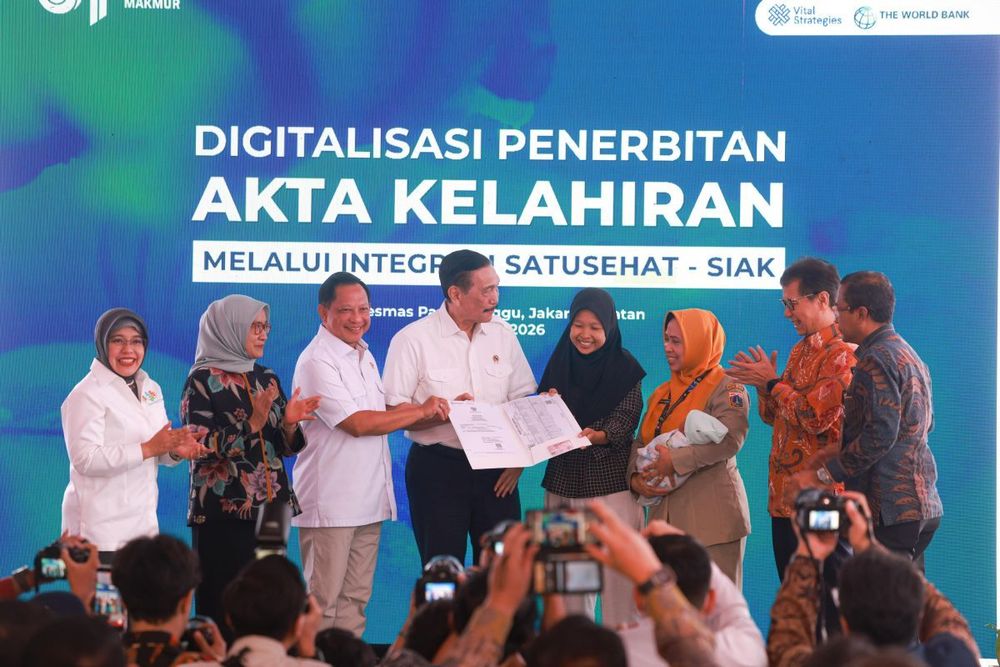
Indonesia Links Health Data Platform with Population System to Streamline Birth Registration
The Indonesian government has connected its national health data platform SATUSEHAT with the Population Administration Information System (SIAK) to enable digital issuance of birth certificates, family cards, and maternal and child health cards directly from healthcare facilities where babies are born.
Health Minister Budi Gunadi Sadikin announced the integration in Jakarta on Tuesday, describing it as a solution to longstanding problems with inconsistent newborn data across government agencies. He noted that immunization teams, maternal and child health teams, and stunting prevention programs each maintained different tallies of births, creating confusion about the actual number of newborns.
The integrated system is designed to handle the approximately 13,000 babies born daily in Indonesia, or roughly 4.8 million newborns annually. Independent demographic data shows Indonesia recorded between 4.42 and 4.48 million births per year in recent years, ranking sixth globally in total births.
Background on SATUSEHAT and SIAK
SATUSEHAT, launched in July 2022 as Indonesia Health Services, was designed to integrate health data from over 60,000 healthcare facilities using the global HL7 FHIR interoperability standard. The platform's mobile app has been downloaded by more than 50 million users and is being deployed for the government's free health screening program targeting 60 million citizens in 2026.
The integration with SIAK addresses historical challenges in Indonesia's population administration. Before the Population Administration Information System was introduced by the Ministry of Home Affairs in 2009, the country faced major problems including duplicate data, lengthy processes, and lack of transparency that disrupted government efficiency and public services. SIAK, managed by the Population and Civil Registration Agency (Disdukcapil) across 514 districts and cities, was strengthened in 2020 under Ministry of Home Affairs Regulation No. 95 of 2019.
Simplifying Birth Registration
Under Indonesian law, births must be registered within 60 days at the local Civil Registry Office, with late registration requiring additional documentation including a court order. The new system eliminates multiple bureaucratic steps previously required.
Home Affairs Minister Tito Karnavian said the initiative aligns with President Prabowo Subianto's policy direction on government digitalization and e-government. He emphasized that population data is highly dynamic, with births, deaths, relocations, marriages, and divorces occurring constantly across the nation's 514 districts and cities.
Karnavian praised the integration for simplifying the birth certificate process and preventing illegal levies. Certificates will now be issued directly by health facilities, either as digital documents emailed to parents or in printed form.
Just imagine, back in our parents' generation, when we were born, our parents had to go door to door asking for signatures from neighborhood and village heads, and sometimes those people weren't even around.
Future Integration and Impact
The move supports Indonesia's 2025 pledge under the Ministerial Declaration on a Decade of Action for Inclusive Civil Registration to ensure every birth is registered by 2030 and close registration gaps among marginalized populations.
Health Minister Sadikin indicated that SATUSEHAT will be further integrated with systems at the Religious Affairs Ministry for death records, the Social Affairs Ministry for aid recipient data, and state health insurer BPJS Kesehatan for health coverage. The integration is particularly relevant for maternal and child health programs, as Indonesia reduced stunting prevalence among children under five from 27.7% in 2019 to 19.8% in 2024.