
University-developed dryer slashes nutmeg drying time for West Papua farmers
A solar-biomass hybrid dryer developed by Hasanuddin University cuts nutmeg drying time from seven days to two in Fakfak, West Papua, helping smallholder farmers reduce post-harvest losses and weather dependency.

University-developed dryer slashes nutmeg drying time for West Papua farmers
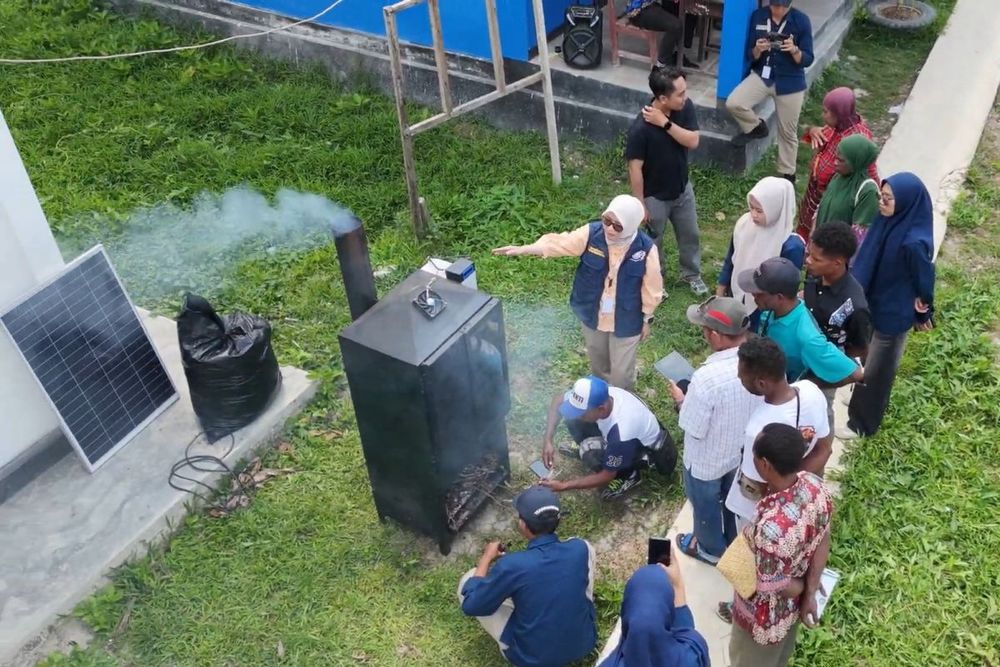
A new drying technology developed by university students has reduced nutmeg processing time to two days from seven for farmers in West Papua Province, addressing a critical post-harvest challenge that has long plagued Indonesia's dominant position in global nutmeg production.
The Smart Solar Biomass Dryer, created by Hasanuddin University's Patriot Expedition Team 15, was introduced to farmers in the Weri-Saharey Transmigration Area in Fakfak District on Wednesday. The innovation comes as Indonesia supplies approximately 60-75 percent of the world's nutmeg, making improvements in Indonesian nutmeg processing significant for global markets.
Regarding the drying tool, we do need something like this so we no longer have to worry about weather, such as rain.
Aher Samai, head of the Rangkum Farmers Group, said in a statement released Thursday by the Transmigration Ministry.
Fakfak Regency plays a crucial role in the province's nutmeg economy, producing approximately 80 percent of West Papua's nutmeg yield entirely through smallholder farmers. The district's approximately 25,240 hectares of nutmeg cultivation have long been integrated into the global spice trade, with the region's local variety, Papuan nutmeg, registered as a geographical indication in 2014.
Weather-independent operation
The dryer uses locally available materials and requires no electricity, allowing farmers to operate it in various locations. Traditional sun drying methods typically take five to seven days under ideal conditions, but can extend to 18 days depending on weather and climate factors, leaving farmers vulnerable to rain disruptions.
We hope the dryer that has been developed can hold a larger capacity, so it can dry more nutmeg, and faster.
Samai said.
According to the Transmigration Ministry, the device maintains temperatures of approximately 60 degrees Celsius and can accommodate up to 1,000 nutmeg seeds per cycle. The technology addresses a significant problem: inadequate drying creates conditions for mold growth and aflatoxin contamination, with studies showing nutmeg is particularly susceptible to fungal contamination during storage.
Hybrid technology design
Michel Obrien, a representative of Hasanuddin University's Patriot Expedition Team, explained the dryer features five trays for placing nutmeg during the drying process.
Then above that there is a separate special space with another five trays, which can dry around a thousand nutmeg seeds.
Obrien said.
The technology combines solar and biomass energy with Internet of Things capabilities, enabling a hybrid drying mechanism. When temperatures fall below 50 degrees Celsius, biomass can be added. If temperatures exceed 60 degrees Celsius, the amount of biomass burned is reduced.
The innovation is part of a broader government initiative involving 1,476 individuals from 10 Indonesian universities deployed to 53 transmigration areas in 2026, with Hasanuddin University serving as the only partner institution from Eastern Indonesia. The program continues the 2025 Patriot Expedition Team initiative, which previously deployed 2,000 participants to transmigration areas.
Production significance
Agriculture Ministry data shows West Papua has 32,440 hectares of nutmeg plantations, producing 1,555 metric tons annually. Farmers in Fakfak typically own multiple plots averaging 4.8 hectares per farmer.
Appropriate technology is a priority theme for the 2026 Patriot Expedition Team, alongside downstream processing, industrialization, the productive economy, digitalization and renewable energy. The dryer technology addresses post-harvest losses, a global challenge affecting 30-40 percent of agricultural production before reaching market due to inadequate storage, processing, and transportation.