
Switzerland Seeks Indonesian Minerals for Artificial Joint Manufacturing
Switzerland is looking to Indonesia as a source of minerals for its manufacturers, including its artificial joint industry, Swiss Ambassador Konstantin Obolensky said. Discussions with Indonesian officials and other stakeholders are already underway.

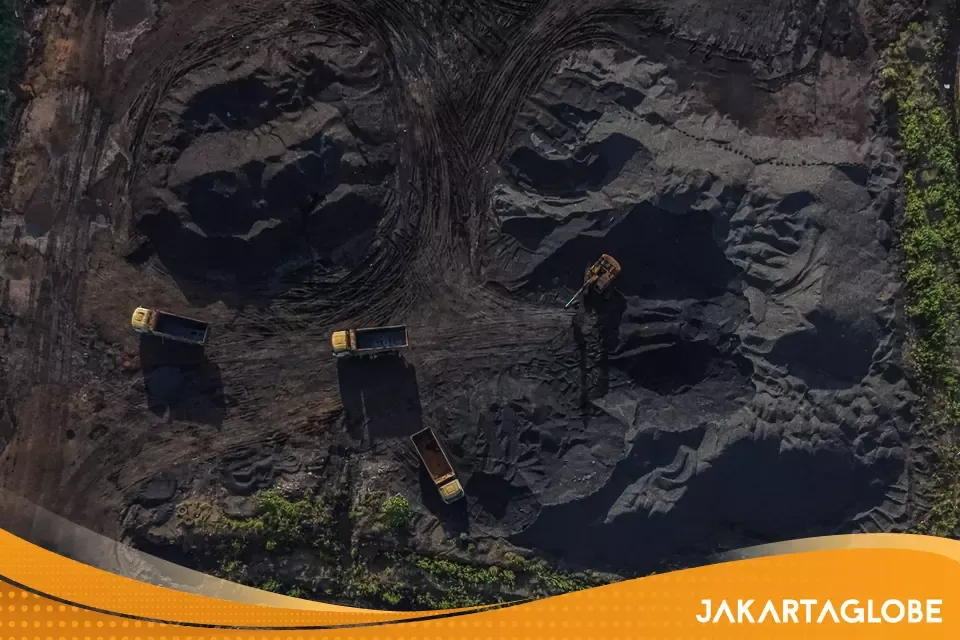
Mineral supplies and government talks
Speaking to reporters in Jakarta on Monday, the newly appointed ambassador said manufacturers worldwide were seeking a wider range of mineral suppliers and considering Indonesia. Switzerland is a major exporter of artificial joints.
"There are critical minerals and other materials that Indonesia produces which are important for the Swiss industry," Obolensky said. "If you produce medical appliances like [artificial] joints where the Swiss industry is strong, they would need a certain amount of these minerals."
Indonesia's mineral resources include materials used in prosthetic devices. Some knee prostheses contain nickel-based stainless steel; Indonesia has the world's largest nickel reserves, totaling 62 million metric tons. The country also holds 2.9 billion metric dry tons of bauxite reserves and produced 1.5 million metric dry tons of alumina, a bauxite derivative, in 2025.
US Geological Survey figures put Indonesia's cobalt reserves at 760,000 metric tons and its 2025 mining output at 44,000 tons.
Asked whether Switzerland had approached the sovereign fund Danantara, Obolensky said discussions were taking place "with the Indonesian government and all the different stakeholders." Danantara controls all Indonesian state assets, including mining holding company MIND ID, and is seeking deals with foreign partners.
A five-year minerals cooperation framework
The two countries have already established a framework for cooperation on minerals and metals. Their memorandum of understanding took effect on July 16, 2026, according to the Swiss Embassy in Indonesia.
Swiss Federal Councillor Guy Parmelin, who heads the Federal Department of Economic Affairs, Education and Research, signed the memorandum in Basel on June 23, 2026. Indonesian Minister of Investment and Downstream Industry Rosan Roeslani signed it in Jakarta.
The memorandum follows an Expression of Interest signed on September 30, 2025. Its scope includes promoting investment, developing mineral and metal supply chains, sharing technology and knowledge, and developing human resources. It also covers environmental, social and governance standards and clean technology. The agreement lasts five years, with extensions requiring both sides' written consent.
Trade agreement and tariff rules
Obolensky also urged companies to make greater use of the Comprehensive Economic Partnership Agreement between Indonesia and the European Free Trade Association. EFTA comprises Switzerland, Iceland, Liechtenstein and Norway and is a $1.3 trillion bloc. The agreement has provided substantial tariff reductions on trade with Indonesia since November 2021.
"We want to strengthen the use of [the CEPA]," he said.
Swiss voters endorsed the agreement on March 7, 2021, with 51.7 percent voting in favor. Its palm oil provisions give Indonesia tariff rebates of 20 to 40 percent across five quotas. Their combined volume starts at 10,000 metric tons and rises to 12,500 metric tons over five years.
According to the Swiss Federal Office for Agriculture, the pact marked the first time Switzerland tied concessions in a free trade agreement to sustainability criteria. Separately, Switzerland eliminated industrial tariffs on January 1, 2024; all industrial products have entered the country duty-free since then.
Trade balance shifts as investment continues
Jewelry shipments helped Indonesia record a trade surplus of nearly $3.6 billion with Switzerland in January through September 2025. A sharp decline in exports to Switzerland reversed that balance to a $200 million deficit in the corresponding period of 2026. Total bilateral trade for 2025 was CHF 5.2 billion, according to the Swiss Embassy.
Indonesia reported Swiss investment of 187.7 million for the first nine months of 2026, without specifying a currency in the reported figure. Over the longer period from 2021 through the first quarter of 2026, Swiss investment amounted to approximately $1.33 billion, or around Rp21.5 trillion, according to Indonesia's Ministry of Investment and Downstreaming.
The ministry identified food manufacturing, transportation and logistics, telecommunications, and chemicals and pharmaceuticals as the largest recipients. The Swiss Embassy says about 150 Swiss companies operate in Indonesia and that recorded Swiss foreign direct investment since 2010 has reached $3.5 billion, making Switzerland one of Indonesia's three largest European investors.