
Indonesia commits government backing for creative sector expansion into Japanese market
Ministry of Creative Economy pledges support for Indonesian creative businesses targeting Japan, including participation in December's Indonesia-Japan Friendship Festival showcasing products from 21 subsectors.

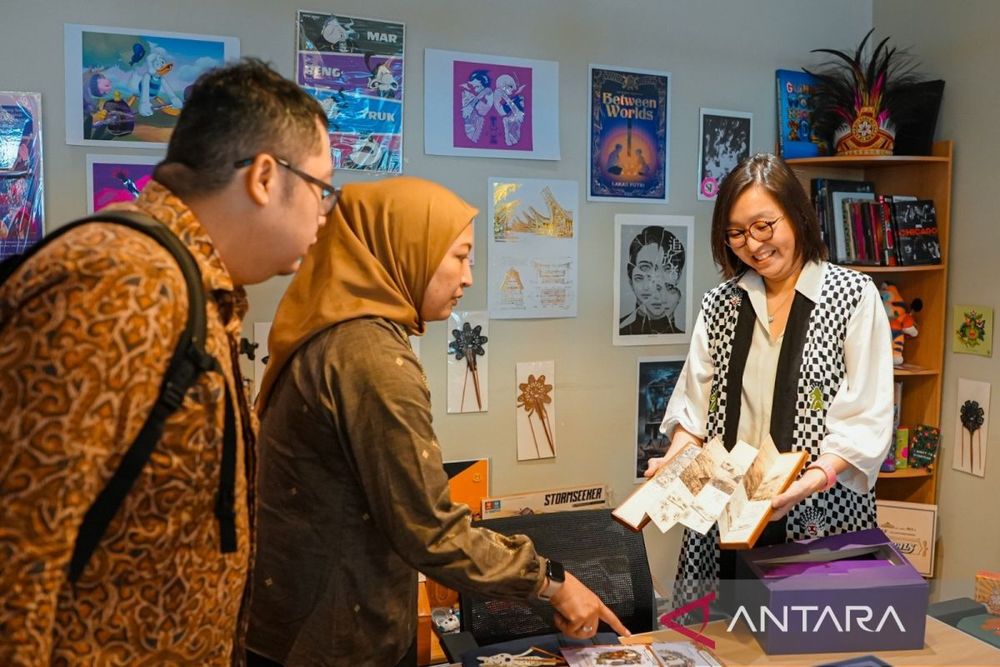
Indonesia pledges support for creative industry push into Japan
Indonesia's Ministry of Creative Economy has committed to supporting domestic creative industry participants as they pursue opportunities in Japan, a market where the country already ranks among the top five destinations for creative exports worth billions of dollars annually.
Deputy Minister of Creative Economy Irene Umar met with Merry Astrid Indriasari, trade attaché at the Indonesian Embassy in Tokyo, on Monday to explore cooperation frameworks for promoting Indonesian creative products, intellectual property, and talent in the Japanese market. Central to the discussions was Indonesia's planned involvement in the Indonesia-Japan Friendship Festival scheduled for December 2026.
The ministry will assist in curating products and providing technical support to businesses preparing for international events such as the festival, which has been held annually since 2008 and attracted approximately 108,000 visitors at its 2025 edition at Yoyogi Park in Tokyo. The government backing comes as Indonesia's creative economy sector contributed 7.28 percent to national GDP in 2024, valued at Rp1,611.2 trillion, and employed 27.4 million workers across 21 subsectors.
This meeting is a strategic step toward creating synergies and expanding global market access for Indonesian creative products.
The planned December participation will showcase Indonesian offerings from all 21 creative economy subsectors to Japanese audiences beyond the Indonesian diaspora. Products identified for promotion include herbal jamu beverages, coffee, perfumes, bags, and musical performances. The ministry and its partners will develop promotional strategies tailored to Japanese consumer preferences and evaluate sector-specific readiness.
Strategic economic partnership strengthens market access
The push into Japan builds on substantial existing economic ties between the two nations. Bilateral trade reached US$32.07 billion in 2025, with Japanese investment in Indonesia totaling US$3.1 billion the same year. The economic relationship was further strengthened when amendments to the Japan-Indonesia Economic Partnership Agreement took effect on August 1, 2026, expanding market access and introducing provisions for e-commerce and enhanced intellectual property protections.
Japan represents a significant destination within Indonesia's broader creative export strategy. From January to October 2025, Indonesia's creative economy exports totaled US$26.69 billion, accounting for 11.96 percent of the country's total non-oil and gas exports. Japan ranked among the top five export destinations alongside the United States, Switzerland, Thailand, and the United Arab Emirates.
Fashion and crafts dominate Indonesia's creative exports, with fashion generating US$14.86 billion and crafts producing US$11.1 billion during the January-October 2025 period. While the United States remained the primary destination in early 2026, receiving US$3.31 billion in creative exports from January to April, the government sees substantial growth potential in other established markets.
Adapting products to Japanese consumer tastes
Merry Astrid Indriasari emphasized that Indonesian creative products can succeed in Japan by combining functionality, quality, and distinctive Indonesian design characteristics. She noted that leather, wood, and rattan products could particularly appeal to Japanese consumers, who typically prefer simple, functional designs with subdued color palettes.
The ministry's initiative reflects the elevated status of Indonesia's creative economy under President Prabowo Subianto, who established the Creative Economy Ministry as a standalone entity in October 2024, separating it from the Tourism Ministry to sharpen focus on innovation, investment, and export performance. More than 50 percent of workers in the sector are under 40 years old, positioning the industry as a key driver for youth employment.
The ministry aims to leverage international festivals and trade events to connect Indonesian creative businesses with global industry networks and expand market reach beyond traditional export destinations.