
Kadin launches 'We Buy From Indonesia' platform to expand non-core exports
The Indonesian Chamber of Commerce and Industry has presented an export-focused technology and trade platform to President Prabowo Subianto. It aims to map domestic supply chains and widen market access for Indonesian products.

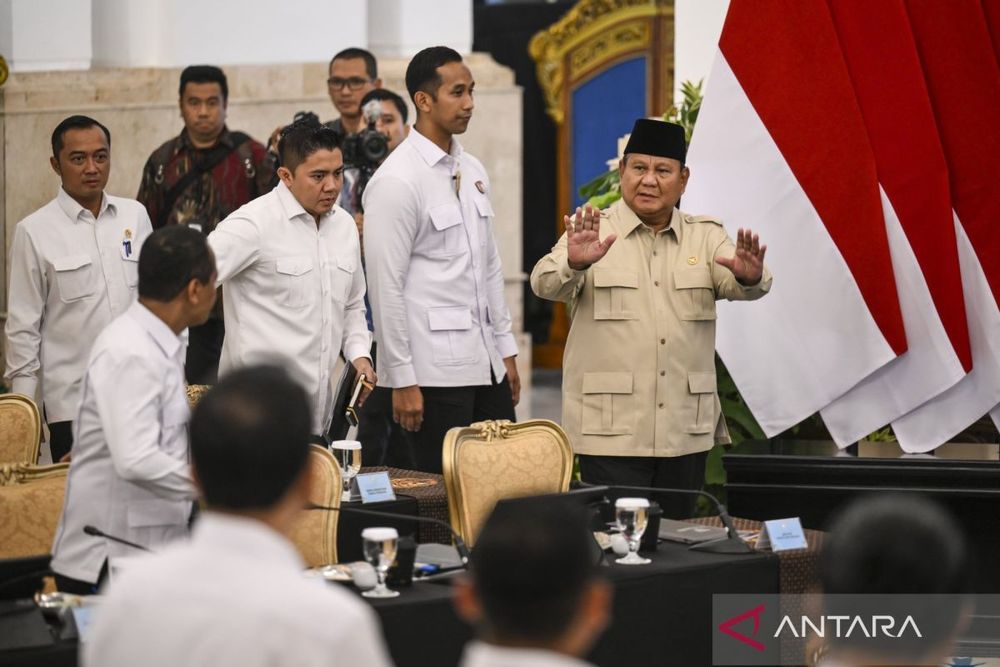
The Indonesian Chamber of Commerce and Industry (Kadin) has launched "We Buy From Indonesia," an export-driven technology and trade platform designed to map domestic supply chains and expand the global reach of Indonesian products. Kadin Chairman Anindya Novyan Bakrie presented the initiative to President Prabowo Subianto on Friday (July 31, 2026) at the State Palace in Jakarta. The occasion was a high-level meeting of central and regional business leaders and government officials.
"Mr. President, we would like to present an initiative entitled 'We Buy From Indonesia.' This initiative is not only a catalog, but also a technology and trade platform," Anindya said during the presentation.
Targeting the non-core export sector
The platform was developed through extensive trade data mapping and focuses on Indonesia's non-core export sector. According to Kadin data, the country's total annual exports are roughly US$300 billion. About US$240 billion of that comes from commodities and manufactured goods outside traditional heavyweights such as coal, stainless steel and palm oil.
For comparison, BPS-Statistics Indonesia recorded total exports of US$282.91 billion in 2025, up 6.15 percent year on year. Non-oil and gas exports accounted for US$269.84 billion of that, or about 95.4 percent. BPS's non-oil and gas category is a different classification from Kadin's non-core grouping, so the figures are not directly interchangeable.
Anindya said Indonesian-made products are already deeply integrated into global supply chains in sectors including automotive, aerospace, furniture and consumer goods. Through the platform, Kadin aims to systematically map active export supply chains and the domestic companies that take part in them. This is intended to make it easier to identify untapped market opportunities.
Repeat orders and production capacity
Anindya explained that the initiative will concentrate on driving repeat orders from existing international buyers. At the same time, it will work to expand the production capacity of domestic businesses so they can meet growing global demand.
To support its international reach, the official "We Buy From Indonesia" guide and materials are available in Indonesian, English and Mandarin. The initiative also exists in book form, titled "We Buy From Indonesia: Behind the World's Global Products (Edisi 2026)." It is a single volume in the three languages. Anindya handed it to the president at the Palace meeting, after presenting it to Cabinet Secretary Teddy Indra Wijaya on July 27.
Kadin is working closely with the Trade Ministry to validate trade metrics. The aim is for the platform to serve as an accurate, central reference point for national export development. Kadin also said it was ready to strengthen trade diplomacy and support the government's 8 percent economic growth target.
Context: market concentration and new trade pacts
The emphasis on wider market reach comes as Indonesia's non-oil and gas exports remain concentrated among a few buyers. China was the largest destination in 2025, taking US$64.82 billion. Together, the three biggest markets accounted for 42.28 percent of non-oil and gas exports, according to BPS data.
Indonesia has also been pursuing a series of trade agreements:
- On February 19, 2026, Indonesia and the United States signed an Agreement on Reciprocal Trade. It sets a 19 percent US tariff on Indonesian goods, down from a threatened 32 percent. Palm oil, which accounts for about 9 percent of Indonesia's exports, was exempted. Indonesia agreed to remove tariffs on more than 99 percent of US products.
- The Indonesia–Canada Comprehensive Economic Partnership Agreement (ICA-CEPA) was signed in Ottawa on September 24, 2025. It was Indonesia's first comprehensive trade deal with a North American country. More than 90 percent of Indonesian products, about 6,573 tariff lines, receive preferential access to Canada. The government projects exports to Canada will reach US$11.8 billion by 2030. Entry into force is targeted for late 2026. Kadin also signed a cooperation agreement with the Business Council of Canada alongside the deal.
- The Indonesia–EU Comprehensive Economic Partnership Agreement (IEU-CEPA) was concluded and announced as a substantive agreement in Bali on September 23, 2025. It covers trade in goods and services as well as investment.
The organization behind the initiative
Anindya was elected Kadin chairman at an Extraordinary National Conference on September 14, 2024, for the 2024–2029 term. Kadin represents 36 provincial chambers and, by its own account, more than 100,000 businesses.
Speaking later at Kadin's 2026 national leadership meeting (Rapimnas) on October 29, Anindya said 77 global brands already buy components made in Indonesia. He named Airbus, Tesla, Nike and On as examples, and cited this as a reason to push the "We Buy From Indonesia" initiative. The figure is Kadin's own claim.