
Indonesia Pushes Coconut Processing Strategy as Malaysia Dependence Highlights Export Potential
Indonesia is advancing coconut downstreaming initiatives to capture greater value from its position as the world's leading coconut producer, as Malaysia's 80% import reliance underscores strong regional demand for processed coconut products.
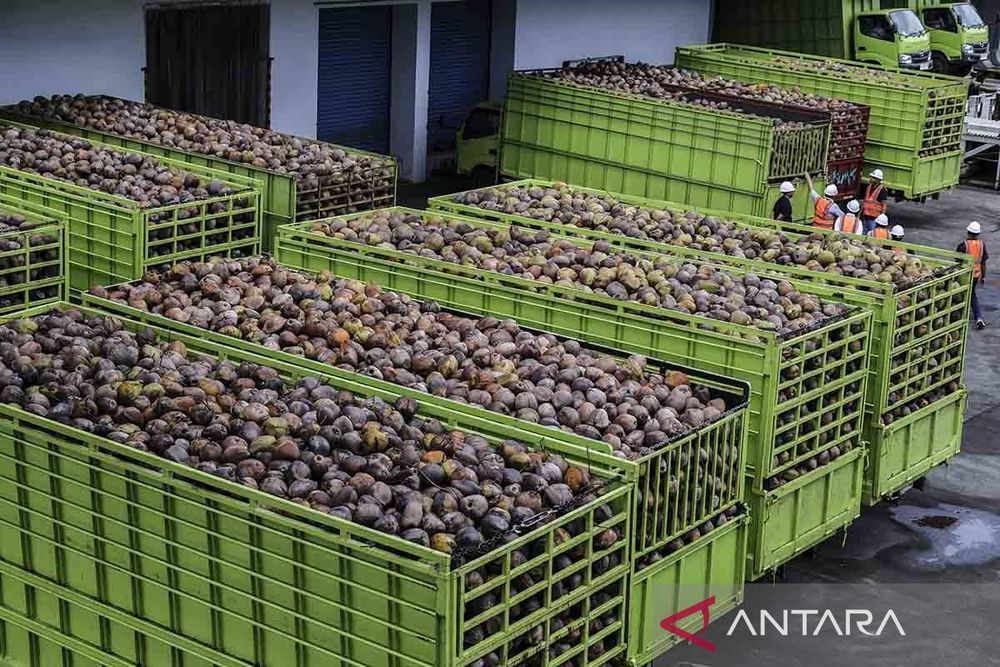
Indonesia Pushes Coconut Processing Strategy as Malaysia Dependence Highlights Export Potential
Indonesia is positioning itself to maximize economic returns from its coconut industry by shifting focus from raw exports to processed products, leveraging its status as the world's top coconut producer and strong demand from neighboring Malaysia.
Malaysia depends on Indonesia for approximately 80 percent of its coconut supply, according to Agus Rosyid, agricultural product quality inspector at Indonesia's Ministry of Agriculture Directorate General of Plantation. This heavy reliance presents a strategic opportunity for Indonesia to strengthen its coconut sector through value-added processing.
"Malaysia relies on Indonesia for nearly 80 percent of its coconut needs. Two years ago, when they faced a raw material shortage, they asked the ministry not to impose an export ban out of concern for their domestic industry," Rosyid said during a discussion in Jakarta on Wednesday.
The urgency of Malaysia's dependence became evident in March 2025, when the country imported over 1 million coconuts worth RM2.42 million to stabilize domestic supply. Malaysian coconut imports are projected to reach 223,000 metric tons by 2026.
Global Production Leadership
Indonesia overtook the Philippines as the world's largest coconut producer, with 2024 output reaching 17.13 million metric tons compared to the Philippines' 14.77 million metric tons. The shift in global rankings followed significant damage to Philippine coconut plantations from Typhoon Yolanda in 2013, which destroyed an estimated 10 million coconut trees.
According to 2023 data from the International Coconut Community and the Ministry of Agriculture, Indonesia's national production reached 2.87 million metric tons of copra equivalent across approximately 3.34 million hectares of plantations, representing about 24 percent of global production. The International Coconut Community, an intergovernmental organization established in 1969 under UN-ESCAP and headquartered in Jakarta, comprises 21 member countries accounting for over 90 percent of world coconut production and exports.
Approximately 98 percent of Indonesia's coconut plantations are owned and managed by smallholders, involving around 5.5 million farmers. Of the total plantation area, about 2.55 million hectares consists of productive trees.
Downstreaming Strategy
The government is encouraging transformation from raw coconut exports to value-added processing operations that convert raw coconuts into finished products through extraction, concentration, and drying processes. Target products include coconut cream, coconut milk, coconut oil, virgin coconut oil, desiccated coconut, and specialized items like coconut vinegar produced using advanced technologies.
This coconut initiative forms part of Indonesia's broader commodity policy launched in 2019, under which the government plans to gradually ban exports of 21 raw material commodities by 2040 to promote domestic processing. Nickel, bauxite, and copper exports have already been restricted to encourage local value addition.
The potential for value creation spans the entire coconut value chain, from husk and shell to meat and water, with an estimated total value-addition potential of US$6.55 billion. Indonesia's coconut product exports were valued at approximately US$2.11 billion in 2022, compared to the Philippines' US$3.22 billion in the same year.
Productivity Challenges
Despite its production volume, Indonesia faces significant productivity constraints. National plantation area and output have been declining due to land conversion to other commodities, pest infestations, and unstable farmgate prices. Current productivity averages around 1.1 metric tons per hectare, well below the estimated potential of 3.5 to 5 metric tons per hectare.
To address these challenges and enhance competitiveness, the government is preparing a coconut downstreaming program targeting 151,554 hectares for development in 2026, supported by a budget of approximately Rp427 billion (around US$23.8 million). The initiative will span 28 provinces, focusing on developing production zones, high-yield seed supply, productivity enhancement, and supply chain strengthening.
Rosyid emphasized that strong regional and global market demand highlights a significant opportunity for Indonesia to increase the added value of its coconut products, allowing more economic value to be retained domestically rather than exported as raw materials.