
Gradiant Completes Water Systems for Infineon's €5 Billion Dresden Semiconductor Facility Ahead of Schedule
Gradiant delivered ultrapure water and water recovery systems three months early for Infineon Technologies' Smart Power Fab in Dresden, now the world's largest power semiconductor manufacturing facility, strengthening Europe's chip production capacity.
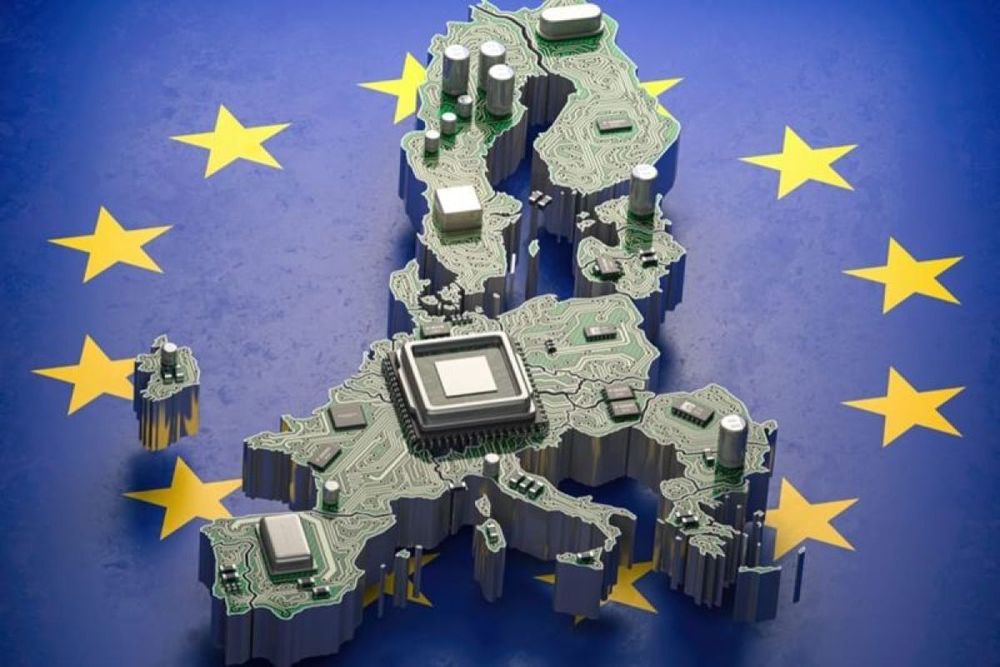
Gradiant Completes Water Systems for Infineon's €5 Billion Dresden Semiconductor Facility Ahead of Schedule
Gradiant, a global leader in advanced water and wastewater solutions, has successfully completed its work for Infineon Technologies' new Smart Power Fab in Dresden, marking a significant milestone in European semiconductor manufacturing. The facility, which opened on July 2, 2026, represents Infineon's largest single investment at approximately €5 billion and is now the world's largest manufacturing facility for intelligent power semiconductors and analog/mixed-signal technologies.
Gradiant completed its delivery of mission-critical ultrapure water and water recovery systems three months ahead of schedule, supporting the facility's launch several months earlier than originally planned. The accelerated delivery reflects close coordination among Gradiant, Infineon, and the broader project team, as well as Gradiant's ability to execute complex infrastructure projects under the semiconductor industry's rigorous quality, safety, and scheduling requirements.
The new facility doubles manufacturing capacity at Infineon's Dresden site and is expected to create approximately 1,000 highly skilled jobs. Located in Silicon Saxony, Europe's largest microelectronics cluster with more than 3,600 companies employing approximately 82,500 people in microelectronics and ICT industries, the facility strengthens the region's position at the heart of Europe's semiconductor strategy. Over €50 billion in public and private investments are either planned or underway in Silicon Saxony, projected to generate more than 24,000 new jobs by 2030.
The project received approximately €1 billion in public funding through programs including the European Chips Act and the Important Project of Common European Interest (IPCEI), complementing Infineon's €5 billion investment. The European Chips Act aims to double the EU's global market share in semiconductors from approximately 10% to 20% by 2030, with the EU budget supporting the initiative with up to €3.3 billion through the Chips for Europe Initiative.
Critical Water Infrastructure for Advanced Manufacturing
Built for production on 300-millimeter wafers, the facility will manufacture power semiconductors and analog and mixed-signal technologies essential to AI data centers, electric vehicles, renewable energy systems, power grids, and industrial applications. A typical semiconductor manufacturing facility uses between 2 to 4 million gallons of ultrapure water per day, with a single 300mm wafer requiring approximately 2,200 gallons of water, more than 68% of which must be ultrapure water.
Gradiant's systems are engineered to meet the stringent purity, reliability, and process consistency requirements of advanced semiconductor fabrication. Water is used throughout wafer manufacturing and rinsing operations, where even trace contaminants can affect product quality and manufacturing yield. The systems help provide the stable and dependable water supply required for these highly sensitive production processes.
The rinse-water recovery systems supplied by Gradiant enable water from selected production processes to be captured and reused for appropriate applications within the facility. This supports more efficient resource use and strengthens the resilience of large-scale manufacturing operations. The facility implements closed-loop water systems with approximately 90% of utilized water to be reintroduced back into circulation, significantly exceeding the water recycling rates of 65-75% that average across semiconductor facilities industrywide.
The facility uses industrial water rather than drinking water for its operations, helping conserve valuable drinking water resources. Internal recycling processes allow production water to be reused multiple times, with a target water recycling rate of up to 45% by 2033. It takes roughly 1,400 to 1,600 gallons of municipal water to produce 1,000 gallons of ultrapure water, making water recovery systems critical for sustainable operations.
Strengthening European Semiconductor Capacity
The Dresden expansion addresses a critical gap in European manufacturing capacity. Europe had more than 15 operational 300mm wafer fabrication facilities as of 2023, with Germany and France leading the regional market with over 45% of the installed capacity. The new facility represents a substantial increase in European production capability for advanced power semiconductors.
Philipp Sausele, Managing Director of Gradiant Europe, represented the company at the facility's official inauguration in Dresden earlier this month.
We are proud to support a project that strengthens Europe's semiconductor manufacturing capabilities and enables a more digital and energy-efficient future. Completing our work ahead of schedule demonstrates the technical expertise of our teams and the strength of our collaboration with the customer and project partners.
Prakash Govindan, CEO of Gradiant, emphasized the strategic importance of water infrastructure for semiconductor manufacturing.
Semiconductors are the foundation of the AI economy, but their potential is ultimately constrained by the availability of water. Gradiant has spent more than a decade building the technologies and operating expertise required to make water certain for the world's most advanced industries. This project demonstrates how we help manufacturers scale with confidence by delivering the purity, reliability, and water efficiency required for the next era of technology.
The successful delivery further strengthens Gradiant's position as a trusted water partner for semiconductor manufacturers worldwide. Across greenfield facilities, manufacturing expansions, and operations optimization, Gradiant helps customers improve water efficiency, production resilience, and environmental performance. The company, founded at MIT and headquartered in Boston, has built more than 3,000 treatment plants across 92 countries.