
Indonesia positions Kura-Kura Bali SEZ as regional artificial intelligence hub
The Indonesian government is promoting the Kura-Kura Bali Special Economic Zone as a center for AI research and semiconductor development, leveraging growing technological and economic partnerships with China through initiatives like the Two Countries Twin Parks framework.

Indonesia promotes Kura-Kura Bali SEZ as regional AI hub
The Indonesian government is positioning the Kura-Kura Bali Special Economic Zone in Bali as a regional center for artificial intelligence research and semiconductor development, capitalizing on deepening technological and economic cooperation with China.
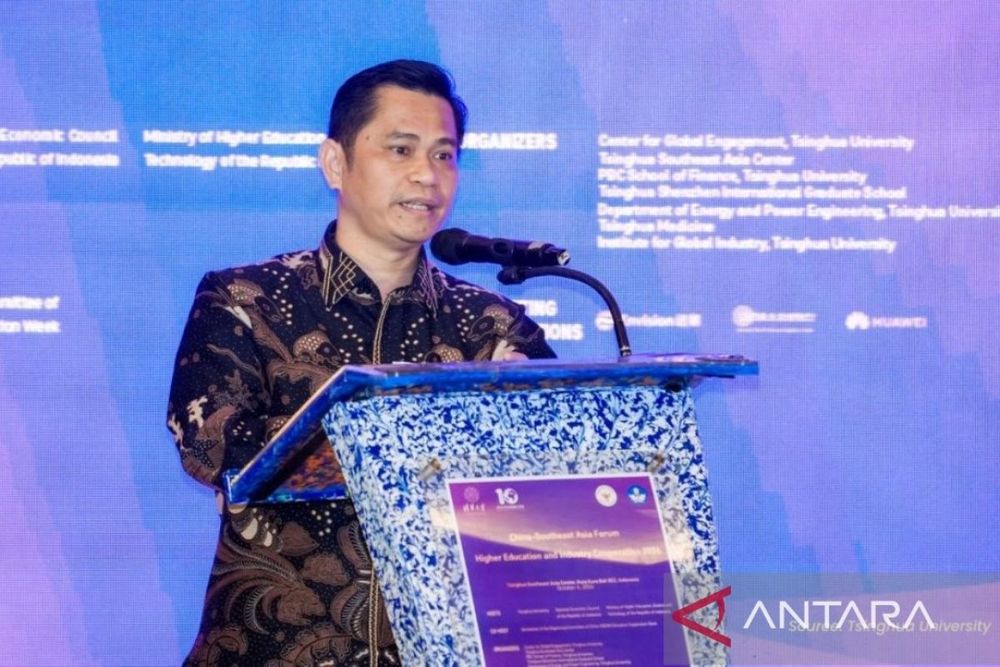
Ali Murtopo Simbolon, Acting Secretary-General of the National SEZ Council and Deputy for Commerce and Digital Economy Coordination at the Coordinating Ministry for Economic Affairs, emphasized the zone's strategic importance for technology innovation during remarks on Sunday.
"Amid global competition and uncertainty, Indonesia offers a secure environment for academic development and industrial collaboration. The Tsinghua Southeast Asia Center can serve as a bridge connecting China, Southeast Asia, and the rest of the world."
Located on Serangan Island in Denpasar and covering 498 hectares, the Kura-Kura Bali SEZ was officially established on April 5, 2023, under Government Regulation No. 23/2023. The zone hosts the Tsinghua Southeast Asia Center, which broke ground in October 2018 and officially opened its campus in November 2022. The campus, funded and constructed by the United in Diversity Foundation, spans 17,000 square meters with facilities capable of accommodating more than 300 researchers and students simultaneously.
The center has already launched foundational research programs in physics and neuroscience, and established a dedicated semiconductor forum in partnership with Beijing's Tsinghua University. Future initiatives aim to expand digital research and development, AI applications, and broader digital economy projects.
The zone's attractiveness to investors is bolstered by substantial tax incentives, including corporate income tax holidays ranging from 10 to 20 years, exemptions from value-added taxes, luxury goods tax, and import duties. As of the first half of 2026, the Kura-Kura Bali SEZ recorded cumulative realized investments of Rp1.8 trillion (approximately US$101.12 million), created 2,173 jobs, and welcomed 131,657 visitors.
Growing Chinese investment presence
Chinese business participation across Indonesia's special economic zones continues to expand. As of the second quarter of 2026, 97 of the 481 tenant entities operating within Indonesian SEZs were Chinese enterprises. Investment Ministry data shows that Chinese investment in Indonesia reached US$38.34 billion from 2021 through the first half of 2026, creating more than 500,000 local jobs.
Nationwide, Indonesia operates 25 SEZs covering approximately 23,797.88 hectares. These zones have recorded cumulative investments of US$20.7 billion, involving 481 business entities and generating over 283,000 jobs.
Two Countries Twin Parks framework
To strengthen industrial integration, Jakarta and Beijing are expanding partnerships through the Two Countries Twin Parks initiative. First launched in 2021 and updated through a memorandum of understanding signed in May 2025 by Indonesia's Coordinating Minister for Economic Affairs Airlangga Hartarto and China's Minister of Commerce Wang Wentao, the framework pairs Indonesian SEZs with Chinese industrial parks.
Under TCTP, Indonesia's Batang Industropolis SEZ in Central Java and Bintan SEZ in Riau Islands are linked with industrial parks in Fujian Province, China. The program aims to integrate supply chains and leverage the complementary strengths of both nations. As of September 2026, Indonesia has secured Rp88.1 trillion (US$4.96 billion) in investment commitments from Chinese companies under this cooperation framework.
The partnership framework combines Indonesia's natural resources and market scale with China's investment capital and technological expertise to build high-value manufacturing and digital infrastructure. Bilateral trade between the two countries reached approximately US$135 billion in 2024, reflecting their strategic positions as global market powers with a combined population of 1.7 billion and economic value of US$19.2 trillion.
Ali emphasized that future cooperation between Indonesia and China should extend beyond investment to include technology transfer, joint research, human resource development, and national industrial capacity building.